Ziam (2025): Ending Explained
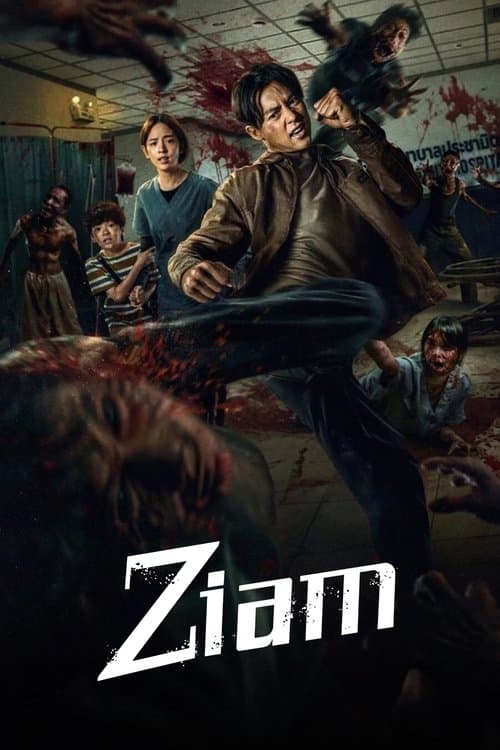
"This barehanded fighter will knock down a horde of zombies."
In a fight for survival against a horrifying army of zombies, a former Muay Thai fighter must use skill, speed and grit to save his girlfriend.
7 min read
Release Year: 2025
Rating: 6.688/10
Runtime: 96 minutes
By Luna Sterling
Ziam (2025): Ending Explained
Quick Recap
In the shadowed underbelly of 1930s Berlin, Ziam unfolds as a hypnotic descent into the fractured mind of Zina, a woman ensnared in the grip of Adlerian psychotherapy under the watchful eye of Professor Arthur Kronfeld. Through sessions laced with hypnosis, Zina unearths buried memories—not just her own, but echoes of her father's turbulent life as a revolutionary leader in Russia, wielding power before exile stripped it away. The air grows thick with the era's encroaching dread: fascism's shadow lengthens across Europe, whispering of inevitable war, while Zina's psyche splinters under the weight of personal and historical trauma.
As her therapy delves deeper, Zina's visions blur the line between hallucination and reality. She begins to embody Antigone, the defiant figure from Greek myth who buries her brother against tyrannical decree, her identification intensifying amid Berlin's streets pulsing with unrest. What starts as internal torment—flashes of revolutionary fervor, exile's isolation, and the specter of loss—seeps outward, transforming her private anguish into a visceral confrontation with the world's unraveling order. The film's tension builds like a storm gathering over the Spree, where personal ghosts collide with the march of history, pulling Zina toward an inexorable tragic arc.
What Happens in the Ending
The final scenes of Ziam plunge us into a feverish crescendo, where the boundaries of Zina's mind dissolve into the fog-shrouded streets of Berlin. As Professor Kronfeld urges one last hypnotic regression, Zina's body tenses on the worn leather couch, her breaths ragged and uneven, the room heavy with the scent of stale tobacco and flickering gaslight. She recounts a vision of her father, not in exile's quiet despair, but storming the barricades of revolution, his face smeared with blood and fervor—yet this memory twists, merging with Antigone's unyielding stand against Creon.
Emerging from trance, Zina wanders into the night, her footsteps echoing hollowly on cobblestones slick with autumn rain. The city's tension mirrors her inner turmoil: distant shouts of fascist rallies swell like a throbbing pulse, red banners snapping in the wind like wounds torn open. Hallucinations solidify—shadowy figures from her father's past materialize as spectral revolutionaries, their eyes hollow with betrayal, urging her toward a forbidden act. In a pivotal moment, Zina approaches a makeshift memorial in a derelict alley, a site echoing her brother's unmarked grave from the myth. With trembling hands, she begins to "bury" a symbolic effigy—a tattered flag stained with ink and dirt—defying the encroaching patrols.
The climax erupts in chaos: as stormtroopers close in, their boots thudding like a heartbeat accelerating toward doom, Zina's visions fully manifest. The streets warp into a tragic tableau, Greek chorus-like whispers from the shadows chanting lines from Sophocles amid the crackle of torches. She confronts a fascist officer, her voice rising in Antigone's defiance, but the encounter shatters her. In the film's visceral close, Zina collapses amid the fray, her body crumpling against cold stone as the hallucinations envelop her completely—the line between her psyche and the objective horror of the rising regime erased. The screen fades to black on her unblinking eyes, reflecting the flicker of flames, leaving the echo of revolutionary hymns hanging in the damp air.
The Meaning Behind the Ending
At its core, the ending of Ziam symbolizes the inescapable fusion of personal trauma and collective catastrophe, where the psyche's buried wounds erupt into the fabric of reality. Zina's transformation into Antigone isn't mere delusion; it's a metaphor for resistance against oppressive structures, be they familial legacies of revolution or the fascist tide swallowing Europe. The hallucinations taking "objective form on the streets" represent how individual suffering, when suppressed, amplifies into societal rupture—her father's exiled powerlessness mirroring the era's democratic fragility.
Thematically, the film probes the psychological cost of historical inheritance: Zina's memories aren't passive recollections but active forces that demand reckoning, much like Antigone's burial rite challenges tyrannical law. The ending's tension underscores a visceral truth—the "dynamics of Greek tragedy" aren't relics but living specters, waiting to seize control when modernity falters. Sensory details amplify this: the rain-slicked stones underfoot evoke isolation's chill, while the acrid smoke of rallies clings like unresolved guilt, immersing us in Zina's unraveling world. Ultimately, it suggests that in the face of fascism's dehumanizing march, personal defiance, even if it leads to destruction, affirms humanity's defiant spark.
Character Arcs and Resolution
Zina's arc culminates in a profound, if tragic, resolution: from a passive patient adrift in hypnotic fogs, she evolves into an active agent of her inherited narrative, fully claiming Antigone's mantle. Her journey traces a psychological awakening—initially fragmented by her father's shadow, she integrates his revolutionary zeal and exile's bitterness into her own stand against Berlin's creeping authoritarianism. This identification doesn't liberate her; instead, it seals her fate, her collapse symbolizing the toll of embodying myth in a world that crushes such ideals. Yet, in that defiance, she achieves a form of catharsis, her arc closing not in victory but in authentic self-assertion amid inevitable loss.
Professor Kronfeld, the detached analyst, serves as a foil whose arc exposes the limits of rational therapy. His failure to contain Zina's visions—watching helplessly as they spill into reality—resolves his intellectual hubris, leaving him shadowed by the very forces he sought to dissect. Zina's father, evoked through memories, arcs indirectly from power's pinnacle to spectral influence, his unresolved exile fueling her tragedy. Together, their resolutions weave a tapestry of inherited burdens, where therapy's couch becomes a stage for history's unfinished drama, emphasizing how personal growth often demands confronting the era's darker undercurrents.
Alternate Interpretations
The ending's ambiguity invites multiple lenses, particularly around whether Zina's visions truly manifest or remain confined to her mind. One reading posits a fully psychological collapse: the "objective form" on the streets is Zina's subjective projection, a hallucination born of therapy's intensity and Berlin's oppressive atmosphere, suggesting the film critiques psychoanalysis as a catalyst for madness rather than healing. Here, her confrontation with the officer is an imagined climax, her collapse a descent into catatonia, underscoring themes of isolation in a fractured Europe.
Alternatively, a more literal interpretation sees the hallucinations as prophetic or supernatural irruptions—Zina's Antigone identification as a mystical channeling, where Greek tragedy literally "steps forward" to warn of war's horrors. This view frames the ending as a supernatural allegory for fascism's dehumanizing rise, with Zina's death as a sacrificial omen. A socio-political take blends both: the ambiguity reflects the era's uncertainty, where personal delusion and real threats blur, inviting viewers to question if resistance is madness or prescience. These layers ensure the ending lingers, its open wounds mirroring the film's unsettled mood.
Themes and Symbolism
Ziam's ending reinforces core themes of inherited trauma and the collision of myth with modernity, subverting the expectation of therapeutic resolution for a tragic inevitability. Symbolism abounds: the rain-drenched streets evoke tears of history's unburied dead, while the effigy's burial ritual symbolizes Antigone's defiance against fascism's erasure of the past—Zina's act a quiet rebellion mirroring her father's lost revolution. The flickering torches and echoing chants subvert Enlightenment rationality, portraying therapy as a fragile dam against tragedy's flood.
Broader motifs include the fragility of identity amid power's abuse: Zina's psyche as a microcosm of Europe's deteriorating order, where personal hallucinations foreshadow collective violence. The film subverts Greek tragedy's catharsis by denying easy closure—Zina's stand doesn't purge but amplifies tension, a nod to how fascism exploits psychological fractures. Sensory symbols, like the metallic tang of blood in visions or the weight of damp cloth, heighten the visceral unease, reinforcing themes of embodiment: ideas don't stay abstract; they demand flesh-and-blood consequence.
Final Thoughts
Ziam's ending masterfully captures the film's haunting essence, blending psychological depth with historical foreboding to deliver a finale that's as intellectually provocative as it is emotionally raw. By letting tragedy seize control without tidy bows, it avoids melodrama, instead immersing us in an atmosphere of creeping dread that resonates with our own era's shadows. This ambiguity—hallucination or harbinger?—elevates the film beyond genre confines, making it a poignant meditation on resistance's cost. For viewers grappling with legacy and loss, it's a visceral reminder: some stories don't end; they echo eternally in the rain-slicked silence.