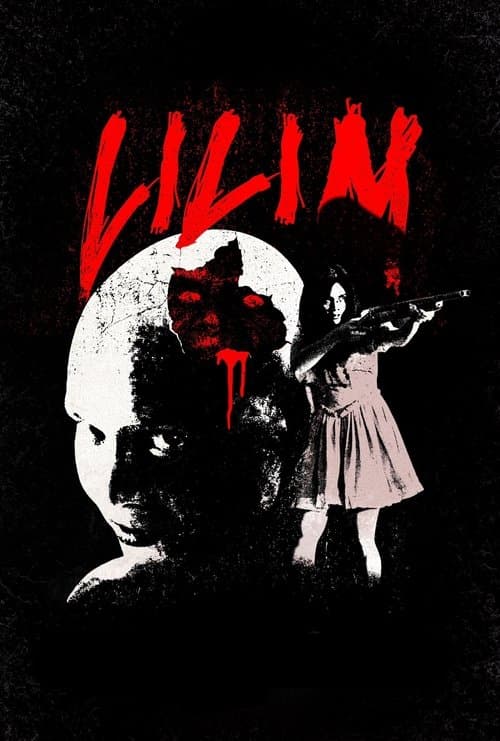
Lilim (2025): Ending Explained
"Hell is a place on earth."
Evading the police, Issa and her brother Tomas seek shelter in a secluded orphanage in the forest. But the siblings’ safe haven soon reveals itself to be a hellscape controlled by a sacrificial cult in thrall to a fearsome nocturnal deity.
9 min read
Release Year: 2025
Rating: 10/10
Runtime: 108 minutes
By Luna Sterling
Lilim (2025): Ending Explained
As Luna Sterling, I've dissected countless films that linger in the shadows of the mind, but Lilim (2025) burrows deeper than most. Directed with a claustrophobic intensity that mirrors the suffocating grip of Martial Law-era Philippines, this horror tale weaves folklore with raw human desperation. The film's ending, shrouded in flickering candlelight and echoing whispers, leaves viewers questioning the line between salvation and damnation. In this Lilim ending explained, we'll unravel the final scenes, probe their psychological undercurrents, and explore how they cap a story drenched in tension and unspoken dread. Spoilers ahead—proceed into the forest at your own peril.
Quick Recap
In the stifling heat of 1983 Philippines, under the iron fist of Martial Law, siblings Issa and Tomas are forced to flee their home after Issa kills their abusive father in a desperate act of self-defense. The air thick with the scent of rain-soaked earth and fear, they stumble upon Helping Hands, a remote orphanage nestled in the misty mountains, run by a cadre of nuns led by the enigmatic Sister Marga. At first, the place offers a fragile sanctuary—its stone walls echoing with the faint patter of children's footsteps and the murmur of prayers. But soon, an unnatural hush descends, broken only by guttural whispers in the night and the metallic tang of something ritualistic in the air.
As days blur into a haze of suspicion, Issa uncovers the orphanage's true nature: a sacrificial cult devoted to the Lilim, a nocturnal deity that hungers for innocence and suffering. The withdrawn children bear strange symbols etched into their skin like invisible brands, and nightmares claw at Issa's sleep—visions of shadowy figures dragging the young into candlelit catacombs beneath the earth, where blood pools like spilled ink. The nuns, their habits stained with secrets, prepare the purest souls for offering, believing these acts shield them from the world's chaos and grant eternal life. Tomas, with his wide-eyed purity, becomes their prime target, pulling Issa into a frantic spiral of investigation and evasion.
The tension coils tighter as Issa pieces together decades of "cleansings"—hidden ledgers and bone fragments whispering of lost lives. Her resolve hardens amid the oppressive silence, the orphanage's corridors twisting like veins in a dying body. But escape proves elusive; the cult's grip is ironclad, laced with drugs and deceit, forcing Issa toward a confrontation that will ignite both literal and metaphorical flames.
What Happens in the Ending
The climax erupts in the bowels of the orphanage, where the air hangs heavy with the acrid bite of incense and the low thrum of chanting that vibrates through the stone like a heartbeat from the grave. Issa, her breaths ragged and clothes torn from the struggle, bursts into the ritual chamber just as the nuns encircle Tomas on a makeshift altar. Flickering torchlight casts elongated shadows that writhe like living entities, illuminating the boy's terrified face smeared with ritual ash. Sister Marga, her eyes gleaming with fanatic zeal, intones the summoning, and the Lilim manifests—a colossal form of swirling smoke and jagged bone, its multitude of eyes glowing like embers in the void, its voice a howling gale that rattles the bones of the earth.
In a surge of primal fury, Issa shatters the ceremony's fragile rhythm. She hurls a lantern, its oil igniting in a whoosh of flames that lick up the tapestries and devour the wooden beams. Chaos reigns as screams pierce the smoke-choked air; the cultists claw at their burning habits, their cries mingling with the Lilim's deafening shriek—a sound like wind tearing through forgotten tombs. The deity recoils, dissolving into wisps that slither into the cracks of the collapsing structure. Issa grabs Tomas, her hands slick with sweat and blood, and they flee through the inferno, the heat blistering their skin as the orphanage crumbles behind them. Emerging into the cool, fog-shrouded forest, they collapse amid the rustle of leaves, the distant crackle of fire fading like a nightmare's echo.
But respite is illusory. In the final shot, a surviving nun—her face gaunt and streaked with soot—emerges from the treeline, her lips moving in a silent prayer to the Lilim. Her gaze fixes on the siblings' retreating forms, the words hanging in the damp air like a curse: the horror, it implies, has merely shifted its shape, waiting in the shadows for another harvest.
(Note: The Netflix release features an alternate ending, diverging sharply after the escape attempt. As Issa and Tomas flee with a handful of freed children, Tomas hesitates at a scream echoing from the group. Turning back, he witnesses Issa—her eyes now vacant and rimmed with an unnatural glow—lunging at one of the boys, her movements jerky and possessed, teeth bared in a feral snarl. Horror-stricken, Tomas abandons her and vanishes into the woods alone. The scene cuts to the orphanage ruins, where the surviving nuns kneel before a wide-eyed Issa, now enthroned in tattered robes. They proffer a swaddled infant as sacrifice; Issa's mouth, slick with fresh blood, curls into a silent acceptance, her transformation into the Lilim's vessel complete amid the scent of scorched earth and spilled life.)
The Meaning Behind the Ending
At its core, the ending of Lilim symbolizes the inescapable cycle of violence and corruption, where purity is not a shield but a commodity devoured by greater evils. The orphanage fire represents Issa's defiant purge—a visceral eruption of light against the cult's smothering darkness—but it's laced with ambiguity. The Lilim's shriek and retreat aren't victory; they're a momentary recoil, underscoring how such entities thrive on chaos, feeding on the very rebellion that seeks to destroy them. The nun's lingering prayer evokes a psychological tether: trauma doesn't burn away; it smolders, ready to reignite in the quiet spaces of survival.
Thematically, the ending probes the cost of protection in a world of systemic oppression. Issa's act of killing her father echoes in her final stand, a metaphor for breaking free from abusive cycles, yet the Lilim hints that liberation invites new monstrosities. Sensory details amplify this—the crackle of flames mirroring the snap of breaking bones from earlier violence, the forest's damp chill a stark contrast to the ritual's feverish heat—creating a mood of uneasy limbo, where escape feels like just another layer of entrapment.
Character Arcs and Resolution
Issa's journey from victim to avenger culminates in raw, unyielding resolve, her arc a descent into the visceral heart of motherhood twisted by survival. She begins as a protector haunted by guilt, her nightmares a psychological fog of paternal shadows and cultish whispers. By the ending, her hands, once trembling with the weight of her father's blood, wield fire as a weapon of catharsis, freeing Tomas and symbolizing her reclamation of agency. Yet, the nun's watchful eye leaves her resolution fragile—has she truly severed the chains, or merely passed the burden?
Tomas, the embodiment of innocence amid the film's oppressive tension, evolves from passive fear to a spark of agency in urging a return to save others (in the alternate ending). His escape affirms the film's undercurrent of hope, but it's bittersweet; scarred by the horrors, he emerges not unscathed but resilient, his purity tested like fragile glass in the Lilim's gale. Sister Marga and the nuns, meanwhile, resolve into fanatic oblivion, their arcs reinforcing blind devotion as a path to self-destruction—their burns a literal manifestation of faith consumed by its own zeal.
Alternate Interpretations
Lilim's dual endings invite multiple lenses, amplifying its psychological depth. The theatrical version can be read as a tale of tentative triumph: the fire as purification, the Lilim's banishment a metaphor for dismantling oppressive structures like Martial Law. The nun's prayer suggests the cult's ideology persists, interpreting the horror as an enduring societal stain—survivors carry the infection, ensuring cycles repeat in the forest's whispering gloom.
The Netflix alternate flips this into outright tragedy, positing Issa's possession as the true cost of resistance. Here, her arc inverts: the protector becomes predator, her "victory" a corruption that dooms her to perpetuate the cult's legacy. This reading emphasizes psychological invasion—the Lilim not as external demon but an internalized trauma, feeding on Issa's rage until it hollows her out. Tomas's solitary escape offers a sliver of optimism, but it underscores isolation as survival's price. Which ending resonates? It depends on whether you see the film as a scream against tyranny or a whisper of inevitable fall.
Themes and Symbolism
The ending reinforces Lilim's core themes of corrupted innocence and the blurred boundary between savior and monster, subverting expectations of horror redemption. The Lilim itself symbolizes colonial and authoritarian legacies— a nocturnal feeder born from historical suffering, its smoky form evoking the fog of suppressed truths in Martial Law Philippines. Sacrifices represent exploited purity, the children's blood a stark metaphor for how power structures devour the vulnerable, their symbols on the walls like tattoos of inherited doom.
Fire subverts as both destroyer and illuminator, its visceral heat contrasting the cult's cold rituals to highlight themes of rebellion's double edge. The forest, with its rustling leaves and hidden eyes, symbolizes ambiguous refuge— a psychological maze where escape blurs into pursuit. Overall, the ending subverts tidy closure, embracing horror's tension: in a world of shadows, light only reveals more darkness.
Final Thoughts
Lilim's ending masterfully sustains its atmospheric dread, leaving a residue of unease that clings like smoke to the skin. Whether through fiery defiance or chilling possession, it delivers a gut-punch resolution that honors the film's psychological layers without cheap catharsis. For general audiences, it's a gripping reminder that true horror lies not in monsters, but in the human capacity to birth them anew. This isn't just an ending—it's a lingering whisper, urging you to check the shadows long after the credits roll. If Lilim haunts you, it's because it knows: some fires never fully die.