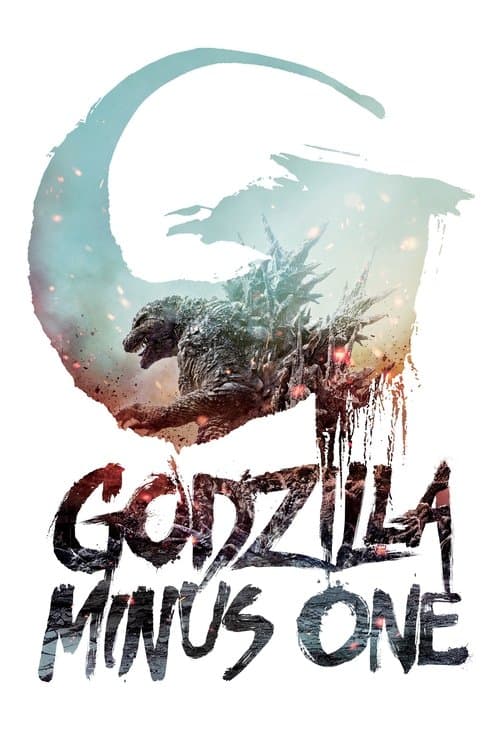
Godzilla Minus One (2023): Ending Explained
"Survive and fight. Live and resist."
In postwar Japan, Godzilla brings new devastation to an already scorched landscape. With no military intervention or government help in sight, the survivors must join together in the face of despair and fight back against an unrelenting horror.
9 min read
Release Year: 2023
Rating: 7.594/10
Runtime: 124 minutes
By Luna Sterling
Godzilla Minus One (2023): Ending Explained
In the shadowed ruins of postwar Japan, Godzilla Minus One delivers a kaiju epic laced with raw human frailty, where the monstrous roar of Godzilla echoes the lingering scars of war. Directed by Takashi Yamazaki, this 2023 standout reimagines the iconic beast not just as a spectacle of destruction, but as a visceral embodiment of trauma and renewal. As audiences search for a deep dive into the film's haunting conclusion, this ending explained uncovers the literal events, symbolic layers, and psychological undercurrents that make the finale pulse with tension and fragile hope. Spoilers ahead—proceed with caution into the abyss.
Quick Recap
Set against the smoldering backdrop of 1945 Japan, Godzilla Minus One follows Kōichi Shikishima, a kamikaze pilot haunted by cowardice. During World War II's final gasps, Shikishima lands his damaged Zero fighter on Odo Island for repairs, only to face the island's garrison—and Godzilla—under a moonless sky thick with dread. Mechanic Sōsaku Tachibana accuses him of shirking duty, and when the colossal creature emerges from the fog-shrouded waves, its guttural roars shaking the earth, Shikishima freezes in his cockpit. He fails to fire, the plane topples, and he awakens amid the carnage, the sole survivor besides Tachibana, who seethes with blame. This encounter plants the seed of survivor's guilt, a shadow that clings to Shikishima like damp rot.
By 1946, Shikishima returns to a Tokyo gutted by firebombings, his parents lost to the flames. Adrift in the rubble-strewn streets, he forms a makeshift family with Noriko Ōishi, a resilient woman orphaned by the war, and baby Akiko, whom she rescued from the chaos. Shikishima joins a minesweeper crew, navigating mine-infested waters under a sky perpetually bruised by defeat. But Godzilla, mutated and swollen by U.S. nuclear tests at Bikini Atoll, stirs anew—its dorsal spines glowing like embers in the deep. The creature sinks American ships and barrels toward Japan, met with governmental silence to avoid panic. In 1947, Shikishima's crew stalls the beast near the Ogasawara Islands, detonating a mine in its maw that tears flesh but sparks rapid regeneration. The cruiser Takao follows, only to be vaporized by Godzilla's searing heat ray, a blue inferno that leaves the air acrid with ozone and charred ruin.
Back in Tokyo, Shikishima confesses his Odo Island failure to Noriko, the words tasting like ash. Godzilla soon rampages through Ginza, its footsteps a thunderous heartbeat amid panicked screams. Noriko survives the initial assault, reuniting with Shikishima in the choking dust, but as tanks futilely engage, the monster unleashes its atomic fury. The blast engulfs the district in a blinding flash, killing thousands and leaving a crater of twisted metal and silence. Noriko shoves Shikishima to safety but vanishes in the inferno, presumed dead. Grief hardens into resolve; former engineer Kenji Noda hatches a desperate plan to drown Godzilla in Sagami Bay using Freon to sink it under crushing pressure. Shikishima seeks out Tachibana to restore a derelict Shinden fighter for a suicidal dive, leaving Akiko with neighbor Sumiko. As Godzilla's silhouette breaches the surface once more, the air hums with foreboding—the stage set for a reckoning in the restless sea.
What Happens in the Ending
The climax unfolds in the churning waters of Sagami Bay, where the salty tang of the ocean mingles with the metallic bite of Freon, heightening the claustrophobic tension. Shikishima, gripping the Shinden's controls with white-knuckled hands, lures Godzilla into Noda's trap. Two unmanned destroyers, baited like sacrificial lambs, draw the beast's ire; its heat ray erupts in a blistering azure torrent, reducing them to splintered wreckage that bobs like forgotten graves. The remaining manned ships close in, their buoys snaring Godzilla's thrashing form. Freon tanks rupture with a hiss that echoes like escaping breath, flooding the bay and dragging the monster down to 1,500 meters. The depths press in, a silent vise of water that should pulverize—flesh rends, bones crack under the invisible weight—but Godzilla endures, its regenerative pulse defying the abyss.
Balloons inflate beneath the creature, a desperate counter to force explosive decompression. It surges upward to 800 meters, the pressure shift tearing gashes that weep dark ichor into the currents, yet it breaks free with a seismic roar that vibrates through the hulls. Two ships strain to haul it surfaceward, cables groaning like tortured sinews, but falter. A fleet of tugboats, rallied by crewmate Mizushima, joins the fray—their engines a defiant growl against the waves. Godzilla breaches, water cascading from its scarred hide like black rain, eyes blazing with primal rage. It coils for the heat ray, the air crackling with impending doom, spines flickering ominously.
In that suspended heartbeat, Shikishima dives. The Shinden hurtles into Godzilla's gaping maw, the cockpit a blur of wind-whipped fear. Remembering Tachibana's urgent plea—"Live, damn you"—Shikishima triggers the ejection seat, a hidden mercy the mechanic installed despite their pact of atonement. The plane vanishes down the throat; explosives detonate in a muffled thunder, shattering the head in a spray of gore and energy. The heat ray, unleashed in death throes, backfires—its volatile force rips through Godzilla's body, atomizing it in a cataclysmic bloom that scatters flesh across the bay. The crew erupts in cheers, the sea's surface now a mirror of relief under the dimming sky.
Shikishima parachutes down, splashing into the cooling waters, alive. Back on shore, Sumiko hands him a delayed telegram. Cradling Akiko, he races to a hospital, the sterile halls echoing with quiet anticipation. There, in a dimly lit room heavy with the scent of antiseptic and unspoken miracles, he reunites with Noriko. She survived the Ginza blast, her embrace warm but marred—a black, vein-like bruise creeps up her neck, a shadowy omen pulsing faintly. Far below, in the ocean's lightless cradle, a severed chunk of Godzilla's flesh twitches, cells knitting in silent regeneration, the depths murmuring of cycles unbroken.
The Meaning Behind the Ending
At its core, the ending of Godzilla Minus One transforms spectacle into catharsis, where Godzilla's destruction symbolizes the shattering of postwar paralysis. The beast, born from nuclear hubris and wartime horrors, represents not just physical devastation but the psychological weight of guilt and loss—its regenerative flesh a metaphor for trauma that refuses to die quietly. Shikishima's dive into the maw mirrors a descent into the self, confronting the "monster" of his inaction on Odo Island. The explosion isn't mere victory; it's explosive release, the heat ray's backlash evoking the atomic bombs that scarred Japan, turning the weapon of ruin against itself. Noriko's survival, shadowed by that creeping bruise, injects ambiguity—a fragile hope tainted by lingering poison, suggesting redemption comes at the cost of incomplete healing. The regenerating chunk sinks like a buried regret, implying that while one horror may fall, its echoes persist in the collective psyche, a visceral reminder that peace is tentative, forged in the tension between survival and recurrence.
Character Arcs and Resolution
Shikishima's journey arcs from frozen cowardice to defiant agency, his survivor's guilt evolving from a suffocating fog into fuel for collective action. The ending resolves this by granting him not death, but life—ejecting from the plane symbolizes shedding atonement's chains, urged by Tachibana's gruff wisdom. Tachibana, once a vessel of accusation, redeems their bond through the ejection seat, a quiet act of forgiveness that pulls Shikishima from the brink. Noriko embodies quiet resilience, her reunion with Shikishima and Akiko forging a family from war's fragments; the bruise on her neck, however, hints at an unresolved scar, her survival a psychological tether to the destruction she endured. Akiko, the innocent orphan, anchors their makeshift unit, her presence a beacon of future amid the rubble—Shikishima's choice to live ensures her world isn't defined solely by loss. The crew, from Noda's ingenuity to Mizushima's grit, finds purpose in unity, their cheers a collective exhale after years of isolation.
Alternate Interpretations
The ending's ambiguities invite multiple lenses, particularly Noriko's bruise and Godzilla's regenerating flesh. The mark could signify physical trauma from the blast—radiation's subtle creep, a nod to real nuclear aftermaths—or something more insidious, like Godzilla's essence infecting her, blurring human and monster. Is she a harbinger of hybrid horror, her survival a pyrrhic gift that dooms their fragile peace? Some might see it as psychological: the bruise as Shikishima's projected guilt, manifesting his fear that joy is illusory. The flesh chunk offers sequel bait or deeper allegory—does it foretell endless cycles of destruction, subverting victory into inevitability? Optimists interpret it as nature's resilience, mirroring Japan's postwar rebirth; pessimists, a warning that ignoring scars invites return. These threads keep the mood unsettled, the ocean's depths a psychological mirror for unresolved fears.
Themes and Symbolism
The ending reinforces Godzilla Minus One's core themes of human fragility against overwhelming forces, subverting the kaiju genre's bombast with intimate psychological depth. Godzilla symbolizes war's monstrous legacy—nuclear tests birthing it parallel imperial hubris and Allied bombs, its heat ray a visceral stand-in for atomic fire that leaves sensory scars of blistering light and ashen silence. Regeneration evokes the war's enduring trauma, unkillable like guilt or societal wounds, yet the plan's ingenuity highlights themes of communal defiance: civilians, not governments, reclaim agency in a postwar void. Water motifs—sinking pressures, balloon ascents—symbolize emotional depths and buoyant hope, the bay's turbulent embrace a metaphor for Japan's submerged grief surfacing. The bruise on Noriko subverts pure triumph, threading in ambiguity about healing; it reinforces that victory is messy, laced with tension, where personal redemption intersects national scars.
Final Thoughts
Godzilla Minus One's ending works masterfully because it balances visceral spectacle with emotional intimacy, leaving viewers adrift in a sea of tentative uplift shadowed by unease. The literal destruction thrills with its tactical ingenuity and explosive payoff, but the psychological layers—Shikishima's ejection as rebirth, the bruise as lurking dread—elevate it beyond monster mash. In a film steeped in postwar mood, this conclusion doesn't erase the horrors; it confronts them, offering hope that's hard-won and human-scaled. For fans dissecting the Godzilla Minus One ending explained, it's a poignant reminder: in the face of unrelenting tides, survival isn't absence of monsters, but the courage to surface and rebuild amid the whispers of what sinks below. A triumph that lingers like salt on the skin.