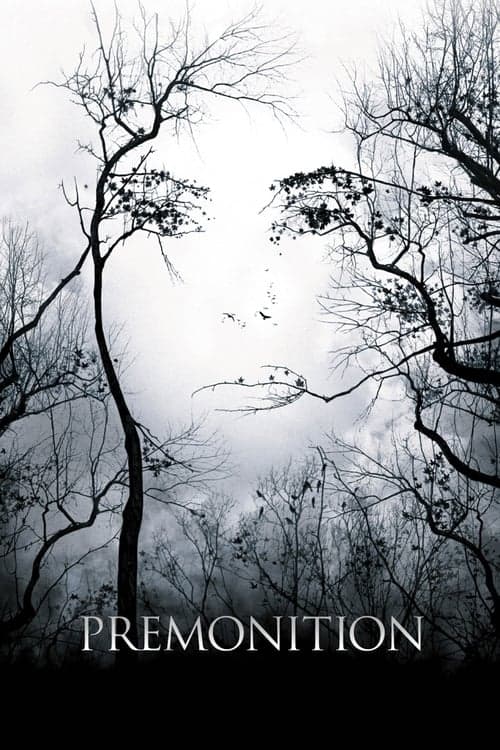
Premonition (2007): Ending Explained
"It's not your imagination."
A depressed housewife who learns her husband was killed in a car accident the day previously, awakens the next morning to find him alive and well at home, and then awakens the day after to a world in which he is still dead.
8 min read
Release Year: 2007
Rating: 6.273/10
Runtime: 96 minutes
By Luna Sterling
Premonition (2007): Ending Explained
In the shadowy grip of time's unraveling, Premonition (2007) weaves a chilling tapestry of foresight and fatalism. Starring Sandra Bullock as Linda Hanson, this psychological thriller plunges viewers into a disorienting haze where days bleed into one another, each awakening laced with the metallic tang of dread. As a film critic who's dissected countless tales of temporal torment, I find Premonition's ending a haunting crescendo—one that lingers like the echo of shattering glass, forcing us to confront the fragility of fate. If you're searching for a Premonition ending explained, buckle up: we'll unravel the literal chaos of those final moments, probe the psychological undercurrents, and explore why this conclusion leaves an indelible chill.
Quick Recap
Linda Hanson, a suburban housewife teetering on the edge of marital despair, receives devastating news: her husband, Jim, has perished in a fiery car crash. The air thickens with grief as her mother, Joanne, arrives to steady the crumbling home, but sleep offers no solace. Instead, Linda jolts awake to find Jim alive and breathing, his presence a warm, bewildering anchor in their faltering world of two young daughters, Megan and Bridgette. Yet reality fractures further—days warp and reorder themselves in a nightmarish shuffle, thrusting her through fragmented glimpses of loss: a wake shrouded in hushed whispers, a funeral where the casket spills its gruesome secret, and a daughter's face marred by jagged scars from a storm-lashed accident.
As tension coils like storm clouds, Linda pieces together the chaos with a makeshift calendar, her pencil scratches a frantic bid for control. She uncovers Jim's near-affair with colleague Claire Francis, the suspicious tripling of his life insurance, and whispers of her own unraveling sanity from Dr. Roth, who prescribes lithium to dull the visions. Desperate to rewrite destiny, Linda consults their priest for tales of premonitions and faith, confronts Claire in a rain-slicked confession, and even scouts the fateful mile marker 220, where the road hums with unspoken peril. Each "day" pulses with visceral urgency—the creak of swings at a wake, the sting of betrayal in stolen glances—building to a feverish quest to shield her family from the inevitable crash that haunts her dreams.
What Happens in the Ending
The film's climax unfurls with a taut, rain-drenched inevitability, the screen flickering like a faulty memory. Linda awakens on what she marks as Wednesday, the air heavy with the scent of fresh coffee and fleeting normalcy. A note from Jim rests on the nightstand: he's dropped the girls at school and promises to return tomorrow. Intercut scenes reveal Jim at the bank, signing papers that triple his life insurance benefits just two days prior—a cold, calculated shadow over their shared life. The children are indeed at school, their absence a quiet void that amplifies Linda's isolation.
Jim's day unravels in parallel: he dials Claire at her hotel, his voice laced with finality as he severs their flirtation, the phone line crackling with unspoken relief. Moments later, he leaves the voicemail that opened the film—a mundane check-in that now drips with tragic irony. As his car hurtles toward mile marker 220, the road slick with impending doom, Linda's cell phone pierces the hum of tires. Their conversation crackles to life; words of reconciliation flow like a balm, mending the fractures in their marriage with raw, desperate honesty. She urges him to pull over, to evade the unseen threat, her voice rising in a crescendo of pleas amid the whoosh of passing vehicles.
But fate, that unrelenting specter, intervenes. An oncoming fuel tanker jackknives in a blur of screeching metal and explosive fury, shearing the roof from Jim's car before erupting in a fireball that engulfs both drivers. The screen flares with orange heat and shattering glass, the blast's roar echoing the film's pent-up tension. Cut to months later: a subdued Linda, her hand resting on a swelling belly, stands in soft light. She murmurs the priest's words on faith, her eyes distant yet resolute, as the frame fades on this quiet emblem of renewal amid ruin.
The Meaning Behind the Ending
At its core, the ending of Premonition is a visceral meditation on the illusion of control, where Linda's frantic interventions dissolve into the acrid smoke of inevitability. The crash isn't just a plot device—it's a thunderous metaphor for how premonitions, those ghostly whispers from the subconscious, can illuminate the fractures in our lives without granting the power to mend them. Jim's death symbolizes the death of their stagnant marriage, but his final reconciliation call offers a fleeting resurrection: a moment of authentic connection forged in the shadow of doom. The pregnancy, blooming like a fragile bloom in winter soil, represents hope's defiant spark—life persisting through loss, a psychological anchor that pulls Linda from the abyss of grief and doubt.
Thematically, the sequence underscores the film's exploration of faith versus fatalism. Linda's calendar, once a talisman against chaos, crumbles as the days refuse to bend, mirroring the psychological toll of foresight: knowledge without agency breeds a suffocating tension, the kind that clings to the skin like damp fog. The tanker's explosion, with its sensory assault of fire and twisted steel, visceralizes the theme of unintended consequences—Linda's efforts to save Jim inadvertently draw him into the path of greater peril, suggesting that meddling with destiny invites its wrath.
Character Arcs and Resolution
Linda's journey arcs from bewildered denial to a hard-won acceptance, her psychological descent through non-linear torment forging resilience. Initially paralyzed by the surreal dissonance of seeing Jim alive amid echoes of his death, she evolves into a fierce guardian, confronting betrayals and her own unraveling mind. The ending resolves her arc with poignant subtlety: the pregnancy signifies not just biological renewal but emotional rebirth, her faith—echoed from the priest—transforming passive premonition into active hope. She's no longer the fractured housewife adrift in time's currents; she's a survivor, carrying forward the love she reclaimed in those final, phone-tethered moments.
Jim, though doomed, achieves a redemptive close. His arc traces a man burdened by marital drift and temptation, the insurance hike a murky hint at self-preservation or guilt. Yet his call to end things with Claire and the reconciling conversation with Linda peel back his flaws, revealing a core of vulnerability. His death resolves the faltering family dynamic not through survival, but through the cathartic honesty it elicits—leaving Linda and the girls with memories untainted by unresolved resentment. For the daughters, the resolution is implicit: spared further scars, they inherit a mother tempered by loss, her strength a quiet legacy.
Alternate Interpretations
Premonition's ending thrives on ambiguity, inviting viewers to question whether Linda's visions stem from genuine precognition or a lithium-fueled hallucination. One reading casts the non-linear days as manifestations of her subconscious grief and paranoia—Dr. Roth's suspicions of murder and self-harm aligning with a psychological breakdown, where the "premonitions" are guilt-ridden projections. The pregnancy could then symbolize denial, a fabricated hope to cope with Jim's "murder" via the accident she subconsciously engineered.
Conversely, a supernatural lens affirms the premonitions as real, the calendar a divine puzzle testing faith. The crow's lightning-struck death earlier foreshadows the crash, suggesting cosmic signs Linda deciphers too late. Here, the ending subverts expectation: her interventions don't avert fate but fulfill it, implying a predestined tapestry where free will is an illusion. The priest's faith motif supports this, positioning the pregnancy as a miraculous counterpoint to death—life's cycle unbroken by mortal meddling.
Themes and Symbolism
The ending amplifies Premonition's core themes of temporal dislocation and the psyche's fragile grip on reality, subverting the thriller trope of outsmarting doom with a fatalistic punch. Rain and storms recur as symbols of emotional turbulence, their patter underscoring fractured dialogues and the glass-door accident, while the explosive crash literalizes bottled-up tensions erupting. The calendar stands as a poignant emblem of human defiance against chaos, its orderly grid mocking the disorder of lived experience.
Symbolism deepens the psychological layers: the dead crow, zapped by lightning, mirrors Jim's fiery end and Linda's harbinger role—omens ignored until too late. The insurance policy symbolizes betrayal's cold calculus, yet Jim's rejection of Claire redeems it, reinforcing themes of redemption amid ruin. Ultimately, the ending reinforces faith as a salve for fatalism, subverting despair by birthing new life from ashes, while the non-linearity evokes the nonlinear nature of mourning itself—jagged, inescapable, and profoundly human.
Final Thoughts
Premonition's ending works its eerie magic through restraint, trading bombastic twists for an intimate gut-punch that resonates long after the credits roll. It's not a flawless film—the plot's temporal knots can snag the unwary viewer—but this conclusion elevates it, blending visceral horror with emotional depth to probe the terror of knowing without saving. For audiences grappling with loss or the what-ifs of life, it's a subtle reminder: some endings can't be rewritten, but they can be survived. If Premonition left you staring at the ceiling, questioning time's cruel dance, you're not alone—it's the mark of a thriller that lingers, atmospheric and unyielding.