Disappearance at Clifton Hill (2020): Ending Explained
"The truth can be deceiving."
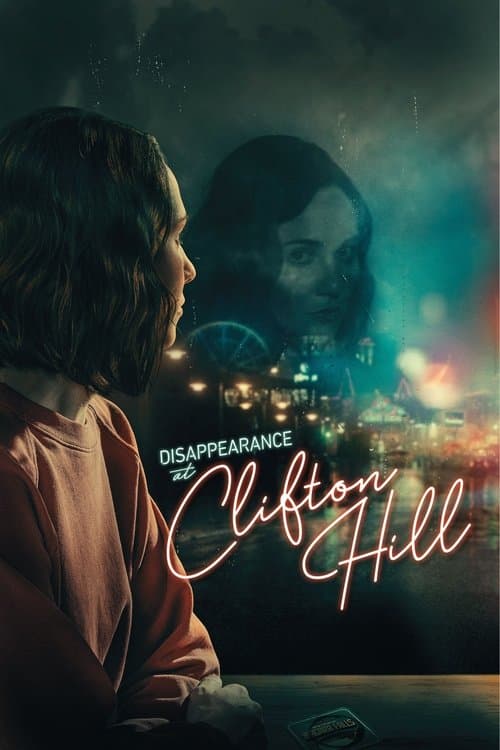
Following the death of her mother, a young woman returns home to Niagara Falls and becomes entangled in the memory of a kidnapping she claims to have witnessed as a child.
8 min read
Release Year: 2020
Rating: 5.509/10
Runtime: 100 minutes
By Luna Sterling
Disappearance at Clifton Hill (2020): Ending Explained
In the misty shadows of Niagara Falls, Disappearance at Clifton Hill weaves a tale of buried secrets and fractured memories, where the roar of cascading water mirrors the turmoil in young Abby's mind. Directed by Albert Shin, this 2020 Canadian thriller grips you with its humid, neon-drenched atmosphere, pulling you into a world where truth slips like fog through your fingers. If you're searching for a breakdown of the film's haunting finale—especially the enigmatic arrival of the one-eyed stranger—read on as we dissect what happens, why it lingers, and the psychological undercurrents that make this ending so viscerally unsettling.
Quick Recap
The film opens in the damp, whispering woods near Niagara Falls, where seven-year-old Abby stumbles upon a heart-pounding scene: a bruised, one-eyed boy cowering as a couple shoves him into their car's trunk and speeds away. The image sears into her young psyche, but fear clamps her lips shut, leaving the trauma to fester unspoken. Fast-forward to adulthood, and Abby returns to the thundering border town after her mother's death, inheriting the crumbling Rainbow Motel alongside her pragmatic sister, Laure. Plagued by a reputation as a compulsive liar and haunted by that childhood ghost, Abby fixates on unraveling the mystery of the "one-eyed boy," resisting Laure's push to sell the property to the influential Lake family.
Driven by an obsessive itch she can't scratch, Abby dives into a labyrinth of half-truths and local lore. She teams up with eccentric podcaster Walter Bell, a conspiracy theorist who suspects the Lakes of orchestrating boy disappearances for decades. Posing as a seller with forged documents, Abby infiltrates Charlie Lake's office, glimpsing a faded photo linking the missing boy—Alex Moulin, son of the flamboyant magician duo, the Magnificent Moulins—to animal trainer Beverly Mole. Her pursuit leads to tense encounters: luring Beverly to the motel with casino bait, only for a casino brawl to send her fleeing; sneaking across the border with Laure's stolen passport to confront the Moulins after their glitzy show, resulting in Abby's arrest. Undeterred, she breaks into Beverly's home, uncovering Gerry chained in the basement. His choked confession reveals they abducted Alex to extort the Moulins, igniting a media storm that ensnares Charlie Lake in arrest, though he vehemently denies murder.
What Happens in the Ending
The film's climax unfurls in a haze of resolution laced with fresh unease, shifting from the chaotic frenzy of arrests to a deceptive calm that clings like the perpetual mist of Niagara Falls. After Gerry's raw confession spills the beans on the kidnapping plot—intended as blackmail against the Moulins—the police swoop in, hauling Beverly away in cuffs while freeing her battered husband. Incriminating evidence surfaces, validating Abby's dogged quest and thrusting the case into a whirlwind of flashing cameras and sensational headlines. Charlie Lake, the shadowy power broker, is arrested amid the uproar, his face twisted in protestations of innocence, his empire crumbling under the weight of suspicion. The Moulins, ever the performers, seize the spotlight, feigning bewildered victimhood and issuing veiled threats of lawsuits to any who dare accuse them of neglect or worse.
As the town's pulse steadies—the roar of tourist crowds resuming their indifferent rhythm—Abby steps away from the Rainbow's peeling walls, finding steadier footing at a sleek, upscale motel. The air there hums with polished efficiency, a far cry from the motel's musty decay. Then, in a moment thick with the scent of rain-soaked carpets and distant thunder, a man strides into the lobby: not much older than Abby, his face partially obscured by an eye patch that catches the fluorescent light like a sliver of forgotten night. He requests a room for an indefinite stay, his voice carrying a subtle undercurrent of familiarity as he tilts his head and asks, "Have we met before?" Abby's breath catches, the room's sterile hum fading into a tense silence. Spotting a newspaper on the desk emblazoned with Charlie Lake's mugshot, the stranger leans in, his words dropping like stones into still water: "Lake is not lying. He saved that boy's life." With that, he turns, his footsteps echoing softly down the hall toward his room, leaving Abby frozen in a stare of wide-eyed wonderment, the weight of unspoken possibilities hanging heavy in the air.
The Meaning Behind the Ending
This finale doesn't slam doors shut; it cracks them open to a draft of ambiguity, where the psychological fog of doubt mirrors Niagara's eternal veil. The one-eyed man's arrival symbolizes the inescapable echo of the past, a visceral reminder that truths unearthed can birth new shadows. His eye patch evokes the "one-eyed boy" directly, suggesting a cyclical haunting—Abby's childhood witness now confronting her as an adult apparition. The revelation about Charlie Lake flips the narrative on its head: if Lake "saved" Alex, it implies the Lakes' dark legacy isn't outright villainy but a tangled web of protection or coercion, underscoring themes of moral grayness in a town built on illusions. The ending represents Abby's fragile victory—not a tidy justice, but a psychological release tainted by lingering tension, where resolution feels as slippery as the falls' wet rocks. It's a metaphor for memory's unreliability, the way trauma distorts like refracted mist, leaving us to question if salvation or further deception lurks in the stranger's words.
Character Arcs and Resolution
Abby's journey arcs from a scattered, pathologically dishonest drifter—her lies a brittle shield against childhood terror—to a woman tentatively grounded, trading the Rainbow's ghosts for a job in brighter lights. Her obsession, once isolating her from Laure and branding her unreliable, culminates in vindication: the kidnapping exposed, her voice finally heard amid the media din. Yet the stranger's parting shot reintroduces doubt, suggesting her arc isn't linear closure but a haunted plateau, where psychological scars pulse beneath the surface. Laure, the voice of pragmatism, fades into the background as the motel sells, her arc resolving in quiet relief from Abby's chaos. The antagonists—Beverly and Gerry's petty criminality unmasked, the Moulins' performative innocence preserved, Charlie's arrest a hollow echo—circle back to Abby's world, their resolutions reinforcing her growth while underscoring the town's enduring underbelly. For Abby, it's a bittersweet equilibrium: empowered, yet forever tuned to the whisper of unresolved echoes.
Alternate Interpretations
The ending's deliberate vagueness invites multiple lenses, each amplifying the film's psychological tension. One reading casts the eye-patched man as Alex himself, grown and returned not for revenge but revelation—perhaps Lake intervened to rescue him from the Moulins' neglect or the kidnappers' grasp, explaining the lack of a body and Walter's suspicions. This interpretation paints a redemptive twist: Abby's fixation "saves" Alex indirectly, closing her trauma loop in quiet reunion, the motel's hum now a sanctuary rather than a cage. Alternatively, he could be a fabrication of Abby's mind, a hallucination born from her liar's tendencies, symbolizing how her psyche conjures closure amid ambiguity—his words about Lake a projection of her guilt or wishful revisionism, leaving us to ponder if reality bends to her narrative. A darker take? He's an impostor tied to the Lakes, planting doubt to discredit Abby's exposé, ensuring the family's secrets simmer beneath the town's facade. These possibilities swirl like the falls' spray, each heightening the unease without definitive anchor.
Themes and Symbolism
The ending reinforces the film's core themes of deception and the blurred line between truth and fabrication, subverting the thriller trope of clean catharsis for a more insidious realism. Niagara Falls itself symbolizes relentless erosion—secrets wearing away at sanity, much like how Abby's memories gnaw at her stability. The eye patch recurs as a potent emblem of partial vision, critiquing how incomplete perspectives (Abby's silence as a child, the town's willful blindness to the Lakes) perpetuate cycles of harm. Psychologically, it explores trauma's visceral grip: the stranger's arrival evokes a sensory chill, the lobby's confined space mirroring Abby's internal confinement. Broader, it subverts expectations of justice in corrupt locales, suggesting power structures like the Lakes' endure through half-truths, while personal healing remains elusive, fragile as the mist-shrouded border.
Final Thoughts
Disappearance at Clifton Hill's ending masterfully bottles the film's moody essence— that creeping dread of truths half-glimpsed in the fog—delivering a payoff that's intellectually tantalizing without cheap resolution. It works because it trusts the audience to sit with the discomfort, the psychological residue of Abby's stare lingering like the falls' distant rumble. For fans of atmospheric mysteries like The Vanishing, this finale elevates a solid plot into something profoundly unsettling, reminding us that some disappearances echo forever. If the one-eyed stranger's whisper has you replaying the credits, you're not alone; it's the kind of close that haunts, inviting endless rewatches amid Niagara's timeless roar.