Eyes Wide Shut (1999): Ending Explained
"Cruise. Kidman. Kubrick."
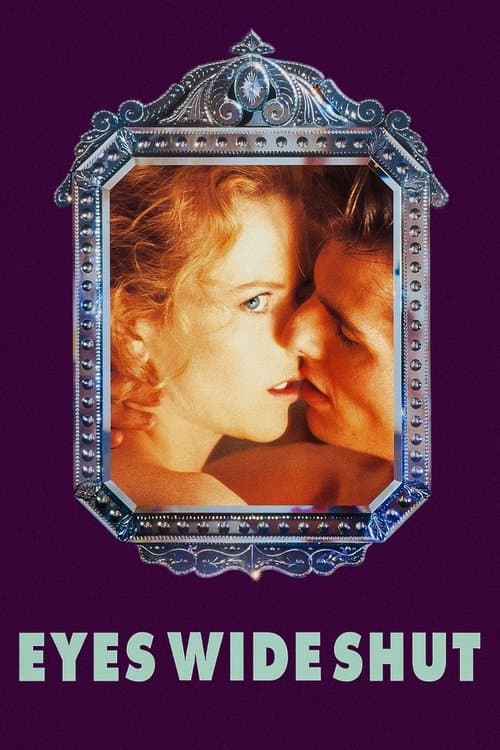
After Dr. Bill Harford's wife, Alice, admits to having sexual fantasies about a man she met, Bill becomes obsessed with having a sexual encounter. He discovers an underground sexual group and attends one of their meetings -- and quickly discovers that he is in over his head.
8 min read
Release Year: 1999
Rating: 7.484/10
Runtime: 159 minutes
By Luna Sterling
Eyes Wide Shut (1999): Ending Explained
By Luna Sterling
Stanley Kubrick's Eyes Wide Shut lingers like a half-remembered dream, its shadows clinging to the edges of consciousness long after the credits fade. Released in 1999, this erotic thriller—Kubrick's final film—unravels the fragile threads of marriage, desire, and hidden worlds through the eyes of Dr. Bill Harford (Tom Cruise). With its pulsating undercurrent of jealousy and forbidden rituals, the movie builds an atmosphere thick with unspoken tensions, where every glance and whisper drips with psychological weight. For those searching for an Eyes Wide Shut ending explained, this deep dive dissects the film's haunting close, revealing layers of ambiguity that mirror the characters' fractured psyches.
Quick Recap
Dr. William "Bill" Harford and his wife Alice navigate the glittering facade of New York high society during a lavish Christmas party hosted by Bill's wealthy patient, Victor Ziegler. Amid flirtations—Bill with two models, Alice with a suave Hungarian—the evening hints at the undercurrents of temptation simmering beneath their polished marriage. The night takes a darker turn when Victor calls Bill to revive an overdosed woman, Mandy, setting the stage for the couple's unraveling.
At home, over marijuana, Alice shatters Bill's illusions of fidelity by confessing a vivid fantasy about a naval officer she once saw on vacation, one that nearly drove her to abandon their life together. Devastated and restless, Bill wanders the neon-lit streets, encountering a prostitute named Domino, resisting a patient's daughter's advances, and learning from his old friend Nick Nightingale about a secretive, masked orgy. Renting a costume from the enigmatic Mr. Milich—whose shop hides its own sordid secrets—Bill infiltrates the ritual at a sprawling mansion. There, amid cloaked figures and blindfolded musicians, he stumbles into danger, exposed as an intruder. A mysterious masked woman intervenes, offering herself in his place, and Bill is sent away with a chilling warning.
The fallout spirals: Alice recounts a nightmare of mocking Bill while lost in orgiastic abandon; Nick vanishes (or so it seems); the costume mask disappears; Milich pimps his own daughter; and a deathly pall hangs over Bill's encounters, from Domino's HIV diagnosis to the morgue identification of Mandy as the orgy savior. Paranoia grips Bill as warnings mount and shadows pursue him, leading to a confrontation with Victor, who downplays the society's threats. The air grows heavier, laced with the scent of betrayal and the echo of forbidden chants, as Bill's odyssey through the city's underbelly forces him to confront the illusions propping up his world.
What Happens in the Ending
The film's denouement unfolds with a raw, intimate intensity, stripping away the nocturnal haze to reveal the Harfords' domestic core. Shaken to his marrow, Bill returns home one final time to discover the missing orgy mask perched ominously on his pillow beside a sleeping Alice—a silent intruder in their bedroom, its empty eyes staring like a ghost from the ritual's fevered night. The discovery hits like a cold draft through cracked glass; Bill's face crumples, tears streaming as the weight of his secrets crashes down. In a moment of visceral vulnerability, he wakes Alice and pours out his confession: the wanderings, the temptations resisted and pursued, the masked ceremony, the woman's sacrifice—all of it laid bare in the dim lamplight, the air thick with the salty tang of regret.
The next morning, the family steps into the crisp daylight of a Manhattan toy store, Helena trailing ahead amid shelves of glittering playthings. The scene hums with holiday bustle—children's laughter cutting through the faint, underlying dissonance—but it's laced with eerie echoes from Bill's night. In the background, the two Japanese men from Milich's costume shop lurk, their presence a subtle reminder of the web Bill narrowly escaped. As Helena drifts toward a display of Barbie dolls and costumes, Bill turns to Alice with a halting apology, his voice low and earnest: "I'm sorry." Alice, her expression a mix of resolve and quiet fire, meets his gaze. She proposes they "take action" to salvage their bond, and when Bill presses for clarity, she delivers the film's final word with deliberate simplicity: "Fuck." The camera holds on their faces—tension unresolved, the future hanging like mist—as the screen fades to black.
The Meaning Behind the Ending
At its core, the ending of Eyes Wide Shut symbolizes the shattering of illusions, a psychological reckoning where the Harfords confront the raw underbelly of their desires. The mask on the pillow serves as a chilling metaphor for intrusion and exposure: not just Bill's literal entry into the secret society, but the way hidden fantasies have invaded their marriage, turning the sanctuary of home into a site of confrontation. Its placement—cold, inert, yet accusatory—evokes the lingering chill of the orgy, where anonymity masked deeper human frailties like power, jealousy, and sacrifice. Bill's breakdown and confession represent a cathartic release, the tension of suppressed urges bubbling over like steam from a sealed pot, forcing honesty amid the marital fog.
Alice's final utterance, "Fuck," is a visceral anchor, stripping the film’s elaborate eroticism to its primal essence. It’s not mere vulgarity but a call to reclaim intimacy on honest terms—raw, unadorned, free from the society's performative rituals or Bill's escapist wanderings. The toy store setting amplifies this: surrounded by symbols of innocence (Helena's playthings), the adults grapple with adult shadows, the holiday cheer underscoring the irony of renewal amid decay. The ending suggests that true connection emerges not from fidelity's rigid cage, but from acknowledging the chaos within, a theme Kubrick weaves through the film's moody palette of blues and shadows.
Character Arcs and Resolution
Bill's arc traces a descent from confident physician to paranoid everyman, his odyssey through the city's undercurrents eroding the control he clings to. The ending resolves this not with triumph, but humility: his tears and confession mark a return to vulnerability, abandoning the detached observer role for genuine emotional risk. Alice, initially the catalyst through her bold revelation, evolves from enigmatic temptress to steady anchor, her "Fuck" asserting agency and equality in their repair. Together, their arcs converge in tentative reconciliation—Helena's presence grounding them in family, a fragile bulwark against the night's abyss.
Yet resolution feels provisional, the psychological scars etched deep. Bill sheds his illusions of male loyalty and female passivity, while Alice steps beyond fantasy into action. Their marriage, once a polite masquerade, now pulses with authentic tension, hinting at growth forged in the fire of near-ruin.
Alternate Interpretations
The ending's ambiguity invites multiple lenses, particularly around the mask's origin and the society's reach. One reading posits the mask as Victor Ziegler's doing—a final intimidation, implying the elite's tendrils extend into Bill's home, rendering escape illusory and underscoring themes of inescapable power structures. Alternatively, it could be self-inflicted paranoia: Bill, in his guilt, might have placed it there himself, a manifestation of his fractured mind, blurring reality and hallucination in Kubrick's dreamlike style.
Alice's "Fuck" also splits interpretations—empowering reclamation of sexuality, or a cynical nod to transactional intimacy, echoing the film's prostitutes and rituals? The toy store men add intrigue: are they harbingers of ongoing threat, or mere coincidence, leaving viewers to question if the Harfords' world remains tainted? These ambiguities heighten the psychological unease, mirroring Bill's disorientation and inviting endless replay.
Themes and Symbolism
The ending reinforces Eyes Wide Shut's core themes of jealousy as a corrosive fog, desire as an unending nocturnal pull, and the chasm between appearance and truth. Symbolism abounds: masks represent societal facades, from the orgy's anonymity to the Harfords' everyday politeness; the Christmas setting subverts festive warmth with underlying dread, lights twinkling like distant ritual candles. Eyes—wide and watchful—motif throughout, culminate in the couple's final stare, a mutual unveiling.
It subverts traditional closure, rejecting tidy redemption for open-ended tension, emphasizing how secrets fester like unspoken breaths in a shared bed. Broader, it probes class divides—the elite's shadowy games versus the middle-class couple's domestic fray—while exploring gender dynamics, with Alice's confession igniting Bill's spiral, only for her word to reclaim narrative power.
Final Thoughts
Kubrick's ending works masterfully because it refuses easy answers, leaving a residue of unease that seeps into the viewer's psyche like the film's pervasive fog. It's not a neat bow on marital strife but a mirror to our own hidden impulses, immersive in its atmospheric restraint—the soft rustle of toys, the weight of a single word—making the ordinary feel profoundly unsettling. For Bill and Alice, "Fuck" isn't closure but ignition, a spark in the dark that promises messy, human vitality. In a film drenched in psychological tension, this ambiguous close cements Eyes Wide Shut as a timeless probe into the heart's veiled chambers, rewarding rewatches with ever-deepening shadows.