Challengers (2024): Ending Explained
"Her game. Her rules."
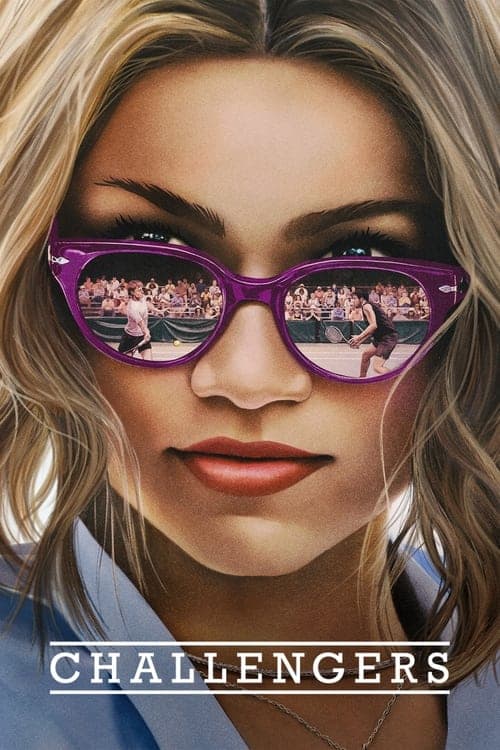
Tennis player turned coach Tashi has taken her husband, Art, and transformed him into a world-famous Major champion. To jolt him out of his recent losing streak, she signs him up for a "Challenger" event — close to the lowest level of pro tournament — where he finds himself standing across the net from his former best friend and Tashi's former boyfriend.
8 min read
Release Year: 2024
Rating: 6.942/10
Runtime: 132 minutes
By Ellis Carver
Challengers (2024): Ending Explained
In Luca Guadagnino's Challengers (2024), the tennis court becomes a charged arena for desire, betrayal, and unspoken bonds. Starring Zendaya as Tashi Duncan, Mike Faist as Art Donaldson, and Josh O'Connor as Patrick Zweig, the film weaves a nonlinear tale of ambition and intimacy. As viewers search for a "Challengers ending explained," this article dives deep into the finale's literal events, symbolic layers, and psychological undercurrents, revealing how the story's erotic tension culminates in a moment of raw human connection.
Quick Recap
The film opens in 2006, introducing teenage best friends Art and Patrick as triumphant junior doubles champions at the US Open. Their victory celebration leads them to Tashi, a prodigious tennis talent who captivates both with her confidence and skill. In a charged hotel room encounter, Tashi orchestrates a playful yet revealing make-out session, even tricking the boys into kissing each other, highlighting the fluid boundaries of their attraction. The next day, Patrick defeats Art in singles, earning Tashi's phone number, and slyly signals his conquest to Art by placing the ball in the racket's neck—a personal tic that foreshadows deeper rivalries.
Years unfold in flashbacks: Tashi joins Art at Stanford for college tennis while maintaining a long-distance relationship with pro player Patrick. Tensions simmer as Art's jealousy emerges, and Patrick's casual view of Tashi as a peer sparks a fight during an intimate moment. Tragedy strikes when Tashi suffers a devastating knee injury, derailing her career. Patrick offers comfort but is rebuffed, with Art stepping in to support her recovery. Unable to return to the court, Tashi pivots to coaching Art, their bond evolving into romance and eventual marriage. By 2011, they're engaged, but Tashi's infidelity with Patrick at the Atlanta Open—witnessed secretly by Art—plants seeds of enduring resentment.
Fast-forward to 2019: Now a power couple with a young daughter, Tashi has molded Art into a near-Career Grand Slam champion under her exacting guidance. Yet Art's recent injury and slump prompt Tashi to enter him in a lowly Challenger tournament in New Rochelle to rebuild his confidence. Fate intervenes when Patrick, now a washed-up drifter living out of his car, enters the same event. As they advance to the final, old wounds reopen: Art rejects Patrick's overtures, Tashi spurns his plea for coaching, and revelations of retirements, ultimatums, and a secret plea to throw the match escalate the stakes. The night before the decisive clash, Tashi sleeps with Patrick after convincing him to let Art win, setting the stage for a confrontation that blurs competition and connection.
What Happens in the Ending
The film's climax unfolds during the New Rochelle Challenger final, a rain-delayed match observed by Tashi from the stands, her presence a silent command. Patrick takes the first set, his game sharp despite his faded status, while Art claws back to win the second, fueled by desperation and Tashi's looming threat to leave if he loses. As the third set progresses, Patrick begins subtly throwing the match—committing uncharacteristic double faults—as per Tashi's request, allowing Art to surge ahead.
But midway through the final game, with Art leading, Patrick halts the sabotage. Instead, he deploys Art's old serve tic: placing the ball in the racket's neck before serving, a deliberate signal echoing their 2006 encounter. This gesture reveals to Art that Patrick has slept with Tashi the night before, shattering Art's focus. Stunned, Art falters, letting points slip until the score ties once more. The tension builds to a feverish tiebreak, where the two trade ferocious shots in an extended rally that symbolizes years of pent-up rivalry and longing.
The rally reaches its peak as both men leap toward the net for a volley, their bodies colliding mid-air over the dividing line. In a moment of unintended intimacy, they embrace—foreheads pressing together, arms entangled—in a tangle that halts the ball untouched. The screen fades to black amid the crowd's roar, with Tashi rising in ecstatic applause from her seat, her cheer the final sound as the credits approach. No winner is declared; the match, and the triangle's fate, hangs suspended in this physical and emotional convergence.
The Meaning Behind the Ending
This collision at the net is no mere accident—it's the film's pulsating metaphor for the inextricable tangle of love, competition, and betrayal that defines the trio's lives. The serve tic's revival isn't just a plot twist; it's a psychological gut-punch, forcing Art to confront Tashi's duplicity and the enduring pull Patrick holds over both of them. By signaling the affair, Patrick reclaims agency, refusing to be Tashi's pawn and reigniting the original love triangle that began on a similar court 13 years prior. The embrace that follows transcends victory or defeat, embodying a release of suppressed truths: the men's fractured friendship, their shared desire for Tashi, and the way tennis has always been their language for unspoken affections.
Thematically, the ending underscores how personal relationships mirror the adversarial nature of sports—structured, intense, yet profoundly intimate. The net, a literal and figurative barrier, crumbles in their mid-air clash, suggesting that boundaries between rivals, lovers, and friends are illusory. Tashi's cheer from afar adds a layer of voyeuristic triumph; her vicarious thrill in the game reflects her own lost dreams, but it also hints at a selfish orchestration of chaos to feel alive. Guadagnino leaves us contemplating the human cost of ambition: in chasing dominance, these characters expose their vulnerabilities, revealing that true "wins" lie in honest collision rather than conquest.
Character Arcs and Resolution
Art's journey from eager junior to jaded champion culminates in vulnerability. Groomed by Tashi into a vessel for her unfulfilled potential, his retirement announcement signals a quiet rebellion against her control. The ending's shock and subsequent embrace mark his arc's resolution—not as a triumphant return to form, but as an acceptance of imperfection. By colliding with Patrick, Art reconnects with the uncalculated joy of their youth, potentially freeing him from Tashi's shadow, though at the cost of their marital facade.
Tashi evolves from prodigy to puppeteer, her injury forcing a shift to emotional and strategic dominance. Her ultimatum to Art and manipulation of Patrick expose her moral complexity: a woman navigating a male-dominated world by wielding sexuality and intellect as weapons. Her final cheer is ambiguous—celebrating Art's fight, Patrick's defiance, or the raw spectacle that mirrors her own thwarted passion? It resolves her arc in empowerment, yet underscores her isolation; she's the architect of the drama but forever sidelined, cheering from the stands of her own life.
Patrick, the fallen prodigy, arcs from cocky victor to humbled survivor. Living marginally, his plea to Tashi for coaching reveals a longing for purpose beyond scraps. By throwing—and then refusing to fully concede—the match, he reasserts his wild spirit, using the tic to wound Art while honoring their shared history. The embrace redeems him, transforming defeat into a moment of brotherhood, suggesting that his arc circles back to the carefree bonds that fame eroded.
Alternate Interpretations
The embrace invites multiple readings, amplifying the ending's ambiguity. Optimistically, it could signal reconciliation: Art and Patrick's collision mends their rift, with Tashi's applause endorsing a renewed triad where competition fosters closeness rather than division. This views the film as a queer-tinged exploration of fluid relationships, where the men's latent attraction—hinted at in the 2006 kiss—finally surfaces without shame.
Pessimistically, the moment might represent inescapable toxicity. The signal's cruelty could doom Art's confidence and marriage, while Patrick's defiance dooms his comeback, leaving all three in emotional wreckage. Tashi's cheer, then, becomes ironic—her delight in the destruction she engineered, perpetuating a cycle of manipulation. Another lens sees it as erotic catharsis: the physicality evokes the film's undercurrent of desire, interpreting the net-crossing as a metaphor for consummated tension, subverting traditional romantic resolutions for something more primal and unresolved.
Themes and Symbolism
The ending reinforces core themes of power dynamics and the commodification of intimacy in high-stakes worlds like sports and relationships. Tennis emerges as a potent symbol for marital and sexual politics—the court's lines dictate boundaries, yet serves and volleys expose inner turmoil. The tic symbolizes buried secrets resurfacing, while the rain-soaked, intimate Challenger setting contrasts elite glamour, commenting on how societal pressures (fame, gender roles) distort personal truths.
Broader societal commentary shines in Tashi's arc: as a Black woman in a white, patriarchal sport, her injury and pivot to coaching highlight resilience amid systemic barriers, yet also the moral ambiguity of survival tactics. The embrace subverts macho rivalry tropes, humanizing the characters' flaws and suggesting that vulnerability, not victory, unveils deeper truths about love's competitive underbelly.
Final Thoughts
Challengers' ending masterfully avoids tidy closure, mirroring life's messy intersections of desire and rivalry. By suspending the match in an embrace, Guadagnino crafts a contemplative payoff that prioritizes emotional resonance over plot resolution, inviting audiences to ponder the blurred lines between adversaries and intimates. It's a bold choice that elevates the film from steamy drama to profound character study, though its ambiguity might frustrate those craving clear wins. Ultimately, this finale works because it honors the characters' complexity—reminding us that in the game of hearts, the real point is the connection forged in the heat of the rally. If you're dissecting Challengers for its psychological depth, this collision lingers as a triumph of thematic subtlety.