L'Eclisse (1962): Ending Explained
"… the ache and ecstasy of love…"
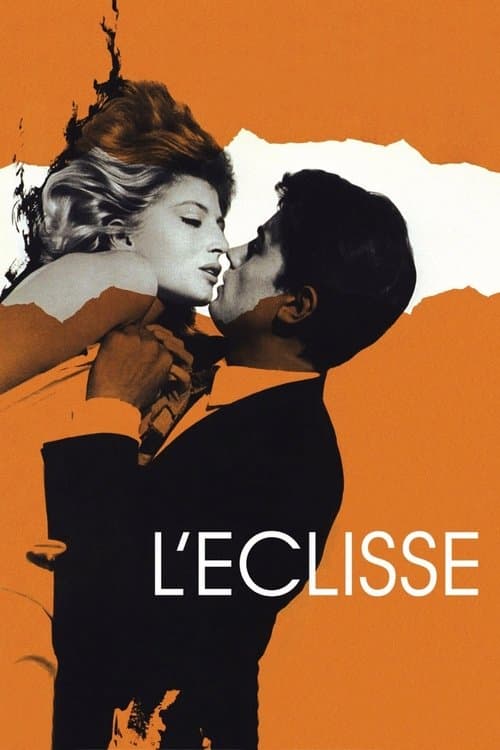
This romantic drama by Michelangelo Antonioni follows the love life of Vittoria, a beautiful literary translator living in Rome. After splitting from her writer boyfriend, Riccardo, Vittoria meets Piero, a lively stockbroker, on the hectic floor of the Roman stock exchange. Though Vittoria and Piero begin a relationship, it is not one without difficulties, and their commitment to one another is tested during an eclipse.
8 min read
Release Year: 1962
Rating: 7.683/10
Runtime: 126 minutes
By Ellis Carver
L'Eclisse (1962): Ending Explained
Michelangelo Antonioni's L'Eclisse (1962) stands as a cornerstone of modernist cinema, a meditative exploration of alienation, desire, and the fragility of human connection in post-war Italy. Starring Monica Vitti as the enigmatic Vittoria and Alain Delon as the impulsive Piero, the film unfolds with deliberate pacing, capturing the rhythms of urban life and emotional drift. As an ending that famously eschews resolution, it invites viewers to confront the void at the heart of modern existence. In this L'Eclisse ending explained, we'll unpack the final moments, their symbolic weight, and the profound ambiguities they leave behind, revealing why Antonioni's vision continues to resonate in an era of fleeting relationships.
Quick Recap
L'Eclisse opens on a jarring note of dissolution: Vittoria, a young literary translator in Rome, ends her stagnant relationship with the intellectual Riccardo after a night of futile conversation. Walking through the stark, modernist architecture of the EUR district at dawn, she embodies a quiet restlessness, seeking something undefined beyond the emotional numbness of her life. This breakup sets the tone for her aimless wanderings, as she navigates a world of superficial bustle—the frenzied Rome Stock Exchange, where her mother obsessively chases profits, and social gatherings laced with colonial anxieties and hollow diversions.
Vittoria's path crosses with Piero, a brash young stockbroker whose vitality contrasts her introspection. Introduced through her mother's financial dealings, their encounters spark a tentative romance amid chaotic settings: a stolen joyride in his Alfa Romeo, a grim visit to a car crash site where a drunk driver perishes, and playful romps that briefly pierce her detachment. Yet, their connection feels ephemeral, shadowed by Vittoria's inner turmoil and Piero's material preoccupations. As they grow closer—sharing kisses, wrestling like children, and making love in his family's opulent apartment—the film builds toward a promised rendezvous, testing whether their bond can endure the mundane pressures of daily life. By the time they agree to meet on a Sunday evening, the stage is set for a confrontation with isolation, mirroring the broader eclipse of meaning in their world.
What Happens in the Ending
The final sequence of L'Eclisse unfolds with Antonioni's signature restraint, shifting from the intimacy of Vittoria and Piero's relationship to a haunting tableau of absence. After a day of escalating affection—lying on a hillside where Vittoria confesses her conflicted feelings ("I wish I didn't love you or that I loved you much more"), followed by a playful office tryst—they part with optimism. Embracing amid the ringing of an alarm clock, they vow to see each other every day and set a specific meeting: 8:00 p.m. that evening at "the usual place" near Vittoria's apartment in the EUR district, on Sunday, September 10, 1961.
As the clock ticks toward the appointed hour, the film cuts away from the lovers entirely. We observe the mundane life of the neighborhood awakening to evening routines: a nurse pushes a baby carriage past indifferent pedestrians; workers converse at a café; a soldier stands alone on a corner, waiting in vain. The camera lingers on everyday objects and spaces—the barren street, a water barrel where Vittoria earlier dropped a piece of wood, an empty lot bordered by unfinished buildings—building a sense of anticipation that dissolves into emptiness. Neither Vittoria nor Piero appears at the meeting spot. Instead, the sequence culminates in the solar eclipse, a natural phenomenon that darkens the sky and casts an otherworldly pall over the landscape. The film closes without dialogue or resolution, leaving viewers in the shadow of this celestial event, as the promised connection evaporates into silence.
This non-event is the literal crux of the ending: no dramatic confrontation, no lovers' reunion or breakup—just the quiet failure of expectation, underscored by the eclipse's transient obscurity.
The Meaning Behind the Ending
At its core, the ending of L'Eclisse symbolizes the eclipse of human connection in a modern world dominated by isolation and superficiality. The solar eclipse, occurring precisely when the rendezvous should happen, serves as a metaphor for the momentary blackout of understanding between Vittoria and Piero. Just as the moon obscures the sun, external forces—societal pressures, personal doubts, and the grind of urban existence—eclipse their fragile bond, revealing the illusion of intimacy. Antonioni uses this celestial event not as spectacle but as a contemplative pause, inviting us to reflect on how desire flickers and fades, much like the light returning after darkness.
Thematically, the ending underscores the moral complexity of emotional detachment. Vittoria's earlier unease—"Two people shouldn't know each other too well if they want to fall in love"—echoes here, suggesting that true connection demands vulnerability the characters cannot sustain. The empty street scenes humanize this void, portraying ordinary lives as a chorus of quiet desperation: the waiting soldier, the chatting café patrons, all oblivious to the personal eclipse unfolding nearby. This societal commentary critiques Italy's economic boom of the 1960s, where stock market frenzies and material pursuits (like Piero's fixation on his damaged car over a dead body) hollow out authentic relationships, leaving individuals adrift in a landscape of concrete and transience.
Character Arcs and Resolution
Vittoria's arc traces a journey from quiet rebellion against emotional stagnation to a deeper embrace of ambiguity, only to confront its limits. Beginning with her decisive breakup with Riccardo, she seeks renewal through fleeting wonders—the wind in the fences, clouds from an airplane, a balloon released into the sky—yet her encounters with Piero expose the psychology of her alienation. Her playful moments with him reveal a yearning for vitality, but her confessions on the hill betray a profound inner conflict: love feels both essential and impossible. The ending resolves her arc not with closure but with suspension; by not appearing, she embodies the film's thesis on incommunicability, her absence a psychological retreat into the safety of solitude.
Piero, conversely, represents impulsive modernity—charming yet shallow, more attuned to profits and possessions than emotional depths. His arc peaks in boyish exuberance during their intimacies, but his failure to meet Vittoria highlights his unreliability, rooted in a self-centered worldview. There's no tidy resolution; instead, their mutual no-show suggests a subconscious recognition that their differences—her contemplative drift versus his material drive—doom the relationship. This open-ended conclusion amplifies the moral complexity: neither is villainized, but both are implicated in the failure, underscoring the human truth that connection requires more than attraction—it demands bridging irreconcilable inner worlds.
Alternate Interpretations
The ambiguity of L'Eclisse's ending lends itself to multiple readings, each enriching its contemplative depth. One interpretation views the non-meeting as a deliberate act of self-preservation: Vittoria, haunted by her breakup's disillusionment and the colonial hypocrisies she witnesses, may consciously withdraw to avoid repeating past pains, while Piero, entangled in his stockbroker's chaos, simply forgets amid distractions. This sees the eclipse as a liberating shadow, allowing escape from a doomed liaison.
Alternatively, it could be circumstantial—perhaps a phone call (like the busy line earlier) or an unforeseen event detains them—emphasizing life's unpredictability over personal failing. A more existential lens posits the ending as metaphysical: the eclipse symbolizes a broader spiritual blackout, where modern individuals, like the lost man drawing flowers after financial ruin, wander without purpose. Some might even read optimism in the ambiguity; the light returns post-eclipse, hinting at potential renewal, though Antonioni's austere style leans toward the bleaker view of perpetual disconnection.
Themes and Symbolism
The ending reinforces L'Eclisse's central themes of alienation and the search for meaning in a commodified society, subverting traditional romantic narratives by denying catharsis. Symbolism abounds: the water barrel with its floating wood evokes stagnation and forgotten gestures, mirroring Vittoria's emotional limbo; the unfinished buildings frame a world in perpetual construction, yet emotionally barren. The eclipse itself subverts natural harmony, transforming a rare beauty into an omen of obscurity, commenting on how societal forces—economic frenzy, colonial legacies—eclipse personal agency.
Broader human truths emerge in the moral ambiguity: Antonioni probes the psychology of desire, showing how fear of intimacy perpetuates isolation. The ending subverts expectations of resolution, challenging viewers to confront their own relational eclipses, where societal commentary on 1960s Italy extends to timeless questions of authenticity amid modernity's illusions.
Final Thoughts
Antonioni's ending in L'Eclisse works masterfully because it trusts the audience to inhabit the discomfort, transforming absence into a profound presence. By forgoing melodrama for meditative emptiness, it elevates the film from romance to philosophical inquiry, leaving us to ponder the eclipses in our own lives. This isn't a failure of storytelling but a triumph of insight—subtle, haunting, and utterly human. For those grappling with L'Eclisse's enigmatic close, it reminds us that sometimes, the most truthful endings are the ones that fade into shadow, inviting endless reflection.