Edward Scissorhands (1990): Ending Explained
"Innocence is what he knows. Beauty is what she sees."
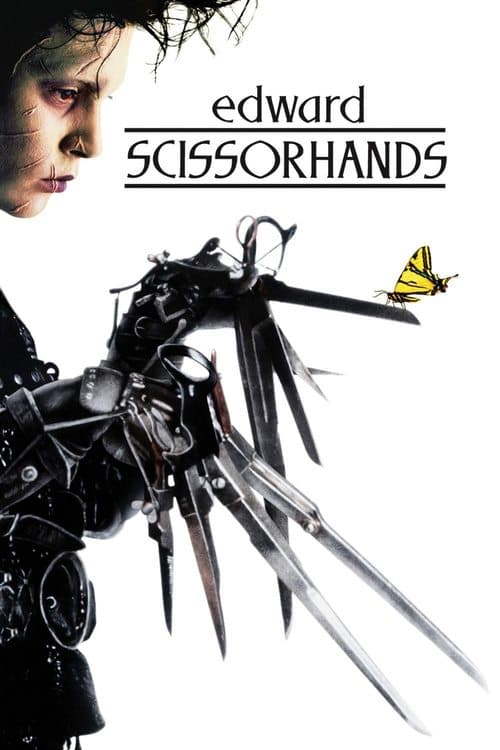
A small suburban town receives a visit from a castaway unfinished science experiment named Edward.
8 min read
Release Year: 1990
Rating: 7.718/10
Runtime: 105 minutes
By Ellis Carver
Edward Scissorhands (1990): Ending Explained
In Tim Burton's whimsical yet poignant fairy tale Edward Scissorhands (1990), the ending delivers a heartbreaking blend of tragedy, acceptance, and quiet magic. As an unfinished creation thrust into a conformist suburban world, Edward's story culminates in a finale that explores the pain of unbridgeable differences. This ending explained dives deep into the literal events, symbolic layers, and emotional resonances, revealing how the film critiques societal norms while celebrating enduring love. If you're searching for clarity on Edward's fate, Kim's choice, or the snow's significance, read on for a thoughtful breakdown.
Quick Recap
Edward Scissorhands opens in a pastel-hued suburban neighborhood where an elderly woman—later revealed as Kim—tells her granddaughter a bedtime story about the origins of snow. Flashback to years earlier: Peg Boggs, an Avon saleswoman, discovers Edward, a gentle, ageless humanoid with scissor blades for hands, living alone in a dilapidated Gothic mansion. Created by an inventor who died before completing him, Edward is innocent and isolated, lacking hands or social understanding. Peg brings him home to her family, including her husband Bill, son Kevin, and daughter Kim, where he quickly falls in love with the beautiful but initially wary Kim.
Edward wins over the neighborhood with his unique talents, trimming hedges into fantastical shapes, grooming dogs, and styling hair. However, jealousy and misunderstanding erode his welcome. Kim's boyfriend Jim manipulates Edward into a burglary that leads to his arrest, though he's released due to his childlike naivety. Rumors spread—fueled by a spurned neighbor, Joyce—portraying him as dangerous. By Christmas, Edward is an outcast, shunned by all except the Boggs family. In a tender moment, he carves an ice sculpture of Kim, its shavings falling like snow, allowing her to dance in a rare wintry wonder. But chaos erupts when Jim's drunken friend nearly runs over Kevin; Edward saves the boy but accidentally cuts him, sparking accusations of violence. Edward flees to the mansion as an angry mob gathers below.
What Happens in the Ending
The final act unfolds with raw intensity in the shadowy heights of the inventor's mansion, contrasting the sterile suburbia below. After saving Kevin and being misjudged by witnesses, Edward retreats to his isolated home on the hill. The vengeful neighbors, led by their fears and prejudices, follow in pursuit, turning the Gothic lair into a besieged fortress. Kim, desperate to protect Edward, races to the mansion ahead of the crowd.
Inside, Kim reunites with Edward in a moment of fragile tenderness. She asks him to hold her, carefully arranging his scissor hands to allow a safe embrace, underscoring their deep but doomed connection. But Jim, consumed by jealousy and rage, has trailed Kim. Armed with a gun stolen from his father, he bursts in and fires at Edward, who dodges but refuses to retaliate at first. Jim then grabs a fire poker and savagely beats Edward, who endures the assault with heartbreaking restraint—his innocence clashing against Jim's brutality. The turning point comes when Jim strikes Kim as she tries to intervene, knocking her down. Enraged beyond endurance, Edward finally fights back: he stabs Jim in the stomach with his blades and pushes him through a window, sending the bully plummeting to his death on the mansion's jagged roof below.
In the aftermath, Kim and Edward share a profound goodbye. She confesses her love, and they kiss—an intimate act that acknowledges their bond while accepting its impossibility in a world that rejects Edward's otherness. As the neighbors clamor outside, Kim descends to mislead them. She claims that Edward and Jim killed each other in a mutual struggle, fabricating details about the roof collapsing and even presenting a severed scissor-hand (implied to be from the fight or the mansion's debris) as "proof" of Edward's demise. The mob, satisfied by the lie, disperses, leaving the suburb in uneasy quiet.
The story circles back to the frame narrative: the elderly Kim finishes recounting the tale to her granddaughter, revealing herself as the young woman from the story. She explains she never returned to the mansion, choosing to let Edward remember her in her youth rather than confront the passage of time. Yet she believes he endures—ageless and immortal as an artificial being—still alive atop the hill. "It wouldn't be snowing if he wasn't up there," she muses, tying the suburb's rare snowfalls to Edward's ice carvings. The film closes with Edward sculpting more delicate figures of his memories with Kim, the shavings drifting down like snow over the neighborhood. A final image flashes to young Kim dancing joyfully beneath the flakes, as elderly Kim adds softly, "Sometimes you can still catch me dancing in it."
The Meaning Behind the Ending
At its core, the ending of Edward Scissorhands symbolizes the tragic isolation of the outsider in a society that demands conformity. Edward's scissor hands, once tools of creation and beauty, become instruments of destruction only when pushed to defend the innocent—a poignant metaphor for how the world twists the misunderstood into monsters. The snow, born from his ice sculptures, represents fleeting purity and memory; it's a gentle rebellion against the suburb's artificial sameness, where winter never naturally falls. This ethereal element ties Edward's inner world to the external one, suggesting that true wonder persists through art and recollection, even in separation.
Thematically, the finale grapples with unfulfilled love as a form of moral complexity. Kim and Edward's kiss isn't triumphant but contemplative—a recognition that some connections transcend physical possibility, surviving in the heart's quiet spaces. It critiques suburban hypocrisy: the neighbors, who once adored Edward's talents, now hunt him like a witch hunt, exposing the fragility of acceptance when it challenges norms. Yet there's redemptive grace in Kim's lie; by "killing" Edward in their eyes, she grants him freedom from persecution, highlighting the human truth that love sometimes requires sacrifice and fabrication to endure.
Character Arcs and Resolution
Edward's arc resolves in bittersweet evolution from passive innocent to active protector. Homeschooled in isolation, he enters the world wide-eyed and trusting, only to learn its cruelties through betrayal and rejection. His final act—defending Kim and Kevin—marks a psychological breakthrough: he claims agency, wielding his "flaws" not for harm but for love's sake. Yet this costs him everything, reinforcing his eternal unfinishedness; he retreats to solitude, his immortality a curse that traps him in perpetual longing.
Kim's journey is one of awakening from conformity to compassionate maturity. Initially repelled by Edward's appearance, she grows to see his soul, breaking free from Jim's toxicity and embracing vulnerability. Her choice to lie and stay away cements her as the story's moral anchor—aging gracefully while honoring their bond through memory. For the Boggs family, resolution brings quiet resilience; they're outcasts but united, with Peg's initial kindness echoing as the catalyst for Edward's brief integration. Jim's death, meanwhile, arcs as a cautionary fall: his jealousy devolves into violence, underscoring how unchecked insecurity destroys.
Alternate Interpretations
The ending's ambiguity invites multiple lenses, particularly around Edward's fate and the snow's reality. One view posits the snow as literal magic—Edward's ageless existence ensuring his subtle influence on the world below, a romantic affirmation of enduring spirit. Alternatively, it could be metaphorical: the snow symbolizes Kim's preserved memories, projecting Edward's presence onto natural phenomena as a coping mechanism for loss. Is Edward truly immortal, or has he perished in quiet obscurity? The film leaves this open, allowing interpretations of hope (he lives, creating eternally) versus melancholy (Kim's belief is a comforting illusion, masking grief). This duality enhances the ending's emotional depth, mirroring life's unresolved mysteries.
Themes and Symbolism
The finale reinforces Edward Scissorhands' core themes of alienation and the beauty in imperfection. Edward embodies the eternal outsider, his mansion a towering symbol of gothic isolation against the suburb's cookie-cutter facade—commenting on how society devours individuality. Moral complexity shines in the gray areas: Edward's violence, though defensive, blurs innocence with consequence, probing human truths about survival in a judgmental world.
Symbolism abounds—the ice sculptures evoke fragile artistry, shavings as ephemeral joy that "snows" on the ungrateful below. The Christmas setting subverts holiday warmth, turning it into a backdrop for exile, while the frame narrative adds layers of generational wisdom, suggesting stories as bridges across time and loss. Ultimately, the ending subverts fairy-tale happily-ever-afters, favoring contemplative acceptance over resolution.
Final Thoughts
Tim Burton's ending for Edward Scissorhands works masterfully because it resists tidy closure, lingering in the ache of what could have been. It's a substantive meditation on love's limits and society's shallowness, delivered with visual poetry that makes the profound feel intimate. For audiences grappling with difference or longing, it affirms that even severed connections can scatter beauty like snow—subtle, persistent, and transformative. This finale doesn't just explain Edward's world; it invites us to dance in its flakes, pondering our own unfinished edges.