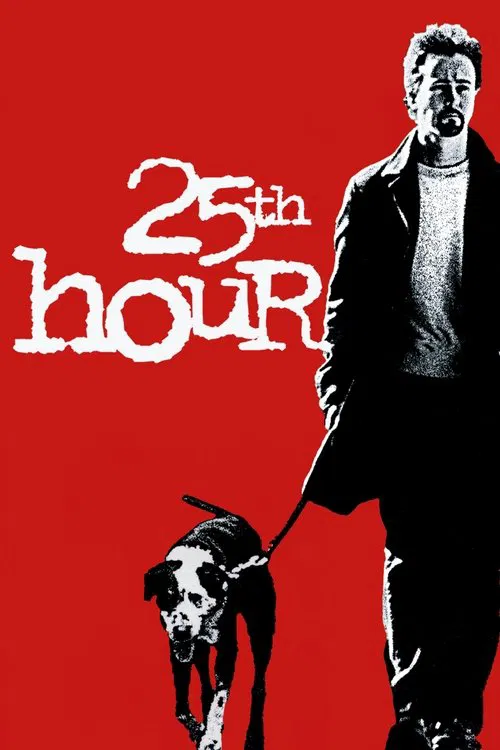
25th Hour (2002): Ending Explained
25th Hour ends by refusing the escape it imagines, leaving Monty driving past the bridge toward prison
8 min read
Release Year: 2002
Rating: 7.3/10
Runtime: 135 minutes
By Ending Explained Team
The short answer
The short answer
Monty Brogan learns on his last day of freedom that his friend Kostya, not his girlfriend Naturelle, sold him out to the DEA. Uncle Nikolai tells him this and offers him the chance to kill Kostya himself in exchange for protection for Monty's father. Monty refuses, walks out, and leaves Kostya to the Russian mobsters. He goes home and apologizes to Naturelle for suspecting her, then gives his dog Doyle to Jacob in the park. He admits he is terrified of being raped in prison and goads Frank into beating him bloody, breaking his nose, on the theory that arriving ugly might keep him alive. Naturelle tries to comfort him as his father James arrives to drive him to Federal Correctional Institution, Otisville. On the Henry Hudson Parkway, James suggests taking the George Washington Bridge and disappearing west, and describes a whole life Monty could have instead: no prison, Naturelle, a family, old age. When the vision ends, they have passed the bridge. They are still driving toward the prison.
The last twenty minutes
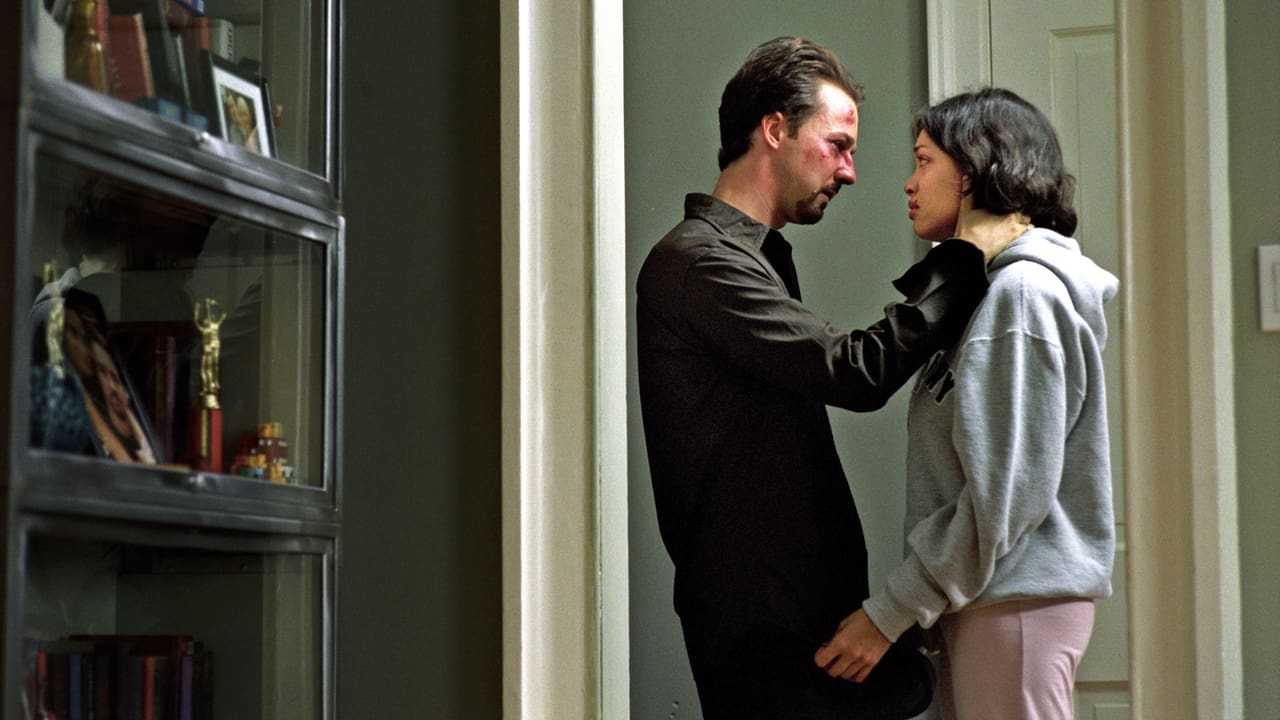
Nikolai's offer
Nikolai tells Monty that Kostya was the informant, not Naturelle, and offers him the chance to kill Kostya himself in exchange for protecting James. Monty refuses because Nikolai was the one who told him to trust Kostya. He walks out, and Kostya dies anyway. Monty loses the friend Nikolai told him to trust, and he loses him by doing nothing.
The apology
Monty goes back to the apartment and apologizes to Naturelle for mistrusting her. The person he spent the day suspecting turns out to be innocent, which means the mistrust was pointed at the wrong person while the real rat stayed close.
Giving up the dog
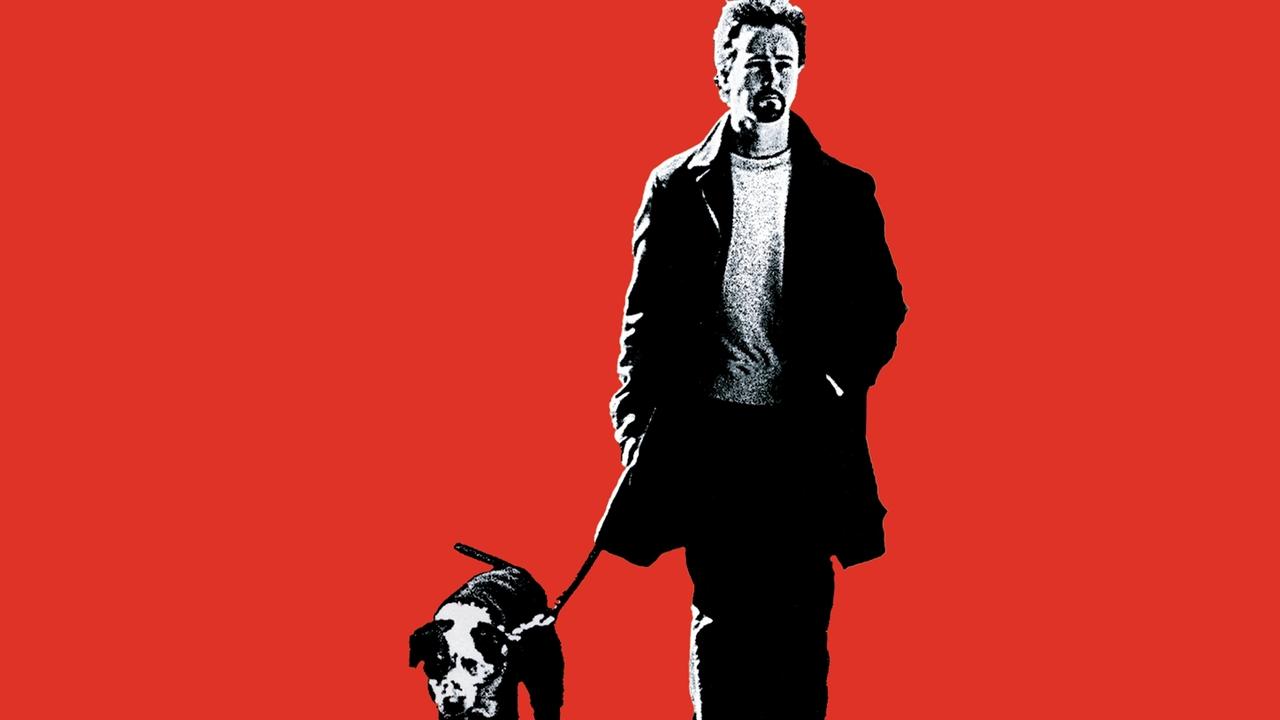
In the park, Monty hands Doyle over to Jacob. Doyle is the animal Monty found injured in the road years earlier and chose not to kill after looking him in the eye, the one living thing he is shown to have saved. Handing him off marks the end of the version of Monty who had something to take care of.
The beating
Monty tells Frank he is terrified of being raped in prison and asks Frank to beat him, so that he enters the facility already damaged and maybe less of a target. Frank refuses. Monty goads him until Frank does it, and Monty is left bruised and bloody with a broken nose. The damage here is not just physical. Monty has talked his childhood friend into hurting him, and Frank, who told Jacob he'd never see Monty again, is the one who did it.
The car
Naturelle tries to comfort Monty as James arrives to take him to Otisville. Whatever the two of them had, this is the last of it for seven years, and it ends with Monty's face already broken.
Past the bridge
On the drive upstate, Monty sees the parade of faces from the city streets again. James suggests taking the George Washington Bridge and going west into hiding, and gives Monty a vision of a future where he skips prison, reunites with Naturelle, starts a family, and grows old. When the vision stops, they are past the bridge and still headed for the prison. James offered the turn. Nobody took it.
The ledger
What he gains
Monty Brogan gets the truth about who betrayed him, an apology he gets to make to Naturelle, and a father willing to throw away his own life to drive him into hiding. He also gets the beating he asked for, which he believes buys him a better chance inside.
What he pays
Monty Brogan loses Kostya, Doyle, his face, Naturelle, and the westbound turn, in that order. He is on the road to Otisville, bruised and bloody, his nose broken, headed for a place he has described as rape and no future.
What he gains
James Brogan gets his son for one more car ride, and the chance to say the thing he has been holding: go west, disappear, live.
What he pays
James Brogan has to keep driving. He makes the offer, watches it go untaken, and keeps driving toward the prison.
What she gains
Naturelle Riviera is cleared. Monty apologizes for suspecting her, and she is not the one who turned him in.
What she pays
Naturelle Riviera still watches him leave in the state Frank left him in, and still has seven years of a life built on drug money to sit in.
What he gains
Frank Slaughtery gets to be the friend who refused, and then the friend who did it anyway when Monty pushed. He gets the last thing Monty asked anyone for.
What he pays
Frank Slaughtery broke his childhood friend's nose on request. He is the one who said, earlier in the night, that after this night he would never see Monty again.
What he gains
Jacob Elinsky gets Doyle, the dog, from Monty in the park.
What he pays
Jacob Elinsky gets the dog and the memory of Mary frozen in the bathroom when he tried to kiss her, and of the student Monty invited into the club while she was underage.
What he gains
Kostya gets nothing. He is left behind when Monty walks out of Nikolai's, and the Russian mobsters kill him.
What he pays
Kostya betrays Monty, gets exposed by Nikolai, and is left to the mobsters when Monty walks out.
The irony
Kostya tells Monty it was Naturelle, the agents say the same, and Monty asks Frank to find out. The person Monty mistrusts is the one who was loyal. The person he keeps close is the one who sold him. And when Nikolai hands him the chance to punish the actual betrayal, Monty refuses because Nikolai was the one who told him to trust Kostya. He walks out, and Kostya dies anyway. Monty doesn't save Kostya. He just doesn't have to watch.
The larger irony sits in the car. James offers the escape Monty's dread of prison makes imaginable, and the film gives it to him as a full imagined life, the wife, the kid, the years. Then it takes it back. The bridge is behind them. The vision stops and the drive continues. The film says no for him, by simply continuing the drive. That is the move that makes 25th Hour land where it does: the escape isn't refused in a speech, it's refused by the car staying in its lane.
Did anyone get a warning
The opening dog scene sets up the ending. Monty and Kostya find the injured dog in the road, Monty means to put the dog down, then looks him in the eye and changes his mind. That dog becomes Doyle, and Doyle is what Monty gives away in the park. The whole film is built on that one reversal, a man who chose not to end something when he had the chance, and the ending is the same choice arriving from the other direction: Monty has the chance to end Kostya, is offered it directly by Nikolai, and walks out. The difference is that the first time, the mercy stuck. The second time, Kostya dies anyway, and Monty is in the car.
Released 15 months after Sept. 11, 2001, Spike Lee's 25th Hour is the only great film dealing with the Sept. 11 tragedy... 25th Hour is as much an urban historical document as Rossellini's Open City, filmed in the immediate aftermath of the Nazi occupation of Rome
The verdict
The verdict
Monty comes out of this worse off, and the film doesn't pretend otherwise. He loses Kostya, Doyle, his face, Naturelle, and the westbound turn, in that order, over the course of a single evening. The one thing he keeps is the chance to enter Otisville on his own terms, or what he thinks are his own terms, and the film is honest that this isn't much of a consolation. What makes the ending stick is that it doesn't punish Monty for refusing Nikolai's offer. It just declines to reward him. He does the decent thing with Kostya and Kostya dies. He apologizes to Naturelle and still leaves her. He gets the beating he asked for and it buys him nothing the film lets us see. James offers the life, Monty doesn't take it, and the car keeps going. Read that way, 25th Hour isn't a film about a man who deserves prison. It's a film about a man who has run out of moves that change anything, and the last shot is the proof: the bridge behind them, the prison ahead, and his father still driving.