Heat (1995): Ending Explained
"A Los Angeles crime saga."
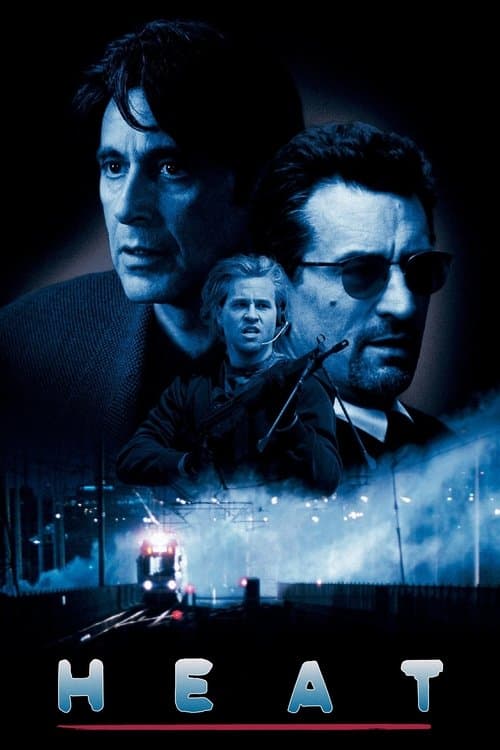
Obsessive master thief Neil McCauley leads a top-notch crew on various daring heists throughout Los Angeles while determined detective Vincent Hanna pursues him without rest. Each man recognizes and respects the ability and the dedication of the other even though they are aware their cat-and-mouse game may end in violence.
8 min read
Release Year: 1995
Rating: 7.9/10
Runtime: 170 minutes
By Ellis Carver
Heat (1995): Ending Explained
As Ellis Carver, I've long admired Michael Mann's Heat for its unflinching portrayal of men trapped in cycles of obsession and isolation. This 1995 masterpiece isn't just a crime thriller—it's a meditation on the human cost of unwavering commitment, where professional codes eclipse personal bonds. In this ending explained, we'll dissect the film's climactic sequence, unpacking its literal events, symbolic weight, and the profound psychological undercurrents that make it one of cinema's most poignant finales. If you're searching for a Heat ending breakdown, including Neil McCauley's fate and Vincent Hanna's moral crossroads, read on for a thoughtful exploration of its depths.
Quick Recap
Heat centers on the inexorable collision between master thief Neil McCauley (Robert De Niro) and relentless LAPD detective Vincent Hanna (Al Pacino), two isolated souls whose professional lives define—and devastate—their personal ones. McCauley assembles a crew for high-stakes heists in Los Angeles, starting with a $1.6 million armored car robbery gone awry due to the impulsive Waingro (Kevin Gage), who murders a guard and forces the team to eliminate witnesses. This sets off a chain of betrayals: McCauley plans to off Waingro but loses him, while Hanna's team investigates, uncovering the crew's next targets. McCauley's solitary code—no attachments, always ready to flee in "30 seconds flat"—begins to crack as he forms a tentative bond with Eady (Amy Brenneman), a graphic designer who sees past his facade.
Tensions escalate with a botched warehouse stakeout and a vengeful ambush from bond owner Roger Van Zant (William Fichtner). Hanna and McCauley share a pivotal coffee meeting, bonding over their mutual isolation—Hanna's crumbling third marriage to Justine (Diane Venora) and troubled stepdaughter Lauren (Natalie Portman), McCauley's self-imposed emotional exile—yet affirming they'll kill each other if duty demands. Waingro allies with Van Zant, torturing crew member Trejo (Danny Trejo) for intel on the crew's $12 million bank heist. The robbery erupts into a brutal downtown shootout, claiming lives on both sides: crew members Michael Cheritto (Tom Sizemore) and driver Don Breedan (Dennis Haysbert) die, as does Hanna's detective Bosko (Ted Levine), with Shiherlis (Val Kilmer) wounded but escaping. McCauley euthanizes the dying Trejo, slays Van Zant, and learns Waingro's hiding spot from fence Nate (Jon Voight). Meanwhile, Hanna saves Lauren from a suicide attempt, shares a fragile reconciliation with Justine (knowing it won't last), and uses Waingro as bait. Shiherlis, disguised, gets a silent farewell from wife Charlene (Ashley Judd) at her safe house before vanishing. As McCauley prepares to flee to New Zealand with Eady, revenge pulls him back one last time.
What Happens in the Ending
The finale unfolds with taut precision, blending quiet introspection and explosive action to cap McCauley's arc. Having killed Van Zant and solidified his escape plan, McCauley returns to Eady, who discovers his criminal life but chooses to leave with him anyway—a rare breach of his "30 seconds" rule against attachments. Nate tips him off to Waingro's location at a hotel, and despite his imminent flight, McCauley succumbs to vengeance, abandoning caution for a personal reckoning.
Posing as hotel security, McCauley triggers the fire alarm to evacuate the building, creating chaos amid the confusion of guests fleeing into the night. He slips into Waingro's room and executes him with cold efficiency, avenging the crew's downfall and the armored car murders that spiraled everything out of control. As McCauley emerges, Hanna—having anticipated the move and monitored the hotel—spots him from afar. McCauley locks eyes with Hanna and, true to their diner pact, bolts without hesitation, leaving Eady waiting alone in the car. She watches him vanish into the crowd, her face a mask of dawning abandonment.
The pursuit spills onto the rain-slicked tarmac of Los Angeles International Airport (LAX), a vast, shadowy expanse of freight terminals and runways under the cover of darkness. Hanna chases McCauley through the dimly lit cargo areas, their footsteps echoing like a ritualistic duel. McCauley nearly gains the upper hand, circling behind Hanna in the gloom, but Hanna spins and fires first, striking McCauley in the chest. Wounded and collapsing amid the desolate airport fields, McCauley clings to life as Hanna approaches. In a moment of raw vulnerability, Hanna cradles McCauley's hand, their fingers intertwining. They share a silent gaze of mutual recognition—two men who finally see their shared solitude—before McCauley slips away, dying in Hanna's grasp as planes roar overhead.
The Meaning Behind the Ending
At its core, the ending of Heat symbolizes the inescapable gravity of one's chosen path, where professional identity devours personal possibility. The airport chase isn't mere action; it's a metaphorical liminal space—a threshold between escape and oblivion—highlighting McCauley's fatal deviation from his creed. By pursuing Waingro, he forsakes the New Zealand flight, underscoring the theme of vengeance as a seductive trap that binds men to their destructive cycles. The rain-drenched tarmac, vast and indifferent, mirrors the moral wasteland of their lives: isolated figures dwarfed by society's machinery, much like the indifferent sprawl of Los Angeles itself.
Hanna's final act—holding McCauley's hand—carries profound emotional weight, representing a fleeting bridge across the law-crime divide. It's not redemption but acknowledgment: both men, defined by obsession, find in each other a mirror to their isolation. This gesture humanizes the violence, suggesting that true connection emerges only in death's shadow, a commentary on how societal roles (cop, thief) foster alienation while revealing our shared human frailty. Thematically, it probes moral complexity—Hanna kills not out of hatred but necessity, yet comforts his foe, blurring lines between hunter and hunted.
Character Arcs and Resolution
Neil McCauley's journey culminates in tragic irony: the thief who preached detachment dies attached to revenge, his arc a cautionary tale of hubris. From solitary heist-master to a man risking all for Eady and retribution, his death resolves his isolation in poignant defeat—understood at last, but too late. It affirms his psychology: crime as a code of honor, yet one that demands total surrender.
Vincent Hanna's arc finds partial closure amid ongoing turmoil. His professional triumph—nabbing McCauley—comes at the cost of further personal fracture, as seen in his brief reconciliation with Justine, marked by resigned honesty about their doomed marriage. Saving Lauren humanizes him, showing glimmers of paternal warmth amid his workaholic detachment. Yet, comforting McCauley reveals his deepest truth: Hanna craves the connection his life denies, resolving his arc not in victory but quiet empathy, a man forever chasing shadows.
For survivors like Shiherlis, escape offers tentative hope—his farewell to Charlene hints at redemption through letting go—while Eady's abandonment underscores the collateral damage of these men's worlds.
Alternate Interpretations
While Heat's ending is largely unambiguous in its events, its emotional ambiguity invites multiple lenses. One view sees Hanna's hand-holding as paternal mercy, a cop granting a worthy adversary dignity in death, subverting the trope of triumphant justice. Alternatively, it could symbolize Hanna's envy: by killing McCauley, he eliminates the one soul who truly comprehends his isolation, dooming himself to eternal solitude. Some interpret McCauley's final gaze as regret—not for crime, but for forsaking Eady—highlighting the film's exploration of love's redemptive potential, thwarted by ingrained fatalism. These readings emphasize the ending's contemplative openness, allowing viewers to project their own moral ambiguities onto the characters' silent exchange.
Themes and Symbolism
The ending reinforces Heat's core themes of existential isolation and the profane poetry of professional zeal. McCauley and Hanna embody the societal commentary on American masculinity: men whose dedication to "the job" (heist or hunt) erodes family and self, reflecting broader critiques of a work-obsessed culture where personal bonds are luxuries. Symbolically, the LAX tarmac evokes transience—planes symbolize unattainable freedom—while the darkness amplifies psychological shadows, their chase a dance of mirrored fates. Waingro's death subverts chaos's reign, affirming order's brutal necessity, yet the hand-clasp humanizes it, suggesting that beneath the violence lies a yearning for connection in a fragmented society. Overall, it subverts the crime genre's black-and-white morality, portraying both sides as tragically human.
Final Thoughts
Michael Mann's ending to Heat endures because it rejects easy catharsis, opting instead for a contemplative ache that lingers like the film's rainy ambiance. It works masterfully by balancing visceral action with introspective depth, forcing us to confront the human truths beneath the gunfire: that obsession forges profound respect but exacts an irrecoverable toll. McCauley's death isn't defeat—it's release—while Hanna's "victory" tastes of ash, a subtle indictment of lives half-lived. For audiences grappling with work-life imbalances or moral gray areas, this finale resonates as both warning and elegy, cementing Heat as a timeless study in quiet devastation. If you've revisited the film, what does that final grip mean to you?