Joker (2019): Ending Explained
"Put on a happy face."
During the 1980s, a failed stand-up comedian is driven insane and turns to a life of crime and chaos in Gotham City while becoming an infamous psychopathic crime figure.
8 min read
Release Year: 2019
Rating: 8.131/10
Runtime: 122 minutes
By Ellis Carver
Joker (2019): Ending Explained
As Ellis Carver, I've long been fascinated by how films like Joker peel back the layers of human fragility, exposing the raw nerves of a society on the brink. Directed by Todd Phillips, this 2019 origin story for one of cinema's most iconic villains isn't just a character study—it's a mirror held up to our collective neglect and the chaos that festers in its wake. The ending, in particular, lingers like an unanswered laugh, blending visceral action with profound ambiguity. In this ending explained, we'll dissect what unfolds, why it resonates, and the moral complexities it leaves us pondering. If you've been searching for a breakdown of the Joker's final descent—or ascent, depending on your view—this is your guide.
Quick Recap
In the gritty underbelly of 1980s Gotham City, Arthur Fleck (Joaquin Phoenix) ekes out a living as a party clown and dreams of making it as a stand-up comedian. Plagued by a neurological disorder that triggers uncontrollable laughing fits, Arthur relies on medication funded by dwindling social services. His life unravels after a brutal street attack, leading his coworker to give him a gun for protection. This sets off a chain of events: an accidental gun drop at a children's hospital costs him his job, and a humiliating subway encounter with three wealthy businessmen ends in bloodshed. Arthur kills two in self-defense and the third in cold execution, igniting a spark of unrest among Gotham's disaffected poor, who don clown masks in solidarity.
As Arthur's fragile world crumbles further, he uncovers devastating truths about his identity. A letter from his ailing mother, Penny, suggests he's the illegitimate son of billionaire mayoral candidate Thomas Wayne. This illusion shatters when Thomas denies it, and hospital records reveal Penny's delusions: she wasn't his biological mother but a former Wayne housekeeper who fabricated their shared history amid her own abuse. Arthur's budding romance with neighbor Sophie Dumond? Another hallucination, exposed when she recoils from his uninvited visit. Reeling from betrayal, Arthur smothers Penny in her hospital bed, severing his last tie to a fabricated past. Meanwhile, his failed comedy routine goes viral as mockery on late-night host Murray Franklin's show, where Arthur is derisively dubbed a "joker." Invited back for a live appearance, Arthur exacts revenge, but not before a violent prelude: he brutally murders his abusive ex-coworker Randall while sparing the kind Gary, then incites chaos on a train amid clown protesters, evading pursuing detectives.
What Happens in the Ending
The film's climax erupts in the brightly lit chaos of the Live with Murray Franklin studio. Arthur, now fully embracing his clown persona, demands Murray introduce him as "Joker"—a defiant reclamation of the insult hurled at him earlier. As the show airs live, Arthur doesn't just perform; he unloads. He spins morbid jokes laced with pain, confesses to the subway murders on national television, and launches into a raw rant about society's indifference to the forgotten. He accuses the elite, including Murray, of mocking the suffering masses for entertainment. The audience shifts from laughter to unease, and when Murray calls him out, Arthur delivers a final, chilling punchline: "I just hope my death makes more cents than my life." In a flash, he shoots Murray point-blank in the head, the host's body slumping as the studio descends into pandemonium.
Arthur is swiftly arrested outside the studio, but Gotham is already fracturing. Riots explode citywide, with clown-masked protesters clashing against the establishment. As police transport Arthur in a squad car, looters in a stolen ambulance crash into it, freeing him amid the anarchy. In a pivotal parallel moment, one rioter corners the Wayne family—Thomas, Martha, and young son Bruce—in a shadowy alley. The rioter executes Thomas and Martha execution-style in front of the traumatized Bruce, their blood pooling on the rain-slicked pavement, marking the origin of Batman's enduring scar.
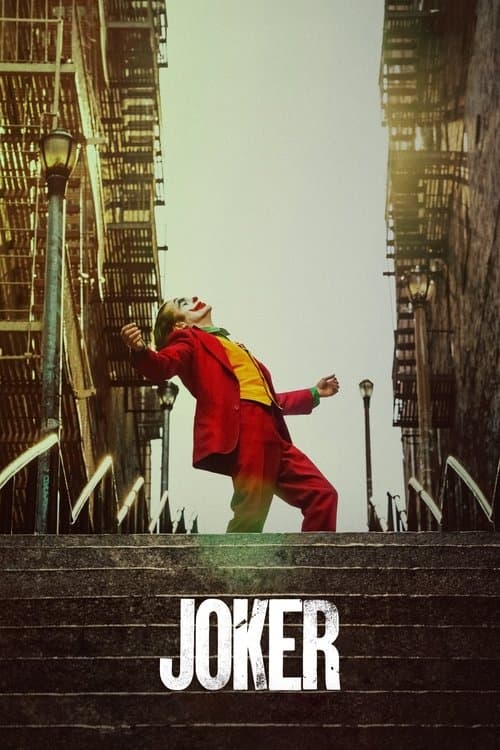
Freed and exalted, Arthur climbs atop the wrecked police car. The rioters cheer him as their anarchic messiah. Spotting blood on his face—perhaps from the crash—he smears it into a grotesque smile, dancing euphorically to the swelling crowd's adulation. The scene cuts to an indeterminate time later at Arkham State Hospital. Arthur, in a therapy session, giggles uncontrollably about an unspoken joke, telling his new therapist she "wouldn't get it." As he walks away, he leaves a trail of bloody shoeprints behind him. An orderly gives chase down the sterile halls, but Arthur's laughter echoes, unresolved.
The Meaning Behind the Ending
This ending isn't a tidy villain origin; it's a symphony of societal collapse, where Arthur's personal madness mirrors Gotham's boiling rage. The Murray assassination broadcasts Arthur's manifesto live, symbolizing how one man's breakdown can catalyze collective fury—his confession isn't hidden villainy but a public indictment of neglect. The riots that follow represent the powder keg of inequality: the clown masks, once symbols of ridicule, become badges of rebellion, turning Arthur's humiliation into a unifying myth.
The blood-smeared smile is the film's starkest metaphor—a perversion of joy born from violence, underscoring how trauma twists the human face into something unrecognizable. It's Arthur's final embrace of the Joker persona, not as escape but as authenticity in a world that denied him humanity. The Wayne murders, timed with Arthur's apotheosis, poetically link his chaos to the birth of order's counterforce (Bruce's future Batman), suggesting cycles of destruction where the oppressed become oppressors. In Arkham, the bloody footprints and chase evoke an endless loop: Arthur's "joke" remains untold, implying his psyche—or the city's—will never heal, only perpetuate the madness.
Character Arcs and Resolution
Arthur's arc is a tragic devolution from aspiring everyman to emblem of nihilism. What begins as a quest for connection—through comedy, his mother, or Sophie—ends in isolation's triumph. By smothering Penny and gunning down Murray, he rejects illusions for a raw, vengeful truth, resolving his arc not in redemption but in liberation through destruction. The Joker isn't born from innate evil but forged in abandonment; his dance atop the car resolves his journey as a dark coronation, where vulnerability hardens into charisma.
Supporting characters meet abrupt, meaningful ends that highlight Arthur's ripple effect. Penny's death severs his delusional roots, forcing confrontation with abuse's scars. Sophie's revelation as fantasy underscores his psychological fractures, her "kind" rejection a mercy he can't accept. Murray, the mocking idol, dies as the punchline to his own cruelty, embodying media's role in dehumanizing the vulnerable. The Waynes' murder, though indirect, cements Arthur's (or the rioters') influence, birthing an antagonist to his legacy. No one finds peace—Gary's sparing is a flicker of mercy, but even he flees the storm Arthur unleashes. These resolutions expose the moral complexity: Arthur's victims are complicit in his pain, yet his violence offers no justice, only escalation.
Alternate Interpretations
The ending's ambiguity invites multiple lenses, particularly the surreal Arkham coda. One reading frames the entire film as Arthur's delusion: the chases him down in Arkham suggests the riots, Waynes' murder, and even the Murray killing might be fantasies spun in his fractured mind, with the bloody prints symbolizing an internal (or impending) rampage. Why else cut to therapy after apparent triumph? It subverts the origin story, implying the "Joker" is just another layer of his illness, not a real-world icon.
Alternatively, it's a linear escalation—Arthur escapes Arkham (or is recommitted post-riot), and the chase signals his ongoing reign of terror, the untold joke a promise of more chaos. Some see the Wayne scene as Arthur's indirect hand in Batman's creation, a karmic irony where his anarchy births heroism. These interpretations hinge on the film's dreamlike tone: is the blood real, or another smear of imagined grievance? Phillips leaves it open, forcing us to question if madness is individual or infectious.
Themes and Symbolism
The ending reinforces Joker's core themes of mental health's invisibility and class warfare's volatility, subverting superhero tropes by humanizing the monster. Arthur's laughter, once a disorder's curse, becomes a weapon of defiance, symbolizing how suppressed pain erupts as spectacle. The clown masks evolve from mockery to masks of the masses, critiquing how society scapegoats the marginalized until they revolt.
Symbolism abounds: the subway killings spark the riots, metaphorically derailing Gotham's facade of civility. Murray's show as a stage for confession highlights media's dual role—amplifying voices or crushing them. The alley murder subverts the classic Batman origin, implying wealth's fall invites vigilantism from below. Overall, it probes moral complexity: Is Arthur a victim radicalized by neglect, or a perpetrator exploiting it? The ending doesn't judge; it indicts us all for fostering such fractures.
Final Thoughts
Joker's ending works because it refuses closure, mirroring life's messier truths—society's ills don't resolve with a bang, but echo in uneasy laughter. It's provocative, not preachy, leaving us to contemplate our own complicity in creating figures like Arthur. In a genre bloated with caped saviors, this contemplative close elevates the film, blending psychological depth with societal sting. If it haunts you, that's the point: the real joke is on all of us.