Saw V (2008): Ending Explained
"You won't believe how it ends."
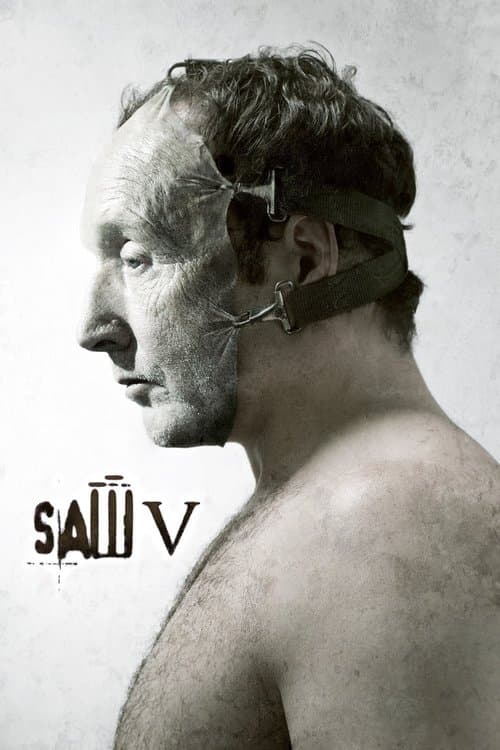
Following Jigsaw's grisly demise, Detective Mark Hoffman is commended as a hero, but Agent Strahm is suspicious, and delves into Hoffman's past. Meanwhile, another group of people are put through a series of gruesome tests.
8 min read
Release Year: 2008
Rating: 6.171/10
Runtime: 95 minutes
By Luna Sterling
Saw V (2008): Ending Explained
As Luna Sterling, I've always been drawn to the shadowy underbelly of horror cinema, where the air hangs thick with dread and every creak of a door echoes like a final judgment. Saw V (2008) plunges us deeper into Jigsaw's labyrinth of moral traps, blending visceral traps with a creeping psychological paranoia that clings like damp rot in an abandoned warehouse. Directed by David Hackl, this installment shifts focus from the original killer's philosophy to the corrosive legacy of revenge and deception. If you're piecing together the film's twisty finale—searching for a Saw V ending explained to unravel its brutal irony—let's dissect it step by step, immersing ourselves in the tension that builds like a noose tightening around the throat.
Quick Recap
In the wake of Jigsaw's death in the previous film, Detective Mark Hoffman emerges as the unlikely hero, having "survived" the meatpacking plant horrors alongside young Corbett Denlon. But FBI Agent Peter Strahm smells something foul in the metallic tang of blood and deceit; he escapes a watery near-death trap and begins unraveling Hoffman's dark secrets. Meanwhile, a new group of five strangers—Ashley, Brit, Charles, Luba, and Mallick—awakes in a dank sewer labyrinth, their necks encircled by bladed collars linked to a wall of razor-sharp menace. A chilling videotape instructs them to defy their selfish instincts and work as one to survive a series of escalating tests, where failure means a swift, decapitating pull or explosive oblivion.
As the tests unfold in rooms thick with the acrid scent of gunpowder and the wet slap of desperation, the group thins: Ashley's hesitation leads to her collar yanking her head into oblivion; Charles sacrifices himself in a bomb-riddled chamber; Luba meets a fatal plunge after Brit snaps her neck in a grim bid for survival. Strahm, piecing together clues from musty case files, uncovers Hoffman's vengeful murder of Seth Baxter—staged as a Jigsaw game after Baxter killed Hoffman's sister—and his forced apprenticeship under John Kramer. Flashbacks reveal Hoffman's hand in earlier traps, from Paul Leahy's aquatic nightmare to the nerve gas house's poisonous haze. The film hurtles toward convergence: the survivors in the sewer grasping the need for collective bloodletting, while Strahm closes in on Hoffman, the air growing heavier with suspicion and the distant drip of inevitable doom.
What Happens in the Ending
The finale uncoils in a suffocating symphony of betrayal and mechanical inevitability, pulling us into the renovated nerve gas house—a relic of past atrocities, its walls whispering of trapped screams and lingering toxins. Strahm, driven by a gnawing paranoia that prickles his skin like unseen eyes in the shadows, tracks Hoffman's signal to this underground lair. He descends into a dimly lit observation room, the air stale and heavy with the faint, coppery echo of old violence. There, amid flickering fluorescent hums, he discovers a foreboding box embedded in the floor, its surface glinting with shards of broken glass that catch the light like jagged teeth.
A tape recorder whirs to life, Hoffman's voice—cold and mocking, laced with the rasp of concealed triumph—urging Strahm to enter the box if he values the truth. But Strahm, his breaths shallow in the claustrophobic space, ambushes the lurking Hoffman, forcing him into the very trap. With a surge of righteous fury, Strahm seals Hoffman inside the glass-filled coffin, the detective's muffled protests vibrating through the thick walls like a heartbeat fading into silence. Victory seems at hand; Strahm's pulse races with the thrill of exposure.
Yet the room betrays him. The door slams shut with a metallic clang that reverberates through the bones, and the walls begin their inexorable squeeze, grinding inward like the jaws of some colossal beast. Desperation mounts as Strahm restarts the tape, Hoffman's words now a venomous prophecy: if he refuses the box, death awaits, and doctored recordings will paint Strahm as Jigsaw's true heir. The agent hesitates, the air thickening with the scent of his own sweat and fear, but pride—or principle—holds him back. He doesn't enter. The walls crush in, the sound a visceral symphony of cracking bones and gurgling finality, reducing Strahm to a broken silhouette. Below, the box descends smoothly into hidden safety, releasing Hoffman unscathed. He emerges, eyes gleaming with sadistic relief, the hero's mask intact as Strahm's body slumps in the debris, framed forever in the killer's narrative.
Parallel to this, in the sewer's final chamber—a cavernous space reeking of mildew and fresh-spilled blood—survivors Mallick and Brit confront a machine demanding ten pints of crimson sacrifice. They slice their arms into whirring saws, the warm gush pooling in a beaker that unlocks the door, their pained gasps underscoring a hard-won unity. But as Erickson discovers them, alerting authorities, the true horror blooms above: Hoffman's ascension, with Strahm's death sealing his deception.
The Meaning Behind the Ending
At its core, the ending of Saw V is a masterstroke of ironic reversal, where the hunter becomes the hunted in a trap of his own unyielding convictions. The crushing room symbolizes the suffocating weight of truth in Jigsaw's world— a psychological vise that demands total surrender. Strahm's refusal to enter the box isn't mere stubbornness; it's a metaphor for the isolation of individualism, echoing the film's mantra to "do the opposite" of instincts. Just as the sewer victims learn cooperation saves lives, Strahm's solitary pursuit dooms him, his body pulverized not by blades but by the very walls of his doubt and isolation. Hoffman's escape reinforces the theme of corrupted redemption: revenge, once a personal catharsis for his sister's murder, has metastasized into a legacy of manipulation, turning Jigsaw's tests into tools for self-preservation.
The sensory horror amplifies this— the grinding walls evoke the inescapable pressure of guilt, while the glass shards in the box represent the painful clarity of confession. Hoffman's survival isn't triumph; it's a hollow echo, binding him deeper to the cycle of violence he sought to control. The ending whispers that in this franchise's moral funhouse, perception is the deadliest trap: Strahm dies a villain in the eyes of the world, his warnings silenced like a drowned scream.
Character Arcs and Resolution
Hoffman's arc culminates in a chilling ascent from vengeful cop to Jigsaw's shadowed successor, his promotion to Detective Lieutenant a bitter crown atop layers of deception. What began as righteous fury over his sister's death evolves into a psychological descent, blackmailed by Kramer into apprenticeship and now fully embracing the killer's ethos for personal gain. His survival in the box resolves his journey as the ultimate survivor— not through heroism, but through cunning betrayal— leaving him isolated yet empowered, the air around him forever tainted by the blood on his hands.
Strahm's path, conversely, arcs toward tragic irony: a dogged investigator whose suspicions sharpen like a blade, only to impale him. His escape from the water box earlier hinted at resilience, but the finale crushes that spark, resolving his arc in gruesome finality. He's the everyman hero undone by the system's blind spots, his death a poignant commentary on institutional failure. For the sewer survivors, Brit and Mallick's blood pact closes their circle of indirect guilt—from the building fire they all enabled—offering redemption through shared pain, though scarred and forever linked by the ordeal's visceral scars.
Alternate Interpretations
While the ending's mechanics are brutally straightforward, its ambiguities invite darker readings. What if Strahm entering the box represented not just physical survival, but a psychological capitulation— becoming "complicit" in Jigsaw's game by accepting Hoffman's narrative? Some might interpret his refusal as noble defiance, a subversion of the franchise's forced morality, suggesting true escape lies in rejecting the traps altogether. Hoffman's unscathed emergence could hint at a larger conspiracy: was the room a mutual test orchestrated by lingering Jigsaw influences, or merely Hoffman's improvised web? These layers add psychological fog, blurring whether the ending affirms cooperation or exposes its futility in a world rigged for the ruthless.
Themes and Symbolism
The finale reinforces Saw V's core themes of interconnected guilt and the perils of selfishness, subverting Jigsaw's original philosophy by showing how apprentices like Hoffman twist tests into personal vendettas. Symbolism abounds: the collars and cables in the sewer evoke societal chains, demanding collective sacrifice over individual flight; the blood beaker literalizes atonement, its warm flow a baptism in shared responsibility. The crushing walls symbolize the franchise's escalating paranoia— psychological tension that builds like rising damp, where truth compresses the soul. Hoffman as the "hidden apprentice" subverts the mentor-protégé dynamic, portraying Jigsaw's legacy as a poisonous inheritance, passed not through ideology but coercion, underscoring how violence begets only more shadowed mirrors.
Final Thoughts
Saw V's ending works its dark magic through relentless tension and a twist that lands like a pendulum's fatal swing— visceral, inevitable, and laced with the bitter aftertaste of irony. It doesn't reinvent the wheel but deepens the franchise's psychological maze, leaving viewers with a lingering chill: in a world of hidden watchers and rigged revelations, who truly escapes? For fans dissecting Jigsaw's web, this finale is a taut reminder of the horror in human flaws, immersive enough to make your own collar feel a little tighter. If it falters, it's in the predictability of the apprentice reveal, but the atmospheric dread and thematic bite make it a standout gut-punch in the series.