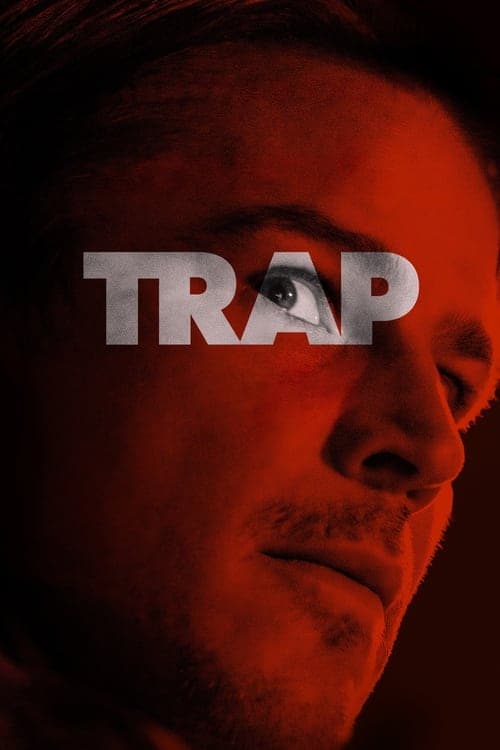
Trap (2024): Ending Explained
"30,000 fans. 300 cops. 1 serial killer. No escape."
A father and teen daughter attend a pop concert, where they realize they're at the center of a dark and sinister event.
8 min read
Release Year: 2024
Rating: 6.26/10
Runtime: 105 minutes
By Luna Sterling
Trap (2024): Ending Explained
In M. Night Shyamalan's Trap (2024), the suffocating grip of deception tightens around a seemingly ordinary father-daughter outing, transforming a vibrant pop concert into a labyrinth of paranoia and pursuit. As audiences search for "Trap ending explained" or dive into the film's chilling twists, this article unravels the finale's visceral layers—its raw tension, psychological undercurrents, and lingering shadows. With Josh Hartnett's haunted performance as Cooper anchoring the dread, the ending doesn't just resolve; it seeps into your skin, leaving a metallic tang of unease.
Quick Recap
Trap opens with the humid buzz of anticipation at a Philadelphia pop concert, where firefighter Cooper Abbott (Josh Hartnett) treats his teenage daughter, Riley (Ariel Donoghue), to a night of Lady Raven's electrifying performance as a reward for her straight-A grades. But beneath the pulsing lights and screaming fans, an oppressive undercurrent emerges: an unprecedented police presence swarms the venue. Whispers from a chatty vendor, Jamie, reveal the FBI's trap—they're hunting "the Butcher," a ruthless serial killer tipped to attend. Unbeknownst to Riley, her affable dad is the monster in question, his phone hiding grainy footage of his latest victim, Spencer, chained in a dim basement, the air thick with unspoken terror.
As the night spirals, Cooper's facade cracks under the weight of surveillance. He swipes Jamie's ID to eavesdrop on police chatter, ignites a chaotic explosion in a food stand to slip onto the roof, and learns the manhunt is spearheaded by sharp-eyed FBI profiler Dr. Josephine Grant (Saleka Shyamalan). Desperate to shield Riley from the encroaching net, Cooper manipulates her dream of becoming Lady Raven's "Dreamer Girl"—a backstage dancer with VIP access—by fabricating a leukemia recovery story. Backstage, the air grows stale with suspicion as police guard every exit. Cornered, Cooper corners Lady Raven herself (also Saleka Shyamalan), whispering his identity and threatening Spencer's remote demise unless she smuggles him and Riley out in her limousine.
The escape fractures into betrayal at the Abbott home. Lady Raven, pulse racing under Cooper's watchful gaze, stalls by dissecting the FBI's profile: a killer haunted by maternal wounds and OCD rituals. She pilfers his phone, barricades in the bathroom to livestream Spencer's location—unleashing a fan-fueled rescue—and outs Cooper to his wife, Rachel (Danielle Deadwyler). Chaos erupts: family locked upstairs, texts to police, a frantic limo getaway thwarted by a mob of incited fans. Cooper slips away through a hidden tunnel, dons a SWAT disguise, and vanishes into the night, the city's sodium glow casting long, jagged shadows over his fleeting freedom.
What Happens in the Ending
The finale plunges us into the Abbott household's dim, pie-scented warmth—a deceptive hearth that reeks of impending fracture. Cooper slinks back home, the adrenaline's bitter aftertaste clinging to him like sweat-soaked clothes. Confronting Rachel in the kitchen's harsh fluorescent light, her face a mask of quiet resolve, she shatters the illusion: she's long suspected him as the Butcher. The anonymous tip? Her doing—a torn ticket receipt planted in a vacant house, baiting the police like a lure in murky water. The air thickens with betrayal's acrid sting as Cooper's rage boils over; he resolves to end it all, slaughtering her before turning the blade on himself, his hands trembling with the weight of exposed sins.
Rachel, voice steady amid the tension's electric hum, deflects with a slice of leftover pie—meant for Riley, its crust flaky and innocent. As they eat, the utensil's scrape against plate echoes like a countdown. Cooper unleashes his venom, accusing her of stealing his years, forcing him to lurk in shadows while his children slipped away. But the sweetness turns sour; the pie, laced with sedatives pilfered from his own tool bag, unravels his mind. Hallucinations bloom in the periphery: his mother's ghostly form materializes, her voice a soothing murmur praising his raw emotion, the first real feeling he's clawed from numbness. The room warps, edges blurring into a psychological fog.
Stumbling toward her, Cooper's world tilts—it's no spectral reunion but Dr. Grant in disguise, her profiler's insight weaponized to mimic his deepest fracture. A taser's crackle pierces the haze, SWAT officers swarming like shadows detaching from walls. Dragged into the stark dawn light, Cooper pauses at Riley's bicycle, its frame a rusted sentinel in the driveway. With mechanical precision—his OCD ticking like a hidden clock—he adjusts a wobbly wheel, then pulls Riley into a tear-streaked embrace, her sobs muffled against his chest, the moment heavy with unspoken finality. Loaded into the police van's cold belly, the door slams shut. Alone in the dim confines, the rumble of tires vibrating through metal, Cooper fishes a bicycle spoke from his sleeve—a sly theft from Riley's bike. With a soft, metallic click, he picks his cuffs, a low laugh bubbling from his throat, dark and unrepentant, as the van fades into the urban sprawl.
A mid-credits sting sharpens the blade: Jamie, the vendor, gapes at news footage in stunned silence, his casual aid to the killer replaying like a nightmare. Vowing to seal his lips at work, his isolation mirrors the film's creeping dread.
The Meaning Behind the Ending
This ending coils around the illusion of control, the pie a poisoned chalice symbolizing domestic betrayal's intimate venom—sweet on the tongue, lethal in the veins. Cooper's hallucination of his mother isn't mere delirium; it's a visceral excavation of his psyche, Grant's profile manifesting as a maternal phantom that both soothes and ensnares. The praise for "real emotion" underscores the film's psychological core: the Butcher's killings as a numb ritual to fill an emotional void, now pierced by familial rupture. Rachel's drugged pie, drawn from his own arsenal, flips the script—his tools of torment turned against him, a metaphor for how his double life poisons the home he guards so fiercely.
The bicycle spoke, glinting like a sliver of innocence amid the grime, represents the fragile tether to Riley. Adjusting the wheel is Cooper's last compulsive act of fatherly normalcy, a ritual grounding him before the abyss. Yet unlocking the cuffs signals the trap's failure; his laugh echoes the serial killer's enduring cunning, suggesting the hunt never truly ends. It's a denouement steeped in tension's afterglow, where capture feels like just another layer of the chase, the air still humming with escaped menace.
Character Arcs and Resolution
Cooper's arc hurtles from everyman facade to exposed predator, his firefighter heroism a brittle shell over the Butcher's methodical savagery. The ending strips him bare—drugged, hallucinating, embraced by Riley in a moment of raw vulnerability—yet his final laugh reaffirms his resilience, a psychological fortress unbreached. He's resolved not in defeat but evasion, his freedom a hollow victory that dooms him to perpetual shadows, forever severed from the family he both cherished and endangered.
Rachel evolves from oblivious wife to quiet avenger, her confession and pie a cathartic unmasking. Her actions reclaim agency, transforming the home from sanctuary to snare, her arc closing with steely survival amid the wreckage. Riley, the wide-eyed dreamer, remains the emotional fulcrum—her innocence shattered by the tearful goodbye, yet the bike spoke hints at unwitting complicity in her father's flight, a bittersweet resolution that leaves her world irrevocably tilted.
Lady Raven and Grant, peripheral yet pivotal, arc toward empowerment: the pop star's resourcefulness turns fandom into a weapon, while the profiler's impersonation cements her as the mind outmaneuvering the monster, their resolutions reinforcing intellect's triumph over brute deception.
Alternate Interpretations
The ending's ambiguity lingers like fog over a crime scene, inviting multiple lenses. Optimists might see Cooper's cuff-picking as a red herring—his laugh a madman's delusion, ensuring true incarceration and thematic closure on justice's inevitability. Pessimists, drawn to the film's Shyamalan-esque twists, interpret it as a genuine escape, the Butcher unbound to stalk again, subverting the "trap" into an eternal cycle of predation. The hallucination adds another layer: is Grant's maternal guise a genuine breakthrough, forcing Cooper's emotional catharsis and redemption, or a manipulative ploy that merely delays his unraveling? These readings hinge on the laugh's tone—triumphant defiance or fractured despair—mirroring the film's psychological haze, where resolution blurs into perpetual unease.
Themes and Symbolism
Trap weaves themes of duality and entrapment, the concert's throbbing energy symbolizing the chaotic facade masking inner horrors, while the home's pie-scented confines represent the domestic cage that both nurtures and imprisons. Maternal issues pulse throughout: Cooper's hallucinated mother as a symbol of unresolved trauma, echoed in Grant's profile and Rachel's betrayal, subverting the "perfect family" ideal into a web of suspicion. Obsession and control manifest in rituals—the bike adjustment, the spoke's precision—reinforcing OCD as both armor and Achilles' heel.
The ending subverts the cat-and-mouse thriller by inverting power: victims like Rachel and Lady Raven ensnare the hunter, challenging gender dynamics in crime narratives. Broader, it probes voyeurism—fans as unwitting mob, news as echoing void—warning how spectacle blinds us to the monsters in our midst, the final laugh a chilling reminder that some traps are self-made, their jaws never fully closing.
Final Thoughts
Trap's ending masterfully distills Shyamalan's signature blend of domestic intimacy and escalating dread, delivering a finale that lingers like the echo of a slammed van door. It works through its psychological intimacy—Hartnett's unraveling gaze pulling us into Cooper's fractured mind—while the ambiguities ensure endless replay value, rewarding "Trap 2024 explained" seekers with layers that unsettle long after credits. Not without flaws; the mid-credits beat feels tacked-on, diluting the van's potent isolation. Yet in evoking the visceral chill of betrayal's bite and freedom's hollow ring, it cements Trap as a taut, atmospheric gem—one that traps you in its web, questioning the shadows at every family table.