K-Shop (2016): Ending Explained
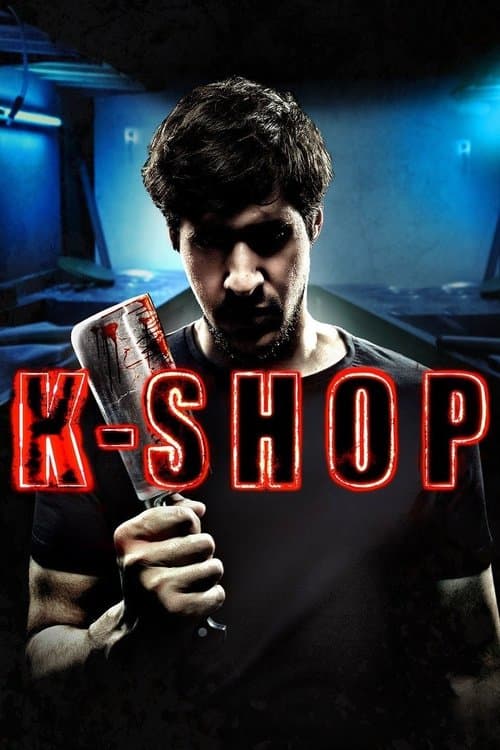
After his father is killed in an altercation with drunken thugs, Salah's world is plunged into darkness. Forced into running the family kebab shop alone, Salah struggles to manage the increasingly rowdy night life and when a fight with an angry customer goes fatally wrong, he finds himself with a dead body on his hands. With no faith in the authorities Salah disposes of the body in the one place he knows best… the kebabs.
8 min read
Release Year: 2016
Rating: 5.814/10
Runtime: 115 minutes
By Luna Sterling
K-Shop (2016): Ending Explained
As Luna Sterling, I've always been drawn to films that linger in the gut like a bad meal—those that blend the mundane with the macabre, turning everyday spaces into chambers of quiet dread. Dan Turner's K-Shop (2016) is one such beast: a British indie horror-thriller that simmers with the greasy haze of late-night takeaways and the sharp tang of desperation. Set against the throbbing pulse of Cardiff's nightlife, it follows a grieving son thrust into a nightmare of his own making. If you've stumbled here searching for "K-Shop ending explained," buckle up—this article unravels the film's visceral close, layer by sticky layer, without spoiling the buildup for newcomers. We'll dissect the literal events, probe the psychological undercurrents, and explore why this ending leaves a metallic aftertaste that doesn't fade.
Quick Recap
In the dim, fluorescent-lit underbelly of a Cardiff kebab shop, K-Shop centers on Salah Hassan, a young Welsh-Moroccan man whose life unravels when his father is brutally murdered by a pack of drunken louts outside their family business. Left to shoulder the shop alone amid the chaotic ebb and flow of rowdy night crowds—stale beer fumes mingling with sizzling meat—Salah grapples with grief, isolation, and the relentless grind of immigrant survival. The air grows thicker with tension as aggressive patrons push him to the brink; one fateful altercation escalates into tragedy when a belligerent customer attacks, and in the heat of self-defense, Salah kills him.
With a chilling pragmatism born of distrust in a system that failed his father, Salah doesn't call the police. Instead, he turns to the shop's heart: the gleaming mincer and grill. He disposes of the body by grinding it into the kebab meat, a decision that starts as a panicked cover-up but spirals into something far darker. As word spreads about the unusually flavorful "special" kebabs, the shop's fortunes reverse, drawing in hordes of oblivious revelers. But shadows lengthen—Salah's secret weighs on him like congealing fat, and his lone-wolf existence cracks when a friend stumbles into the horror, forcing choices that blur the line between victim and monster.
What Happens in the Ending
The film's climax builds like a storm over the kebab shop's grimy counter, the air heavy with the sizzle of fat dripping onto hot plates and the low hum of exhaustion. After the initial body disposal catapults the shop into unexpected popularity—customers raving about the "tender, juicy" meat that masks its unspeakable origin—cracks appear in Salah's fragile facade. His friend Halil, a fellow outsider navigating the same hostile streets, discovers the truth during a late-night shift. The revelation hits like a cold blade: Halil walks in on Salah portioning meat that isn't lamb or beef, the metallic scent of blood undercut by cumin and garlic. Shocked but bound by their shared marginalization, Halil doesn't flee; he helps, becoming complicit in the grim routine.
As suspicions mount—whispers from regulars about "something off" in the taste, a nosy health inspector poking around the back alley where trash bags bulge unnaturally—the tension coils tighter. A police officer, drawn by reports of the father's unsolved murder and now the shop's odd surge in business, confronts Salah. The interrogation unfolds in the shop's stifling confines, fluorescent lights buzzing like angry insects, the officer's breath reeking of authority and cheap coffee. Salah's restraint snaps in a visceral burst of violence: a struggle amid the clutter of knives and skewers ends with the officer dead on the blood-slicked floor, his uniform staining the tiles a deeper crimson.
In the final scenes, Salah and Halil process the body with mechanical efficiency, the mincer's whine drowning out their labored breaths. The shop reopens at dawn, steam rising from the grill like ghosts from the night before. Customers line up, oblivious, forking into wraps that drip with illicit juices. The camera lingers on Salah's face—eyes hollow, hands steady as he serves—before cutting to a wide shot of the bustling street, the shop's neon sign flickering defiantly. No arrests, no redemption; just the cycle grinding on, the kebabs selling out as the sun creeps up, casting long shadows over the pavement slick with last night's rain.
The Meaning Behind the Ending
At its core, the ending of K-Shop is a festering metaphor for consumption in its rawest, most predatory form—not just literal cannibalism, but the devouring of the vulnerable by a society that chews them up and spits out the bones. The kebab shop, once a humble anchor for Salah's immigrant family, transforms into a symbol of tainted sustenance: the "special" meat represents how the marginalized are forced to ingest their own trauma to survive. Each sizzling patty on the grill evokes the psychological toll, the way grief and rage ferment into something nourishing yet poisonous, feeding the very predators who haunt the night—drunken Brits blind to the human cost beneath their midnight snacks.
Thematically, it probes the illusion of assimilation. Salah's act of grinding the body isn't mere horror; it's a visceral rebellion against a world that killed his father and now threatens to consume him. The ending's lack of closure amplifies this, leaving us with the acrid aftertaste of moral decay. As the shop thrives on its secret, it underscores how capitalism and prejudice create monsters: the customers' gluttony mirrors societal indifference, devouring without question, while the grill's relentless heat symbolizes the erasure of identity, reducing lives to anonymous filler.
Character Arcs and Resolution
Salah's arc is the film's throbbing heart, evolving from a grieving son adrift in fog-like sorrow to a hardened survivor whose hands, once trembling with loss, now wield the cleaver with grim purpose. The ending resolves his journey not with catharsis but calcification—his isolation deepens into a solitary vigilance, the shop's counter his unyielding throne. Halil's involvement marks his own pivot from bystander to partner in the abyss, their bond forged in the slick residue of shared sin, highlighting themes of brotherhood amid alienation.
For antagonists like the rowdy customers and the probing officer, resolution is final and unflinching: they become fuel for the machine, underscoring the film's inversion of power. Salah doesn't triumph heroically; he endures, his arc a slow bleed into complicity, where survival demands becoming the very violence he once fled. It's a resolution that clings like grease to the skin—unwashing, unrelenting.
Alternate Interpretations
K-Shop's ending invites ambiguity, its open maw allowing multiple shadows to flicker. One reading sees it as a blackly comic triumph: the shop's success as ironic justice, Salah flipping the script on a racist underbelly by literally serving it back its own. The oblivious crowds chowing down become unwitting cannibals, a satirical jab at cultural ignorance, with the neon sign's glow suggesting an endless, absurd feast.
Alternatively, it's a descent into damnation—Salah trapped in an eternal loop, the mincer's grind echoing his father's unsolved death, implying psychological imprisonment rather than escape. Did Halil's help free him, or chain another soul? Some viewers interpret the final wide shot as impending doom, the bustling street hinting at exposure, while optimists (few as they are) glimpse resilience: in a world that devours immigrants, Salah carves out space by any means. These layers keep the ending alive, festering in the mind long after the credits.
Themes and Symbolism
The ending reinforces K-Shop's core themes of otherness and retribution, subverting the immigrant success story into a horror of assimilation's price. Symbolism drips from every frame: the kebab skewer as a modern impalement, piercing the veil of civility; the shop's steam as exhaled secrets, veiling the truth in aromatic haze. It subverts cannibalism tropes, not as exotic taboo but as gritty necessity, critiquing how Britain's nightlife—boozy, aggressive—preys on the vulnerable, turning victims into perpetrators.
Broader still, it evokes the psychological fracture of diaspora life: the grill's fire mirroring inner turmoil, consuming identity to produce something palatable to the majority. By ending on continuation rather than confrontation, it subverts redemption arcs, insisting that some cycles—prejudice, survival's cost—simmer indefinitely, their heat warping everything they touch.
Final Thoughts
K-Shop's ending works because it doesn't pander; it stains, forcing us to confront the unease of complicity in a world that normalizes quiet atrocities. In its atmospheric close—the hum of the city, the drip of sauce—Turner crafts a lingering dread that elevates this low-budget gem beyond schlock. It's not perfect; the humor occasionally undercuts the tension, leaving some threads dangling like uncooked meat. But for those craving a film that tastes of the forbidden, this finale is a masterstroke—visceral, thought-provoking, and utterly unsettling. If you've seen it, what's your take on those final kebabs? Drop a comment below, and let's dissect.