Oddity (2024): Ending Explained
"Every murder lives on."
After the brutal murder of her twin sister, Darcy goes after those responsible by using haunted items as her tools for revenge.
8 min read
Release Year: 2024
Rating: 6.668/10
Runtime: 98 minutes
By Luna Sterling
Oddity (2024): Ending Explained
As Luna Sterling, I've always been drawn to films that linger in the shadows of the mind, where the line between the seen and the unseen blurs into something palpably chilling. Oddity (2024), directed by Damian Mc Carthy, is a masterclass in atmospheric dread—a slow-burn horror that coils around themes of grief, vengeance, and the uncanny. Set in the creaking isolation of a rural Irish house, it weaves supernatural intrigue with raw psychological tension. If you're searching for a breakdown of Oddity's haunting finale, you've come to the right place. We'll dissect the literal events, peel back the layers of meaning, and explore the film's lingering ambiguities, all while honoring its moody, tactile world of flickering lights and whispering doubts.
Quick Recap
The film opens with a visceral act of violence: Dani Odello-Timmis, wife of psychiatrist Ted Timmis, is savagely murdered in their newly acquired country house. The prime suspect is Olin Boole, one of Ted's former patients, who had visited Dani that night to warn her of a lurking stranger. Olin's warnings fall on deaf ears, and he's soon convicted—only to meet a gruesome end himself, his head smashed in a psychiatric halfway house. The air thickens with unresolved grief as the story shifts one year later to Dani's identical twin sister, Darcy Odello, a blind clairvoyant who runs a Cabinet of Curiosities in Cork, peddling haunted oddities that hum with otherworldly energy.
Darcy, haunted by her sister's death, enlists Ted's help by acquiring Olin's glass eye for a psychometric reading. What she uncovers shatters her assumptions: Olin was innocent, a mere messenger trying to save Dani from the real killer—Ted himself, who orchestrated the murder with the aid of Ivan, a brutish hospital orderly, to clear the path for his affair with Yana, a pharmaceutical rep. Darcy arrives unannounced at the house with a massive crate: a life-sized wooden golem, its rough-hewn form exuding an eerie stillness. As night falls, tensions simmer—Yana's car keys vanish, the golem shifts positions with a faint, unnatural creak, and hidden compartments in its head reveal intimate relics like locks of hair, a tooth, photos of the twins, and a vial of blood. Apparitions flicker in the dim corners, urging escape, and Yana flees into the rain-slicked night, leaving Darcy and the house's shadows to conspire.
What Happens in the Ending
The finale unfolds in a crescendo of calculated cruelty and supernatural retaliation, the house's stone walls seeming to pulse with barely contained malice. Ted returns from his hospital shift to confront Darcy upstairs, where she lays bare her revelations: her own vengeful killing of Olin, the glass eye's damning visions, and Ted's plot with Ivan to eliminate Dani and secure the property without divorce complications. The air grows heavy, charged with accusation, as Ted—ever the rationalist—dismisses her claims as delusions fueled by a brain tumor that stole her sight. To "prove" his innocence, he leaves his cell phone on the landing and steps out, promising to summon the case's investigator for a clarifying call.
But Ted's departure is a trap. He's pried loose a hidden trap door in the floorboards, a remnant of the house's unfinished renovations. When the phone rings, Darcy gropes toward the sound, her cane tapping faintly against the wood, only to plunge through the yawning gap onto the unyielding stone below. The impact echoes like a muffled scream, leaving her broken and bleeding in the dim basement crawlspace. Ted, monitoring from afar, dispatches Ivan to the house to finish the job—ensure Darcy's silence forever.
Ivan arrives, his heavy footsteps thudding through the halls, flashlight beam cutting jagged shadows. But the golem awakens, animated by Darcy's fading will or some deeper curse; its wooden limbs creak to life with a visceral snap, stalking Ivan through the rooms. The attack is brutal and intimate—Ivan is pummeled, the golem's unblinking eyes fixed in silent judgment—yet he survives, battered and raving about the impossible mannequin. Time skips forward: Ivan, now institutionalized, babbles incoherently under Ted's watchful eye. To seal the loose end, Ted unleashes a violent cannibal patient from the wards; the man's feral snarls end in Ivan's gruesome demise, blood pooling on the sterile tiles.
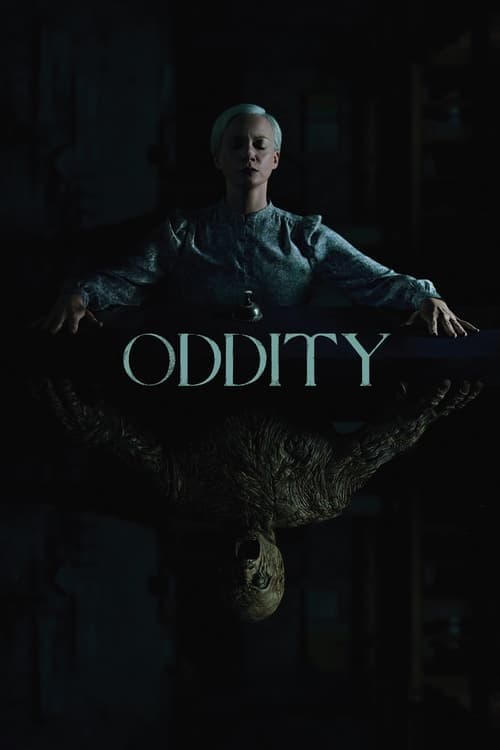
Ted returns to the now-empty house—Yana has fled their relationship, repulsed by his cold indifference to the deaths staining its walls. Alone in the flickering lamplight, he finds a small package on the doorstep from Darcy's shop: a tarnished call bell, the kind rung by long-dead hotel staff. Earlier, Darcy had described its haunt—a vengeful bellhop's ghost, summoned by a single chime to claim the ringer's life. Ted, smirking at the superstition, rings it defiantly. The bell's clear tinkling hangs in the still air, unanswered by any specter. He exhales, tension easing from his shoulders, oblivious to the translucent figure materializing behind him—the bellhop, pallid and looming, his presence a chill draft on the neck.
The Meaning Behind the Ending
At its core, Oddity's ending is a poetic inversion of justice, where the tools of the supernatural—once dismissed as folly—deliver a retribution that rationality cannot evade. The bell's ring symbolizes the inescapable echo of guilt; Ted's act of ringing it isn't just hubris but a final denial of the film's psychic undercurrents, the house itself a metaphor for buried secrets festering like damp rot in the foundations. Darcy's death doesn't end her vengeance; it amplifies it, her oddities becoming extensions of her unseeing gaze, piercing Ted's facade. The bellhop's silent approach evokes the psychological weight of isolation—Ted, murderer and survivor, is left utterly alone, the ghost a manifestation of his own unraveling conscience, or perhaps the literal dead rising to claim their due.
This climax underscores the film's meditation on perception: Darcy's blindness grants her a "sight" into truths Ted blinds himself to with science and denial. The ending's visceral final shot, with the ghost's form hovering unseen, leaves a residue of dread, implying that vengeance transcends mortality, coiling through the everyday objects we touch without thought.
Character Arcs and Resolution
Darcy's arc is one of transformative fury, evolving from a grieving clairvoyant curating curiosities to an avenging force who wields them as weapons. Her fall through the trap door—literal and figurative—marks the peak of her vulnerability, yet her supernatural animation of the golem resolves her journey in spectral triumph, her death a catalyst for Ted's doom rather than defeat. It's a visceral arc, her bloodied form in the basement evoking the twins' unbreakable bond, ensuring Dani's murder isn't forgotten.
Ted's trajectory, conversely, spirals from composed professional to cornered predator. His orchestration of deaths—from Dani to Darcy to Ivan—reveals a man armored in logic, but the ending strips that away. Living alone in the tainted house, ringing the bell, he achieves a hollow "resolution," his arc culminating in ironic exposure: the rationalist haunted by the irrational, his relaxation a prelude to inevitable judgment.
Yana and Ivan serve as collateral threads; Yana's flight resolves her arc in survival, fleeing the house's oppressive atmosphere, while Ivan's brutal end closes his as Ted's disposable tool, his ravings a futile echo of the truth.
Alternate Interpretations
Oddity's ending thrives on ambiguity, inviting debates over the supernatural's reality versus psychological projection. One reading casts everything as Darcy's tumor-induced hallucinations: the golem's movement, the apparitions, even her "powers," manifestations of grief-fueled madness. Ted's final ring then becomes a mundane act, the "ghost" a trick of light or his paranoia, subverting horror into tragedy—Darcy's vengeance illusory, her death self-inflicted delusion.
Alternatively, the supernatural could be unequivocally real, the oddities portals to a vengeful afterlife where Darcy's will lingers post-mortem. The bellhop's appearance affirms this, positioning Ted as the fool who invites his fate, the film a cautionary tale on dismissing the unseen. A third lens blends both: the house as a psychological amplifier, where guilt summons "ghosts" that feel corporeal, blurring mental fracture with metaphysical terror. These layers keep the ending elusive, mirroring the film's tension between belief and skepticism.
Themes and Symbolism
The ending reinforces Oddity's core themes of sight and blindness—not just literal, but perceptual. Darcy's unseeing eyes "read" the glass eye and animate the golem, symbolizing intuitive truth piercing rational veils; Ted's clear vision blinds him to moral rot. Vengeance permeates as a haunting cycle, the oddities—golem, bell—metaphors for personal relics turned lethal, subverting curiosity into curse.
Symbolically, the house embodies entrapment, its trap door and creaking floors a visceral stand-in for suppressed trauma bubbling up. The golem, with its relic-stuffed head, evokes a Frankensteinian doppelganger of the twins' shared pain, while the bell's chime disrupts silence like a conscience's toll. The film subverts traditional ghost stories by grounding horror in human betrayal, the supernatural a mirror to psychological depths, where tension builds not in jumps but in the slow seep of unease.
Final Thoughts
Oddity's ending is a triumph of subtle terror, wrapping its atmospheric dread in a bow of poetic irony that lingers like a draft in an empty room. It works brilliantly because it doesn't overexplain—leaving Ted's fate to our imagination heightens the psychological chill, making the film a standout in folk horror. For audiences craving closure amid ambiguity, it delivers catharsis through Darcy's spectral legacy, proving that some truths ring clearest in silence. If you've felt the film's moody grip, this finale cements why Oddity haunts: in a world of unseen forces, denial is the deadliest oddity of all.