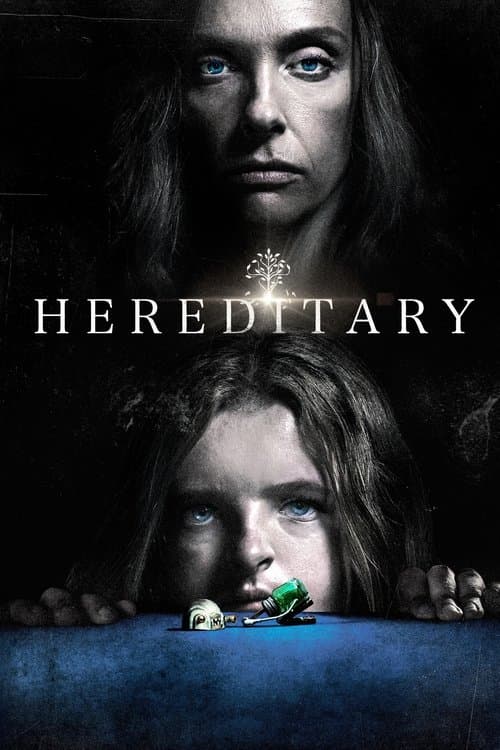
Hereditary (2018): Ending Explained
"Every family tree hides a secret."
Following the death of the Leigh family matriarch, Annie and her children uncover disturbing secrets about their heritage. Their daily lives are not only impacted, but they also become entangled in a chilling fate from which they cannot escape, driving them to the brink of madness.
8 min read
Release Year: 2018
Rating: 7.29/10
Runtime: 128 minutes
By Luna Sterling
Hereditary (2018): Ending Explained
As Luna Sterling, I've dissected countless films that linger in the shadows of the mind, but Ari Aster's Hereditary claws its way into the psyche like few others. This 2018 horror masterpiece doesn't just scare—it suffocates, wrapping you in a fog of familial dread and unspoken horrors. If you're here for the Hereditary ending explained, buckle up: the finale is a visceral descent into inherited damnation, where grief twists into something ancient and insatiable. We'll unpack the literal chaos, the symbolic undercurrents, and the lingering questions that make this ending a gut-punch of psychological terror.
Quick Recap
The film opens with the suffocating weight of loss: Annie Graham, a meticulous miniatures artist, mourns her secretive mother, Ellen Leigh, whose death unravels the fragile threads of the Graham family. Living in a sprawling Utah home that feels both too vast and claustrophobically intimate, Annie shares the space with her husband Steve, their brooding teenage son Peter, and their enigmatic daughter Charlie, whose quirky habits mask deeper eccentricities. Ellen's passing exposes fractures—Annie's eulogy drips with resentment over their strained bond, and whispers of mental illness haunt the family's history.
As grief festers, tragedy strikes harder. Peter, pressured to take Charlie to a party, accidentally causes her death in a nightmarish car accident, her decapitation by a telephone pole echoing like a thunderclap in the silence of shock. The Grahams fracture further: Annie's cold fury toward Peter, Steve's quiet unraveling, and Peter's visions of Charlie's spectral presence turn the house into a pressure cooker of tension. Seeking solace, Annie turns to a support group, where she meets Joan, who introduces her to a séance that backfires spectacularly, inviting chaos into their lives. Objects shatter, flames erupt, and Annie uncovers Ellen's occult ties—a demon named Paimon, hungry for a male host, woven into their bloodline. Paranoia mounts as Annie digs into her mother's hidden life, leading to horrifying discoveries that blur the line between madness and malevolent reality, culminating in a family imploding under the weight of their cursed heritage.
What Happens in the Ending
The final act of Hereditary plunges into a feverish nightmare, the air thick with the metallic tang of blood and the acrid smoke of burning secrets. Peter, haunted by visions and the family's escalating horrors, awakens to the charred remnants of his father Steve's body—Annie, in a desperate bid to sever the curse, had thrown Charlie's sketchbook into the fireplace, only for Steve to erupt in spontaneous flames, his screams swallowed by the crackling inferno.
Panic grips Peter as Annie, her eyes wild with a mix of terror and otherworldly compulsion, pursues him through the house's dim corridors, the floorboards groaning like labored breaths. She herds him into the attic, a hidden chamber transformed into a ritualistic shrine: walls smeared with crimson symbols that pulse with an unnatural glow, the scent of decay hanging heavy. There, before a circle of naked coven members whose chants hum like distant thunder, Annie levitates—her body defying gravity in a slow, deliberate ascent. With a piano wire strung taut like a garrote from the rafters, she commits a grotesque self-decapitation, her head tumbling to the floor with a wet thud, blood pooling in the shadows as her headless form slumps.
Peter, driven to the brink, hurls himself from the attic window, the impact jarring through his bones as he lies broken on the dew-slick grass below. A faint, ethereal light seeps into his body, warm and invasive, pulling him back to consciousness. Drawn inexorably forward, he stumbles to Charlie's treehouse, a childhood sanctuary now desecrated. Inside, atop a makeshift altar, rests Charlie's severed head, crowned in withered laurels, perched on a faceless mannequin like a grotesque idol. Joan and the coven kneel in reverence, their faces illuminated by flickering candlelight, as the headless corpses of Annie and Ellen join the tableau. Joan, her voice a reverent murmur that cuts through the still night air, addresses Peter as "Charlie," proclaiming him the vessel of Paimon—the demon finally liberated from its female host, now free to possess a male form and command its worshippers in eternal dominion.
The Meaning Behind the Ending
At its core, the ending of Hereditary is a ritualistic consummation of inherited doom, where the Grahams' personal tragedies become the scaffolding for an ancient evil's ascension. Paimon, the demon detailed in Ellen's occult book, embodies the film's central metaphor: the inescapable legacy of familial trauma, passed down like a poisoned heirloom. The literal beheadings—Charlie's accidental, Annie's deliberate—symbolize the severing of free will, heads as vessels for the soul now claimed by supernatural forces. The treehouse altar, once a space of innocent play, twists into a profane throne, underscoring how childhood innocence is corrupted by parental shadows.
Thematically, this finale dissects grief as a gateway to madness and possession, the psychological unraveling mirroring demonic influence. The light entering Peter's body isn't just possession—it's the erasure of self, a visceral invasion that leaves the air humming with finality. Paimon's preference for a male host critiques patriarchal undercurrents in occult lore, but here it's subverted: the women (Ellen, Charlie, Annie) suffer as unwilling incubators, their bodies sacrificed to empower the male heir. The ending represents total surrender—the family's "chilling fate" from the outset, where daily life dissolves into cultish obedience, leaving a hollow triumph that tastes of ash.
Character Arcs and Resolution
Each Graham's journey culminates in the ending as a tragic inversion of their arcs, binding personal flaws to the cult's machinations. Annie, the artist who miniaturizes life to control it, spirals from repressed grief to frenzied investigator, her sleepwalking past foreshadowing her possessed suicide. Her arc resolves in self-sacrifice, not redemption—beheading herself to "stop the haunting," only to fuel Paimon's rise, her headless form bowing eternally.
Peter, the reluctant adolescent burdened by guilt over Charlie's death, embodies the innocent caught in the web. His visions and self-harm (slamming his head at school) build to the window leap, a desperate flight that delivers him straight to possession. Transformed from haunted survivor to demonic king, his resolution is the cruelest: "liberated" as Paimon, he loses his identity, the light's warmth a false comfort masking eternal subjugation.
Steve, the grounded patriarch, arcs from stabilizer to victim, his flames a literal burning of denial—accusing Annie of madness right before his immolation seals the family's isolation. Ellen, the unseen matriarch, posthumously orchestrates it all, her desecrated grave and attic shrine revealing her as Paimon's devotee. Charlie, the eccentric child, is the bridge: her death initiates the chaos, her head's crowning a perverse resurrection. Collectively, their resolutions affirm no escape—arcs of grief circle back to cultish unity, the house's oppressive atmosphere now a temple of despair.
Alternate Interpretations
While the ending leans supernatural, its ambiguities invite psychological readings that heighten the tension. Is Paimon's possession real, or a manifestation of collective trauma? Peter's "light" could be a hallucination from head trauma, the treehouse scene a delirious breakdown amid the family's corpses—Annie's "chase" perhaps her final, grief-maddened act before suicide, not demonic control. Joan's role as cult leader might be Annie's paranoid projection, her support group friendship twisting into conspiracy under stress.
Another lens: the occult as metaphor for mental illness, inherited like Ellen's "significant figure" in Charlie's life. The symbols and chants evoke dissociative episodes, Paimon's male-host desire symbolizing gendered expectations in family dynamics. Yet the film's visceral details—levitation, spontaneous combustion—push against pure psychology, suggesting a hybrid: trauma summons the real supernatural, blurring lines in a way that leaves viewers questioning if the Grahams were ever free.
Themes and Symbolism
The ending reinforces Hereditary's core themes of inescapable inheritance and the fragility of sanity, subverting horror tropes by making the domestic the demonic. Decapitation recurs as a symbol of fragmented identity—heads detached, yet spirits persist—mirroring how grief decapitates the living. The house itself is a character: its attics and treehouses, once refuges, become tombs, the air growing heavier with each revelation.
Fire symbolizes futile purification—Steve's burning, the sketchbook's flames—only spreading the curse. Paimon embodies generational trauma, the cult's bowing a perverse family reunion, subverting reunion narratives into submission. Broader, it probes motherhood's burdens: Annie's fraught bond with Ellen echoes in her role as unwilling vessel, themes of control (her miniatures) yielding to chaos. The ending doesn't resolve; it amplifies, leaving a mood of humid dread that clings like smoke.
Final Thoughts
Hereditary's ending is a masterstroke of atmospheric horror, working its magic through unrelenting tension and psychological depth—it's not jump scares, but the slow seep of inevitability that lingers. By tying personal loss to cosmic evil, Aster crafts a finale that's both literal apocalypse and intimate tragedy, rewarding rewatches with layers of unease. If it doesn't work for everyone—its bleakness can overwhelm— that's its power: it forces confrontation with the horrors we inherit, leaving you breathless in the dark. For fans dissecting the Hereditary ending explained, it's a chilling reminder—some legacies demand worship, not escape.