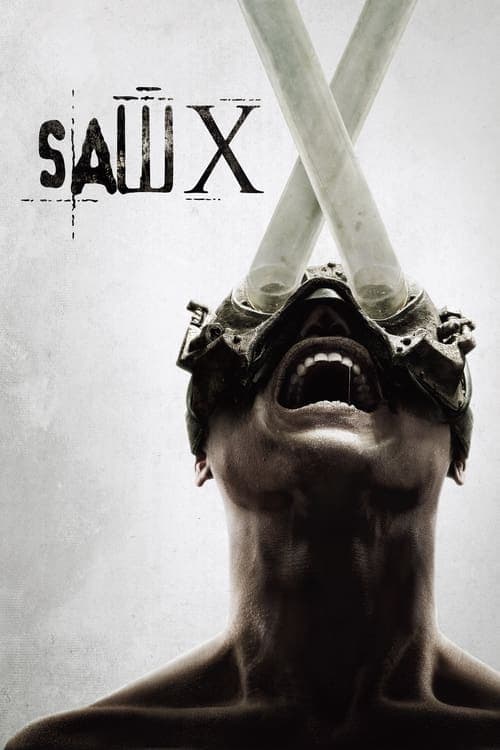
Saw X (2023): Ending Explained
"Witness the return of Jigsaw."
Between the events of 'Saw' and 'Saw II', a sick and desperate John Kramer travels to Mexico for a risky and experimental medical procedure in hopes of a miracle cure for his cancer, only to discover the entire operation is a scam to defraud the most vulnerable. Armed with a newfound purpose, the infamous serial killer returns to his work, turning the tables on the con artists in his signature visceral way through devious, deranged, and ingenious traps.
8 min read
Release Year: 2023
Rating: 7.194/10
Runtime: 118 minutes
By Luna Sterling
Saw X (2023): Ending Explained
As Luna Sterling, I've dissected countless horror films, but the Saw franchise always pulls you into its claustrophobic web of moral quandaries and visceral traps. Saw X (2023), set between the first two entries, delivers John Kramer's origin as Jigsaw with a raw, sun-baked intensity in Mexico. This ending explained dives deep into the film's pulse-pounding finale, unpacking the blood-soaked twists that leave you questioning the cost of desperation. If you're searching for Saw X ending explained, spoilers ahead—proceed with the unease this series thrives on.
Quick Recap
John Kramer, the man who would become Jigsaw, is crumbling under terminal brain cancer, his body a ticking clock in the dim glow of hospital scans. Desperate for a miracle, he stumbles upon whispers of an experimental Norwegian treatment and journeys to a shadowy clinic outside Mexico City. There, the air thick with false hope, he meets Cecilia Pederson, a poised doctor whose team— including the slick Mateo, the alluring Valentina, and the enigmatic Dr. Cortez—promises salvation. John bonds unexpectedly with Carlos, the young son of the clinic's caretaker, sharing quiet moments that pierce the tension like a fleeting breath of humanity.
Surgery awakens him to lies: the procedure was a scam, the team preying on the vulnerable for profit. Rage ignites John's purpose. He unmasks the con—Dr. Cortez is really the taxi driver Diego—and unleashes his traps. Amanda Young, his secret apprentice, helps abduct the scammers, transforming the clinic into a labyrinth of agony. Valentina's leg is severed in a futile bid for bone marrow, her screams echoing as a saw claims her head. Mateo's skull drill yields a key too late, his face melting in a heated mask. Gabriela, suspended and battered by radiation, smashes her own limbs free with a sledgehammer, her body a canvas of desperate survival. But as Parker Sears, another mark turned intruder, storms in with a gun, the game's fragile balance shatters, leading to a betrayal that drenches the finale in blood and irony.
What Happens in the Ending
The clinic's sterile halls, now stained with the metallic tang of blood and sweat, pulse with escalating dread as Cecilia's mask cracks. In a moment of cold calculation, she snaps Gabriela's neck with a brutal twist, the sickening crunch reverberating like a final judgment. Revealing her web of deceit, Cecilia admits she summoned Parker—not as a savior, but as her accomplice in the scam. With John momentarily vulnerable, she forces him at gunpoint to chain himself into the trap originally designed for her: a nightmarish waterboarding device that will drown him in a torrent of pig's blood, the viscous red tide symbolizing the life force they've all stolen.
Tension coils tighter when Carlos's innocent voice echoes from outside, drawn by the chaos. Cecilia, her eyes gleaming with ruthless pragmatism, seizes the boy and chains him opposite John, turning the patriarch's moral code against him. The trap activates, a relentless spray of blood cascading over their faces, forcing gasps and chokes in the humid air. Parker and Cecilia flee to John's control room to reclaim their bag of ill-gotten cash, but their greed triggers a hidden tripwire. Steel doors slam shut with a deafening clang, sealing them inside and simultaneously releasing John and Carlos from their watery peril—the mechanism's cruel poetry freeing the innocent while trapping the guilty.
John, ever the architect, reveals his masterstroke: Diego, under duress, exposed every scammer, including Parker and even Henry Kessler from the support group. John had manipulated Cecilia into luring Parker, turning her scheme inward. As a lethal chemical gas seeps into the room—its acrid fumes burning the lungs— the only escape is a narrow ventilation hole, sized for just one head. Panic erupts; Cecilia and Parker claw at each other in a frenzy of survival, nails raking flesh amid choking coughs. Cecilia emerges victorious, strangling Parker in a haze of desperation, but victory sours as she presses her face to the hole, only to watch John, Amanda, and a shaken Carlos walk away into the Mexican dusk, abandoning her to suffocate in her own trap.
In a chilling epilogue, the screen fades to a grimy bathroom, where Henry Kessler stirs awake, a grotesque abdominal trap strapped to his gut. John and a new figure, Mark Hoffman, loom in the shadows, hinting at the franchise's expanding web of retribution.
The Meaning Behind the Ending
This finale isn't just a gore-soaked payoff; it's a psychological vise grip on themes of poetic justice and the illusion of control. Cecilia's betrayal and subsequent isolation symbolize the scammers' hubris— they've built an empire on exploiting the dying, only for John to invert their game, making them taste the helplessness they inflicted. The blood-waterboarding trap, with its suffocating deluge, evokes a baptism in reverse: a cleansing through suffering that tests true value of life, forcing John to confront his limits while dooming Cecilia to watch her world collapse from a single, insufficient peephole.
The gas chamber's one-person salvation hole underscores the franchise's core metaphor—survival demands sacrifice, but greed devours the selfish. Cecilia's win over Parker feels hollow, a pyrrhic victory that mirrors John's philosophy: games reveal character, and hers is irredeemable. Psychologically, it's immersive torment; the sensory assault of blood, gas, and isolation amplifies the mood of inescapable dread, leaving viewers with the lingering chill of moral ambiguity in a world where hope is just another trap.
Character Arcs and Resolution
John Kramer's arc crescendos from broken patient to vengeful visionary, his cancer-fueled desperation forging the Jigsaw we know. By saving Carlos and outmaneuvering Cecilia, he reclaims agency, his bond with the boy a rare thread of tenderness amid the carnage— a psychological anchor that humanizes his brutality. Amanda's role as apprentice solidifies her loyalty, her shadows lurking as a promise of future horrors.
Cecilia's descent is the film's visceral heart: from clinical savior to frantic animal, her arc exposes the rot beneath her composure. She starts as the untouchable orchestrator but ends gasping alone, her resolution a damning indictment of unchecked avarice. Gabriela's tragic death underscores the collateral damage of scams, her brief freedom snuffed out in betrayal. Parker and the others serve as cautionary footnotes, their arcs resolving in ironic punishment—greed's architects buried in their own foundations. Overall, the ending ties John's rebirth to the scammers' annihilation, closing his Mexico chapter with renewed purpose, the air still humming with the weight of lives tested and found wanting.
Alternate Interpretations
While Saw X's ending feels decisively punitive, ambiguities linger in its fringes, inviting darker readings. Is Cecilia's survival through the gas a deliberate mercy from John, forcing her to live with guilt, or just the trap's oversight—echoing the franchise's penchant for lingering threats? The epilogue with Henry and Hoffman could imply John's games extending beyond the scam, perhaps questioning if Henry was complicit all along, his "cure" story a deeper con. Some might see the finale as John's subtle failure: chaining himself briefly exposes vulnerability, hinting his philosophy risks the innocent like Carlos, subverting his "appreciate life" mantra into potential tragedy. These layers keep the unease simmering, open to interpretations that blur victim and villain in the Saw moral maze.
Themes and Symbolism
The ending reinforces Saw's obsession with retribution's double edge, subverting the scam's false miracles with traps that demand authentic sacrifice. Symbolism drips like the blood in the waterboard: the red flood as stolen vitality, the gas chamber as the suffocating isolation of deceit, and the ventilation hole as life's narrow, contested path—only one can breathe free, echoing societal divides between predator and prey. Psychologically, it probes desperation's psychology, the clinic's humid tension mirroring inner turmoil. Broader themes of vulnerability in illness persist, with John's cancer a metaphor for eroded control, while the scammers embody predatory capitalism, their downfall a visceral catharsis that questions if true healing lies in pain or illusion.
Final Thoughts
Saw X's ending works masterfully, distilling the franchise's gore into a taut, atmospheric symphony of twists that honor its roots while feeling freshly unhinged. The sensory immersion—choking blood, burning gas, echoing screams—builds unbearable tension, rewarding patient viewers with John's triumphant exit and Cecilia's poetic isolation. It's not flawless; the epilogue teases future films a touch conveniently, diluting some immediacy. Yet, in a series built on games within games, this finale captivates, leaving you haunted by the what-ifs of survival. If Saw is about valuing life, Saw X ends by asking: at whose expense? A gripping, gut-wrenching cap to Kramer's Mexican reckoning.