Weapons (2025): Ending Explained
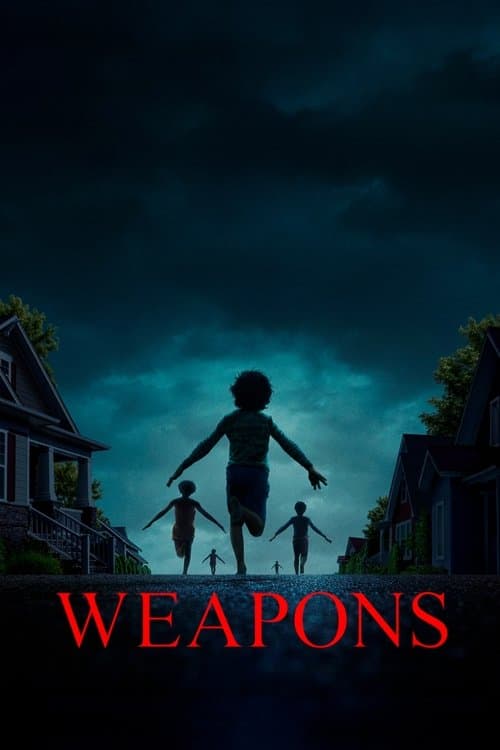
"Last night at 2:17 AM, every child from Mrs. Gandy's class woke up, got out of bed, went downstairs, opened the front door, walked into the dark ...and they never came back."
When all but one child from the same class mysteriously vanish on the same night at exactly the same time, a community is left questioning who or what is behind their disappearance.
9 min read
Release Year: 2025
Rating: 7.332/10
Runtime: 129 minutes
By Luna Sterling
Weapons (2025): Ending Explained
By Luna Sterling
In the shadowy underbelly of a small town gripped by dread, Weapons (2025) weaves a chilling tale of disappearance, suspicion, and supernatural horror. Directed with a taut intensity that lingers like fog on a midnight street, the film plunges us into the unraveling of a community haunted by the vanishing of seventeen third-graders. As whispers of conspiracy swirl and the air thickens with unspoken fears, the story builds to a visceral climax that leaves scars on both characters and viewers. If you're searching for a breakdown of the film's haunting finale—its literal events, symbolic depths, and lingering ambiguities—this guide will illuminate the darkness without spoiling the journey to get there.
Quick Recap
The nightmare begins at precisely 2:17 a.m., when seventeen children from Maybrook Elementary's third-grade class bolt from their homes in eerie unison, vanishing into the night like ghosts summoned by an unseen force. The next morning, only one boy, Alex, shows up to school, his face a mask of quiet detachment amid the chaos. Their teacher, Justine Gandy—a woman already teetering on the edge of personal demons like alcoholism and a tangled affair with local cop Paul—is swiftly placed on leave, her every move shadowed by suspicion from frantic parents and indifferent authorities.
As the town fractures under the weight of grief and paranoia, construction contractor Archer, desperate to find his son Matthew, pores over smart doorbell footage, tracing the children's frantic paths that inexplicably converge on a single point: Alex's house. Justine, haunted by an instinctive pull toward the boy, spies on his home—windows plastered with newspapers, his parents frozen in unnatural stillness inside, the air heavy with an unspoken menace. Meanwhile, the homeless addict James stumbles into the horror's heart during a burglary, discovering the missing children in the basement, their bodies limp and eyes vacant, as if drained by some predatory thirst. Paul, entangled in violence and cover-ups, crosses paths with James, leading to a tense pursuit that pulls the threads of the mystery tighter.
Flashbacks peel back layers of dread, revealing Gladys—a spectral woman in a garish red wig—as the malevolent puppeteer. Posing as Alex's aunt, she infiltrates his home, wielding a grotesque ritual of hair, blood, and snapped twigs to bend wills and shatter lives. Alex, coerced into silence after witnessing her power over his parents, becomes her reluctant accomplice, collecting personal tokens from his classmates to fuel her dark summons. As Justine and Archer close in, the film's pulse quickens with betrayal and bloodshed, the suburban night alive with the metallic tang of fear and the distant echo of children's footsteps.
What Happens in the Ending
The finale erupts in a frenzy of shadowed violence inside Alex's house, the air thick with the musty scent of damp basements and the coppery bite of blood. As the investigation converges, Gladys—her red wig a grotesque crown of unraveling strands—urges Alex to flee with her, her frail form trembling with the urgency of a predator cornered. Archer and Justine burst through the door, only to be ambushed by Paul and James, their alliance twisted into something feral and obedient under Gladys's lingering influence. The struggle is raw and claustrophobic: fists thud against flesh, breaths rasp in the dim light, and Justine, in a surge of desperate clarity, seizes Paul's gun. Shots ring out, sharp and final, dropping Paul and James in pools of spreading crimson, their bodies crumpling like discarded puppets.
Archer races to the basement, the children's catatonic forms stirring faintly in the gloom, but Gladys intercepts him with her hypnotic ritual. Her voice, a sibilant whisper laced with ancient malice, bewitches him; his eyes glaze over, muscles seizing as he turns on Justine with mechanical fury, the betrayal hanging heavy in the stale air. Upstairs, Alex's parents—still locked in their trance-like stupor—lurch toward their son, their movements jerky and unnatural, fingers clawing at the dim hope of escape. In a pivotal twist, Alex, his small frame silhouetted against the flickering bulb, mimics Gladys's spell: he twists a lock from her wig around a twig, smears it with blood, and snaps it with a crack that echoes like breaking bone. The power reverses in an instant—Gladys's control shatters, her face contorting in shock and agony.
Freed from their haze, the children surge from the basement like a tide of vengeful shadows, their bare feet pounding the floorboards in a rhythmic, primal chant. They spill into the neighborhood under the moon's pale gaze, chasing Gladys through the silent streets. The pursuit is visceral, the night air alive with their breathless cries and the rustle of her tattered clothes. Cornered, she collapses, and the horde descends—small hands tearing, teeth gnashing—in a blur of feral release. Her screams dissolve into silence, her body rent apart in the dim glow of streetlights, leaving only fragments of wig and bloodied earth. Archer, snapping from the spell, cradles his son Matthew and carries him home through the fading dawn, the weight of survival pressing like a bruise on his soul.
A child narrator's voice, soft and ethereal, closes the curtain: Gladys's death liberates her victims, though scars remain. Alex's parents linger in catatonia, their vacant stares a haunting reminder of the ritual's toll. Alex finds refuge with a different aunt, the house's oppressive quiet lifting slightly, while some children begin to murmur words again, their voices fragile threads reconnecting to the world.
The Meaning Behind the Ending
At its core, the ending of Weapons symbolizes the shattering of insidious control, where innocence weaponized against itself becomes the ultimate reckoning. Gladys's ritual—twisting personal locks of hair with blood and twigs—serves as a metaphor for how vulnerability is exploited, turning everyday tokens of identity into chains of domination. Her death at the hands of the children she sought to consume represents a poetic inversion: the devouring force is devoured, her life-prolonging hunger sated by the very vitality she stole. The visceral chase through the neighborhood evokes the town's suppressed terror erupting into cathartic fury, the sensory chaos of pounding feet and tearing flesh underscoring the psychological release from hypnotic paralysis.
Thematically, the finale probes the fragility of community bonds under supernatural strain, where suspicion festers like an untreated wound. Alex's replication of the spell isn't just survival—it's a reclamation of agency, highlighting how trauma, when internalized, can be repurposed as resistance. The lingering catatonia in Alex's parents and the tentative recovery of the children illustrate the enduring psychological scars of manipulation, a subtle nod to how evil's tendrils linger even in victory. The child narrator's epilogue, delivered with an otherworldly calm, infuses the resolution with a sense of fragile hope, the dawn light filtering through like a hesitant promise that healing, though incomplete, is possible.
Character Arcs and Resolution
Justine Gandy's journey arcs from a suspect adrift in self-doubt—haunted by the bottle's numb embrace and Paul's toxic pull—to a fierce guardian, her hands steady on the gun that ends the immediate threat. Her survival, bloodied but unbroken, resolves her arc with redemptive purpose; the teacher who failed to protect her class now liberates them, the metallic echo of gunfire washing away layers of suspicion and personal torment.
Archer, driven by paternal desperation, evolves from a lone searcher mapping paths in the dark to a man reclaiming his son, his bewitched assault on Justine a brutal test of his humanity. Carrying Matthew home, muscles aching under the boy's limp weight, he embodies quiet triumph, his arc closing on a note of restored fatherhood amid the night's fading shadows.
Alex, the reluctant linchpin, transforms from coerced accomplice—eyes wide with the horror of his parents' self-mutilation—to quiet hero, his spell-breaking act a psychological pivot from victimhood to empowerment. Moving to a new aunt's care, he steps into uncertainty, his arc a poignant reminder of childhood's stolen innocence, yet glimmers with the potential for speech and normalcy. The other characters—Paul and James, ensnared pawns; Gladys, the unraveling witch—meet fatal ends that underscore their roles as conduits of chaos, their resolutions stark and final against the survivors' tentative peace.
Alternate Interpretations
While the ending appears straightforward in its supernatural mechanics, ambiguities invite darker readings. Is Gladys truly dead, or does her essence persist in the catatonic parents, a latent curse waiting to resurface? The child narrator's voice could be interpreted as Alex's own fragmented psyche, suggesting the entire climax as a collective hallucination born of trauma— the chase a metaphor for repressed rage rather than literal vengeance. Alternatively, the converging paths might symbolize not just physical summons but a psychic convergence of the town's guilt and neglect, with the children's attack representing societal retribution against overlooked evils like addiction (James) and abuse (Paul). These layers keep the finale open-ended, the neighborhood's post-dawn silence humming with unspoken dread.
Themes and Symbolism
Weapons reinforces themes of predatory innocence and the cost of silence, subverting the child-victim trope by arming them with feral agency. The red wig symbolizes deceptive facade—Gladys's clownish disguise masking her vampiric hunger—while the 2:17 a.m. summons evokes the witching hour's psychological void, where rational barriers crumble. Hair as a ritual tool symbolizes intimate violation, personal essence weaponized to control, subverting familial bonds into tools of horror. Broader, the film critiques communal apathy: the town's slow unraveling mirrors how ignored undercurrents—poverty, infidelity, suspicion—feed monstrous growth, the ending's catharsis a warning that buried darkness demands confrontation.
Final Thoughts
The ending of Weapons lands with the force of a snapped twig—sharp, irreversible, and echoing long after the screen fades. It works masterfully by blending visceral horror with psychological depth, leaving us immersed in the survivors' fragile dawn without cheap resolution. The sensory immersion—the chill of bewitched skin, the wet rip of vengeance—amplifies the tension, making the triumph feel earned yet haunted. For a film that preys on our fears of the unseen, this finale doesn't just explain the nightmare; it etches it into memory, a subtle reminder that some weapons cut deepest from within. If Weapons lingers with you, it's because its close whispers: freedom comes at the price of facing the shadows we helped create.