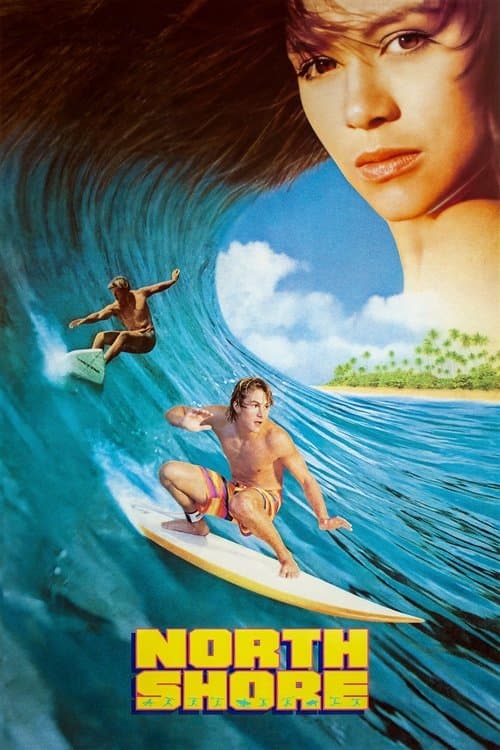
North Shore (1987): Ending Explained
"The peak...the dream...the ultimate test."
On a small stretch of coastline as powerful as a man's will, Rick Kane came to surf the big waves. He found a woman who would show him how to survive, and a challenge unlike any other.
7 min read
Release Year: 1987
Rating: 5.8/10
Runtime: 96 minutes
By Ellis Carver
North Shore (1987): Ending Explained
As a film critic who's spent years dissecting the waves of cinema—both literal and metaphorical—North Shore (1987) stands out as a sun-soaked coming-of-age tale that rides the tension between ambition and authenticity. Directed by William Phelps, this under-the-radar surf drama captures the raw energy of Hawaii's North Shore while probing deeper into the soul of its protagonist. If you're searching for a North Shore ending explained, you're in the right place: we'll break down the final moments, unpack their layered meanings, and explore how they tie into the film's themes of cultural clash, personal growth, and the elusive pursuit of "soul" in a competitive world. Spoiler alert: this isn't just about who catches the biggest wave—it's about what happens when the ride ends.
Quick Recap
North Shore follows Rick Kane (Matt Adler), an 18-year-old hotshot from Arizona who's fresh out of high school and buzzing with dreams of pro surfing glory. Armed with winnings from a wave tank contest, he jets off to Hawaii's North Shore for a summer of real ocean waves before college beckons. What starts as wide-eyed enthusiasm quickly crashes into reality: Rick's tank-honed skills falter against the unpredictable sea, and he clashes with the tight-knit local surf community, particularly "The Hui," led by the formidable Vince Moaloka (Gerry Lopez). A botched surf session at Sunset Beach leaves him chased off the beach, his gear stolen, and his ego bruised.
Enter the film's heart: Rick befriends Turtle (John Philbin), a laid-back local who introduces him to Kiani (Nia Peeples), Vince's cousin and a beacon of island grace. Through her, Rick begins to navigate Hawaiian customs and falls deeply in love. More crucially, Turtle connects him with Chandler (Gregory Harrison), a philosophical surfboard shaper who embodies "soul surfing"—a pure, spiritual communion with the waves, far removed from the cutthroat contests Rick idolizes. As Rick hones his skills under Chandler's guidance, he discovers his artistic talent, even designing a fresh graphic for Chandler's boards. Looming in the background is the antagonist, Lance Burkhart (Laird Hamilton), a top-ranked pro whose materialistic, win-at-all-costs ethos clashes with Chandler's single-fin philosophy. Tensions build toward the climactic Banzai Pipeline contest, where Rick's journey from outsider to contender tests the boundaries of rivalry, respect, and self-discovery.
What Happens in the Ending
The film's climax unfolds at the high-stakes surf contest on the treacherous Banzai Pipeline, pitting Rick against Lance in a final heat that crystallizes their opposing worldviews. As the waves pound, Lance resorts to dirty tactics, yanking Rick's leash to sabotage his ride and force a wipeout. The crowd—and Chandler, who's long been skeptical of competitive surfing—watches in outrage as the cheat unfolds. Yet, in a pivotal moment of restraint, Rick pulls himself from the surf and reminds Chandler that the true essence isn't victory, but "going the distance"—persevering through the wipeout, embodying the soulful ride over the scoreboard.
With the contest behind him, Rick prepares to depart Hawaii for college in New York, a place devoid of the ocean's call (at least in his mind). He shares a heartfelt goodbye with Chandler on the beach, thanking him for the lessons in soul surfing and the quiet wisdom that's reshaped his perspective. The scene shifts to the airport, where Turtle and Kiani surprise him. Amid the hum of departure, Rick and Kiani exchange a tender kiss, a bittersweet seal on their romance born of cultural bridging and shared sunsets. Turtle, ever the comic relief with a deeper loyalty, flashes a newspaper headline exposing Lance's disqualification for his unsportsmanlike conduct—justice served, albeit off-screen. As Rick boards his flight, he gazes back and promises to return to the North Shore, leaving the island's waves echoing in his wake.
The Meaning Behind the Ending
At its core, the ending of North Shore serves as a meditative exhale after the adrenaline-fueled contest, shifting from physical triumph to emotional reckoning. The leash-pull cheat by Lance isn't just a plot device; it's a metaphor for the manipulative undercurrents of ambition, where success is chained to shortcuts and ego. Rick's wipeout, followed by his calm affirmation to Chandler, symbolizes a rejection of toxicity—it's the moment he internalizes soul surfing as a mindset, not a style. The waves of Pipeline, often a graveyard for surfers, represent life's unforgiving tests, and Rick's decision to "go the distance" underscores a human truth: resilience lies in the effort, not the endpoint.
The airport farewell amplifies this introspection. Kiani's kiss and Rick's promise to return evoke the impermanence of youth's passions, hinting at love's role in anchoring fleeting adventures. Lance's disqualification in the newspaper adds a layer of moral equilibrium—fate, or the surfing world's code, restores balance without Rick needing to seek revenge. Overall, the ending whispers that true mastery comes from humility and connection, critiquing a society (and sport) obsessed with rankings while celebrating the quiet victories of personal evolution.
Character Arcs and Resolution
Rick's arc is the film's emotional spine: he arrives as a brash outsider, mistaking mechanical skill for depth, but leaves transformed. The ending resolves his journey by affirming his growth— from the humbled kid chased by locals to a young man who prioritizes soul over sponsorships. His goodbye to Chandler marks a mentor-protégé bond sealed in mutual respect, while the kiss with Kiani resolves his romantic subplot, blending haole (outsider) curiosity with genuine cultural immersion. Yet, it's tinged with melancholy; heading to New York symbolizes a reluctant step into adulthood, where surfing's lessons must sustain him sans surf.
Chandler's resolution is equally poignant: his outrage at the cheat reveals his protective investment in Rick, but Rick's reminder humanizes him, softening his anti-competitive stance. Lance, the embodiment of hollow ambition, gets his comeuppance via disqualification, resolving his arc as a cautionary tale—his "board that works" philosophy crumbles, exposing the isolation of unchecked ego. Kiani and Turtle provide communal closure: she represents the heart Rick gains, he the friendship that grounds it, ensuring Rick doesn't leave entirely adrift.
Alternate Interpretations
While North Shore's ending feels resolute, its open-endedness invites ambiguity, particularly around Rick's future. One reading sees his promise to return as genuine optimism—a cycle of growth where Hawaii remains his spiritual home, pulling him back from New York's concrete shores. Alternatively, it could be interpreted as youthful delusion: the kiss and vow might fade into college routines, with the North Shore becoming a nostalgic myth, underscoring the film's subtle commentary on how profound experiences often get diluted by life's currents. Lance's off-screen downfall adds another layer— is it karmic justice, or a convenient narrative bow? Some might view it as the film's romanticizing of island "fairness," glossing over real-world inequities in surf culture. These interpretations highlight the ending's contemplative space, allowing viewers to project their own waves of doubt and hope.
Themes and Symbolism
The ending reinforces North Shore's central themes of cultural harmony versus intrusion, and spiritual authenticity against commercial grind. Symbolically, the Pipeline waves embody chaos and purity—Rick's wipeout subverts the hero's traditional win, symbolizing that enlightenment often comes through failure. The leash, yanked by Lance, represents the ties of rivalry that bind and break us, contrasting Chandler's "single-fin-mentality," a nod to simpler, freer times. Broader societal commentary emerges in Rick's outsider status: his arc critiques entitlement, showing moral complexity in how locals like Vince and Kiani navigate resentment and openness. Love, too, symbolizes integration—Kiani bridges worlds, suggesting that true belonging requires vulnerability. Ultimately, the ending subverts surf-flick tropes by prioritizing introspection, reminding us that the ocean, like life, rewards those who listen to its deeper rhythms over conquering its surface.
Final Thoughts
North Shore's ending works because it doesn't force a tidy victory lap; instead, it lingers like the salt on your skin after a long session, inviting reflection on what we've gained from the wipeouts. In a genre often dominated by flashy wipeouts and crowning moments, this contemplative close elevates the film, blending heartfelt romance with subtle moral inquiry. It's not flawless—the disqualification feels a touch pat, and Rick's New York detour raises unaddressed questions about his passion's longevity—but its sincerity shines. For anyone grappling with ambition's illusions or the pull of uncharted waters, this ending resonates as a thoughtful reminder: the best rides are the ones that change you, long after the wave breaks. If you've surfed these thematic depths, North Shore proves that even a '80s B-movie can deliver waves worth riding again.