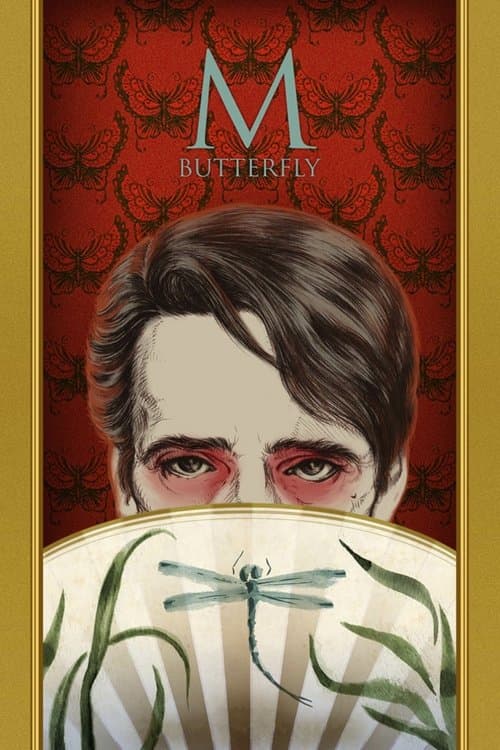
M. Butterfly (1993): Ending Explained
"Passion. Power. Revenge. In All Their Majesty."
In 1960s China, French diplomat Rene Gallimard falls in love with an opera singer, Song Liling – but Song is not at all who Gallimard thinks.
7 min read
Release Year: 1993
Rating: 6.592/10
Runtime: 101 minutes
By Ellis Carver
M. Butterfly (1993): Ending Explained
As Ellis Carver, I've long admired David Cronenberg's adaptation of David Henry Hwang's play M. Butterfly for its unflinching exploration of illusion, desire, and cultural collision. Starring Jeremy Irons as the besotted diplomat René Gallimard and John Lone as the enigmatic Song Liling, the film weaves a tale of love, espionage, and self-deception that culminates in a devastating revelation. In this ending explained, we'll unpack the final scenes' literal events, their symbolic weight, and the psychological fractures they expose—reminding us how fragile our perceptions of truth can be.
Quick Recap
Set against the backdrop of 1960s Beijing, M. Butterfly follows René Gallimard, a middling French diplomat whose mundane life ignites when he encounters Song Liling, a graceful Peking opera performer portraying the female role of Butterfly in Puccini's famed opera. Captivated by Song's delicate beauty and submissive allure, Gallimard embarks on a passionate affair, projecting onto her his fantasies of the exotic East as a land of willing, subservient women. Unbeknownst to him—or perhaps willfully ignored—Song is spying for the People's Republic of China, extracting diplomatic secrets from the lovesick Frenchman.
Their relationship endures for two decades, evolving into a marriage that spans Gallimard's postings and personal triumphs. Song bears a son (though the circumstances remain shrouded), and Gallimard rises in his career, all while clinging to an idealized vision of his lover as the embodiment of feminine perfection. Yet cracks begin to form as geopolitical tensions rise: the Cultural Revolution disrupts their world, and Gallimard's recall to France in the 1980s forces a separation. Song, exposed as a spy, faces trial, setting the stage for the shattering confrontation that defines the film's close. This buildup of deception and delusion propels us toward an ending that strips away the veils of fantasy.
What Happens in the Ending
The film's final act unfolds with raw emotional intensity, shifting from courtroom drama to intimate tragedy. After years apart, Gallimard, now living a hollow existence in Paris, learns of Song's trial for espionage. In a public spectacle, Song—dressed in her traditional opera garb—takes the stand and delivers a bombshell: under interrogation, she reveals her true identity as a man, a secret agent who exploited Gallimard's Western stereotypes of Asian femininity to seduce him and steal state secrets. The courtroom erupts in shock, but Gallimard, watching from afar, reels in disbelief, his world crumbling as flashbacks intercut the scene, replaying their intimate moments now tainted by hindsight.
The narrative then pivots to a private reunion in a dimly lit prison cell, where Gallimard confronts Song one last time. Demanding proof, Gallimard watches in horror as Song disrobes, exposing his male body—a moment of stark, unflinching nudity that shatters the illusion Gallimard has nurtured for over 20 years. Song mocks Gallimard's naivety, explaining how he played the "perfect woman" to fulfill the diplomat's colonial fantasies, turning the tables on the power dynamics of their relationship. Devastated, Gallimard flees, retreating into isolation.
In the film's haunting coda, Gallimard transforms his modest apartment into a makeshift stage. Donning yellowface makeup and a kimono, he imagines Song as the demure Butterfly of his dreams. Reciting lines from the opera, he stabs himself in ritualistic seppuku—hara-kiri—with a hidden knife, collapsing in a pool of blood as the fantasy version of Song watches impassively. The screen fades on this tableau of self-inflicted demise, leaving the audience with the echo of Puccini's aria.
The Meaning Behind the Ending
At its core, the ending of M. Butterfly symbolizes the violent unraveling of self-deception, where personal fantasy collides with unyielding reality. Gallimard's suicide isn't mere despair; it's a final, desperate act to preserve his illusion, choosing death over the humiliation of truth. The ritual hara-kiri evokes not just Japanese tradition (ironically misapplied here) but a deeper metaphor for the West's self-destructive obsession with Orientalism—Edward Said's concept of exoticizing the East as a submissive "other" to affirm one's superiority. Song's revelation in the courtroom serves as a piercing indictment of this gaze: by embodying Gallimard's projections, Song weaponizes them, exposing how desire can blind us to exploitation.
Thematically, the ending grapples with the fluidity of identity and gender. Song's dual role as man and "woman" underscores the performative nature of both, challenging rigid binaries. Gallimard's final makeover of himself into a grotesque "Butterfly" inverts the opera's narrative, suggesting that the true victim of illusion is the projector, not the projected. This moral complexity invites contemplation: Is Gallimard's ignorance innocence or complicity? The ending posits that love, unchecked by reality, becomes a cage of one's own making, with societal commentary on colonialism's lingering shadows amplifying the personal tragedy.
Character Arcs and Resolution
René Gallimard's arc traces a descent from complacent bureaucrat to tragic romantic, only to end in ruinous clarity—or willful denial. What begins as a midlife awakening through Song's "femininity" evolves into a marriage built on secrets, mirroring his professional ascent amid diplomatic intrigue. By the end, his suicide resolves his journey not in redemption but in stasis: unable to reconcile the man he loved with the spy who deceived him, Gallimard clings to fantasy, his death a psychological retreat that underscores his inability to evolve beyond patriarchal entitlement.
Song Liling's trajectory, conversely, arcs from apparent vulnerability to empowered revelation. As the spy who adopts the Dan role (traditionally male performers of female parts in Peking opera), Song manipulates Gallimard's biases with calculated grace. The ending affirms Song's agency: by stripping away the facade, he reclaims his identity, subverting the power imbalance. Their marriage, once a symbol of cross-cultural union, dissolves into mutual destruction—Song imprisoned, Gallimard self-immolated—highlighting how espionage and romance entwine to erode personal integrity. For both, resolution comes through exposure, forcing a confrontation with the human cost of sustained pretense.
Alternate Interpretations
The ending's ambiguity lies in Gallimard's final moments: Does his suicide stem from genuine heartbreak, or is it a performative echo of the opera, a last bid for control? One reading sees it as tragic catharsis—Gallimard, enlightened too late, atones for his blindness by mirroring Butterfly's fate, emphasizing themes of forbidden love's inevitability. Another, more cynical view interprets it as ultimate denial: by reimagining Song as the ideal woman, he rejects reality altogether, suggesting the West's refusal to confront its cultural missteps. A third perspective, focusing on Song's courtroom triumph, frames the ending as subversive victory—Song's exposure not only unmasks Gallimard but indicts broader Orientalist tropes, turning personal betrayal into political allegory. These layers ensure the film rewards multiple viewings, each revealing new facets of moral ambiguity.
Themes and Symbolism
The ending reinforces M. Butterfly's central themes of illusion versus reality, gender performativity, and colonial power dynamics while subverting romantic tropes. Symbolically, the opera Madame Butterfly looms large: Gallimard's self-stabbing parodies Pinkerton's abandonment, flipping the narrative to critique Western imperialism— the "conquering" lover becomes the conquered by his own delusions. Song's nudity in the cell symbolizes stripped illusions, bare truth amid emotional nudity, while the yellowface in the coda evokes racial caricature, commenting on how stereotypes perpetuate harm.
Broader societal commentary emerges in the espionage motif: the 20-year affair as a microcosm of Cold War manipulations, where personal desires fuel geopolitical betrayals. The film subverts expectations of heterosexual romance by revealing queerness not as hidden shame but as a tool of resistance, challenging viewers to question fixed identities. Ultimately, these elements weave a tapestry of human frailty, where love's blindness fosters moral complexity, urging empathy for flawed psyches ensnared by cultural myths.
Final Thoughts
M. Butterfly's ending works masterfully because it refuses easy closure, leaving us to ponder the chasm between perception and truth. Cronenberg's direction—intimate yet operatic—amplifies the psychological depth, making Gallimard's demise feel both inevitable and poignant. It's a contemplative gut-punch that lingers, inviting reflection on our own illusions in relationships and society. For audiences grappling with identity and power today, this 1993 film remains strikingly relevant, a subtle yet substantive reminder that the most profound betrayals often begin with the stories we tell ourselves. If you've seen it, revisit those final frames; they reveal as much about us as they do the characters.