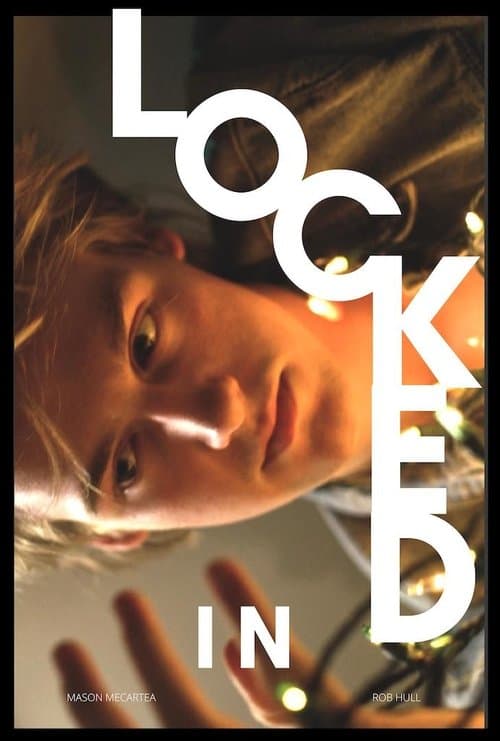
Locked in (2020): Ending Explained
A young artist struggles to find purpose after his plans seemingly screech to a halt.
8 min read
Release Year: 2020
Rating: 0/10
Runtime: 3 minutes
By Ellis Carver
Locked In (2020): Ending Explained
As a film critic who's spent years dissecting the tangled webs of human motivation in cinema, Locked In (2020) stands out for its unflinching exploration of fractured family bonds and the shadows of inheritance. Directed with a taut intensity that mirrors the protagonist's paralysis, this thriller peels back layers of resentment and deception to reveal the raw undercurrents of loyalty and betrayal. If you're searching for a Locked In ending explained, you're in the right place—this article dives deep into the film's climactic resolution, unpacking its literal events, symbolic weight, and the moral ambiguities that linger long after the credits roll. Spoilers ahead, naturally; proceed with caution if you haven't seen it.
Quick Recap
Locked In centers on Katherine, a once-glamorous former TV star now trapped in the devastating grip of locked-in syndrome following a near-fatal accident. Paralyzed from head to toe and unable to speak, she communicates only through blinks as her devoted nurse, Nicky, works tirelessly to help her regain some semblance of control. The story unfolds through a mosaic of flashbacks, revealing the toxic dynamics of Katherine's family estate—a sprawling mansion that symbolizes both legacy and loss.
Katherine's late husband, a wealthy patriarch, bequeathed everything to his son Jamie, leaving Katherine resentful and sidelined. Jamie, emotionally neglected by his stepmother, finds solace in Lina, Katherine's adopted daughter from her childhood friendships. Lina marries Jamie out of duty and affection, inheriting the estate in the process, which only deepens Katherine's bitterness. Enter Dr. Robert Lawrence, the family physician whose charm masks a predatory greed. He begins an affair with Lina, who's stifled by her isolated life, but his true aim is the property. Robert systematically poisons Jamie with painkillers, then orchestrates his drowning during a boat trip, framing Lina's private journal fantasies to keep her under his thumb.
Tensions escalate after Jamie's death. Robert pressures Lina to sell the mansion, but she uncovers his manipulations. Katherine, entangled in her own affair with Robert, witnesses his pursuit of Lina and intervenes protectively. As Katherine slowly recovers in the hospital, she spells out "murder" to Nicky, alerting Lina to the dangers. Lina, fearing exposure, convinces Robert to bring Katherine home, setting the stage for a deadly confrontation that forces everyone to confront their complicity in the family's unraveling.
What Happens in the Ending
The film's finale unfolds in a pulse-pounding sequence at the family mansion, blending present-day tension with clarifying flashbacks to tie together the threads of deception. After Lina persuades Robert to transport the still-paralyzed Katherine from the hospital under the pretense of confronting her accusations, Nicky—suspicious of their motives—follows discreetly. Through texts and a phone call, Nicky reveals a pivotal truth to Lina: Katherine wasn't aiming to harm her that fateful night but was protecting her from Robert's wrath.
A flashback illuminates the night of Katherine's accident: As Robert chases Lina from the house in a rage, Katherine grabs a rifle and fires—not at Lina, but at Robert's tire, sabotaging his vehicle to halt the pursuit. In a moment of desperate mercy, Katherine pleads with Robert to spare Lina, exposing her own conflicted loyalties after their affair. Enraged and cornered, Robert deliberately runs Katherine over with his car, leaving her for dead and plunging her into locked-in syndrome.
Back in the present, Lina turns the tables on Robert. She injects him with a lethal drug he'd prepared for Katherine, intending to silence her forever. But the dose proves insufficient, and Robert, weakened but furious, lunges at Lina and attempts to finish Katherine with another syringe. In a frantic struggle, Lina grabs a nearby object and stabs Robert repeatedly, killing him in self-defense and to protect Katherine. The scene is visceral and chaotic, emphasizing the raw physicality of their confrontation against the mansion's oppressive grandeur.
As the dust settles, police sirens wail in the distance. Officers arrive at the mansion, where Lina, Katherine (now slightly more mobile but still limited), and Nicky stand in uneasy silence. The authorities collect Robert's body, treating the scene as a clear case of justified homicide given the evidence of his aggression. Lina, grappling with the weight of her actions, turns to Nicky and asks what she'll tell the police about the night's events. Nicky, who has witnessed everything, offers only silence—her expression a mask of quiet resolve. The film closes on an intimate note: Lina and Katherine, bound by blood and betrayal, reach out and hold hands, a fragile gesture of reconciliation amid the ruins of their shared history.
The Meaning Behind the Ending
At its core, the ending of Locked In is a meditation on the paralysis of the soul—far beyond Katherine's physical condition—where characters are trapped not just by circumstance but by the invisible chains of greed, resentment, and unspoken love. The hand-holding between Lina and Katherine symbolizes a hard-won redemption, a tactile affirmation that protection and forgiveness can emerge from the ashes of manipulation. Robert's death isn't triumphant; it's a grim necessity, underscoring the moral cost of survival in a world where inheritance corrupts absolutely.
Symbolically, the mansion itself looms as a metaphor for inherited trauma: a beautiful prison that lures with promise but ensnares with possession. Robert's failed injection and Lina's stabbing subvert the clinical detachment of his medical facade, revealing the brutal intimacy of violence. Nicky's silence, in particular, carries profound weight—it's not complicity but a deliberate withholding, suggesting that some truths are too layered for official narratives, echoing the film's theme that justice is often personal and incomplete. This ending doesn't resolve the pain; it humanizes it, inviting viewers to contemplate how love, twisted by betrayal, can still anchor us in chaos.
Character Arcs and Resolution
Katherine's arc is the film's emotional spine: from a bitter, dispossessed stepmother preoccupied with her own grievances to a fierce protector who sacrifices her mobility for Lina's safety. Her locked-in state mirrors her internal isolation, but spelling "murder" marks her agency, culminating in the hand-hold that signifies her journey toward maternal redemption. It's a subtle evolution, highlighting the psychology of resentment yielding to empathy.
Lina transforms from a dutiful caregiver, stifled by obligation, to an empowered avenger. Her marriage to Jamie was born of compassion, but Robert's abuse exposes her suppressed rage—fueled by her journal's dark fantasies. Killing Robert resolves her arc not as vengeance, but as self-liberation, freeing her from the estate's shadow and affirming her autonomy. Yet, her question to Nicky reveals lingering vulnerability, a recognition that resolution comes with accountability.
Nicky, the outsider, embodies quiet integrity; her silence in the end resolves her role as catalyst, choosing loyalty to Katherine and Lina over institutional truth. Robert, the antagonist, arcs toward his downfall through unchecked ambition—his affairs and murders stem from a void of genuine connection, making his death a poetic justice that exposes the hollowness of his schemes. Collectively, these resolutions weave a tapestry of moral complexity, where no one emerges unscathed, but bonds reform in the face of annihilation.
Alternate Interpretations
While the ending appears straightforward on the surface—Robert's death as clear self-defense—its ambiguities invite multiple lenses. Nicky's silence could imply she's protecting Lina and Katherine by omitting details of the injection attempt, preserving their narrative of victimhood. Alternatively, it might hint at her own doubts: Did Lina's actions cross into premeditation, given the drug? This reading positions the ending as a commentary on unreliable testimony, where the "locked-in" truth of the family remains partially obscured.
Another interpretation views the hand-holding as illusory reconciliation. Katherine's resentment over the inheritance lingers; perhaps it's a momentary truce, doomed by the estate's enduring curse. Or, optimistically, it signals a new beginning—Lina and Katherine co-inheriting not just property, but mutual understanding. These layers reflect the film's contemplative nature, leaving room for viewers to project their own experiences of family dysfunction onto the ambiguity.
Themes and Symbolism
Locked In reinforces themes of inheritance as both boon and burden, subverting the trope of the "family fortune" by showing how it fosters isolation and deceit. Greed, personified in Robert, critiques societal pressures on women like Lina and Katherine to navigate power through relationships, while their resilience highlights female solidarity amid patriarchal schemes. Moral complexity abounds: No villain is cartoonish; Robert's charm makes his betrayal sting, and Lina's fantasies blur victim and perpetrator.
Symbolism abounds—the boat's capsizing foreshadows emotional drownings, and Katherine's blinks evolve from desperation to accusation, symbolizing the power of the voiceless. The rifle shot at the tire represents redirected rage, turning destruction inward to save another. Ultimately, the ending subverts thriller conventions by prioritizing psychological intimacy over spectacle, commenting on how societal structures (like inheritance laws) lock individuals into cycles of harm, only broken through raw, human connection.
Final Thoughts
The ending of Locked In works masterfully because it resists tidy closure, mirroring the messy truths of human psychology and leaving us to ponder the cost of survival. It's not a crowd-pleaser in its restraint—no explosive twists or heroic monologues—but that's its strength: a contemplative punch that lingers, much like Katherine's paralysis. For audiences grappling with themes of family betrayal or personal agency, this finale offers substantive insight without preachiness. If Locked In explores how we're all a little locked in by our pasts, its close reminds us that even in stillness, we can reach out—and sometimes, that's enough to break free. A thoughtful gem in the thriller genre, worth revisiting for its depth.