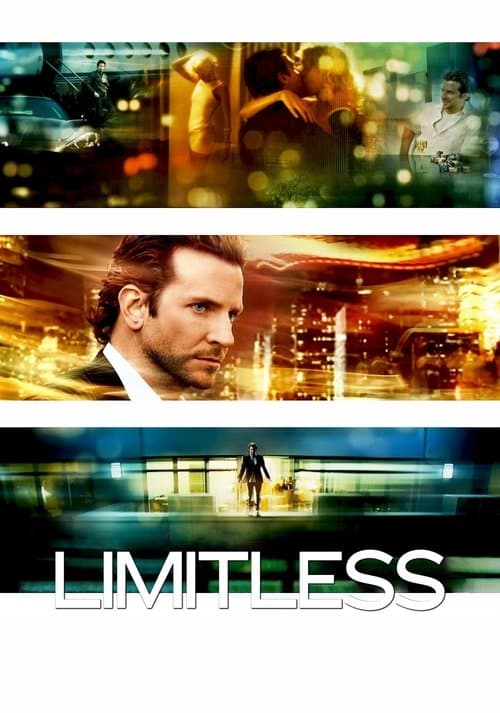
Limitless (2011): Ending Explained
"What if a pill could make you rich and powerful?"
The life of an unsuccessful writer is transformed by a top-secret 'smart drug' that allows him to use 100% of his brain and become a perfect version of himself. His enhanced abilities soon attract shadowy forces that threaten his new life.
9 min read
Release Year: 2011
Rating: 7.2/10
Runtime: 106 minutes
By Luna Sterling
Limitless (2011): Ending Explained
In the shadowy underbelly of ambition and intellect, Limitless (2011) delivers a pulse-pounding thriller that probes the intoxicating allure of unlocking the human mind. Directed by Neil Burger and starring Bradley Cooper as the everyman turned superman, the film weaves a tale of neural enhancement gone perilously awry. As we dissect its enigmatic close, we'll peel back the layers of tension and psychological haze that leave viewers questioning the price of perfection. If you're searching for a Limitless ending explained, this breakdown uncovers the literal events, symbolic depths, and lingering ambiguities that make the finale so viscerally gripping.
Quick Recap
Eddie Morra, a down-on-his-luck writer drowning in creative drought and personal failures, stumbles into a life-altering discovery when his ex-wife's brother slips him NZT-48—a clandestine smart drug promising access to 100% of the brain's potential. The pill ignites Eddie's world: memories sharpen like shattered glass, ideas cascade in vivid torrents, and his rundown New York apartment transforms from squalor to sanctuary under its influence. He devours his stalled novel, seduces opportunities (and people) with effortless charisma, and even beds his landlord's wife in a haze of heightened senses. But paradise fractures when he finds his supplier murdered, thrusting him into a web of theft, paranoia, and shadowy pursuits.
Fuelled by the drug's relentless high, Eddie pivots to Wall Street, turning a loan shark's $100,000 into millions through prescient day-trading. He rekindles his romance with ex-girlfriend Lindy, only for cracks to emerge—blackouts, "time skips," and whispers of bodies piling up among NZT users. Enter Carl Van Loon, a titan of finance who enlists Eddie for high-stakes mergers, while a trench-coated stalker and vengeful loan shark Gennady close in. Eddie fights back by reverse-engineering the drug, fortifying his life with bodyguards and lawyers, but the toll mounts: withdrawals claw at his sanity, relationships fray under the drug's artificial glow, and the line between enhancement and enslavement blurs. As the merger day dawns, Eddie's empire teeters on the edge of collapse, with betrayals lurking in every shadowed corner.
What Happens in the Ending
The finale of Limitless unfolds in a crescendo of visceral desperation and calculated triumph, plunging us into Eddie's unraveling psyche amid the sterile chill of boardrooms and the metallic tang of violence. It kicks off on the fateful merger day, where rival tycoon Hank Atwood slips into a coma—revealed later as NZT withdrawal's brutal grip. Eddie, sharp but strained, spots Atwood's driver, the enigmatic trench-coated man, in a police lineup, piecing together that Atwood was a fellow user hunting for more pills. But betrayal strikes close: Eddie's attorney pilfers his NZT stash during the lineup, leaving him exposed as withdrawal's fog descends like a suffocating veil, dulling his once-electric mind to a throbbing haze.
Interrogation by Van Loon turns claustrophobic, Eddie's thoughts fracturing under the pressure, until a grisly parcel arrives—severed hands of his bodyguards, a stark warning dripping with implied savagery. He staggers home through rain-slicked streets, the city's neon blur mocking his fading clarity, only for Gennady to burst in, veins bulging from a fresh NZT injection straight into his bloodstream for an amplified, unyielding rush. The loan shark, eyes wild with drug-fueled supremacy, taunts Eddie, knife gleaming under dim lights as he prepares to gut him. In a primal surge, Eddie seizes his own blade, stabbing Gennady in the chaos—the air thick with the coppery scent of blood and the ragged gasps of survival. With his supply depleted and clarity slipping, Eddie does the unthinkable: he laps at the pooling blood from Gennady's wound, ingesting trace NZT to jolt his brain back online in a grotesque, animalistic revival.
Empowered once more, Eddie dispatches the remaining henchmen with cold precision, his mind a whirlwind of tactical clarity cutting through the carnage. He tracks the trench-coated man to Atwood's deathbed, deducing the plot's threads, and reclaims his stolen pills from the attorney's lair. The screen fades to black on this blood-soaked apex, then leaps forward a year. Now a polished Senate candidate, Eddie exudes unshakeable poise in tailored suits, his campaign a symphony of charisma. Van Loon confronts him in a tense, wood-paneled office, revealing he's seized the NZT-producing company and quashed Eddie's lab—offering a lifetime supply in exchange for political allegiance, his voice laced with the quiet menace of mutual destruction. Eddie, unflinching, counters that he's transcended the drug: reverse-engineered a perfect version, weaned off without losing his gifts. Van Loon, defeated, slinks away into the shadows.
The film closes on an intimate lunch with Lindy, sunlight filtering through café windows like a fragile normalcy. Eddie orders in flawless Mandarin, the words rolling off his tongue with effortless grace, but Lindy's gaze sharpens—suspicion flickering in her eyes like a storm cloud over calm waters. He meets her stare and utters a simple, "What?"—the screen lingering on the unspoken tension, the air heavy with unresolved doubt.
The Meaning Behind the Ending
At its core, the ending of Limitless symbolizes the intoxicating cycle of addiction and ascension, where the pursuit of godlike intellect devolves into a visceral, blood-drenched ritual of self-preservation. Eddie's act of consuming Gennady's blood isn't mere survival—it's a metaphor for the drug's parasitic hold, forcing him to literally internalize its essence in a moment of raw, primal degradation. This grotesque ingestion evokes the psychological underbelly of enhancement: the illusion of control masking a dependency that demands sacrifice, turning the body into both vessel and battlefield. The year-later reveal amplifies this, positioning Eddie's claimed independence as a pinnacle of human potential, yet the final suspicious glance from Lindy injects a chilling ambiguity—hinting that true transcendence might be as illusory as the drug's high, a fragile veneer over lingering shadows.
Thematically, the close grapples with the cost of unchecked ambition in a world of shadowy power brokers. Van Loon's offer underscores how NZT represents not just personal evolution but a tool for systemic domination, traded like currency in the corridors of influence. Eddie's rejection symbolizes a defiant reclamation of agency, but it carries the weight of moral ambiguity: has he truly escaped the cycle, or merely evolved into a more dangerous predator? The ending's mood—shifting from the sweaty, knife-edge terror of the apartment showdown to the polished unease of political lunch—mirrors the film's exploration of the mind's dark recesses, where clarity breeds isolation and genius invites paranoia.
Character Arcs and Resolution
Eddie's arc crescendos from aimless drifter to self-made sovereign, his journey a psychological odyssey through the highs of godlike insight and the lows of withdrawal's disorienting void. The finale resolves his transformation not with tidy redemption but with a haunting evolution: by killing Gennady and reclaiming his pills, he sheds the victim role, emerging as the architect of his fate. Yet his Senate run and off-drug boast suggest a hard-won maturity—retaining hyper-cognition without the crutch—though Lindy's wary eyes question if this "perfect" Eddie is sustainable or just another layer of deception.
Lindy, the emotional anchor, arcs from frustrated ex to reluctant witness of Eddie's ascent, her breakup and reunion highlighting the drug's relational erosion. The ending's lunch scene resolves her arc with poignant tension: she's drawn back, yet her suspicion signals unresolved trauma, leaving their bond fragile amid his otherworldly poise. Van Loon embodies the old guard's cynicism, his defeat marking the torch-passing to Eddie's generation, but it resolves with mutual wariness—neither fully victorious. Antagonists like Gennady and the trench-coated man meet grisly ends, underscoring how NZT amplifies threats into monstrous foes, while Eddie's survival cements his arc as one of ruthless adaptation.
Alternate Interpretations
The ending's deliberate ambiguity invites multiple lenses, particularly around Eddie's claimed independence from NZT. One reading posits it as genuine triumph: his reverse-engineering success allows a clean break, symbolizing the triumph of intellect over substance, with the Mandarin fluency as proof of internalized genius. This interpretation frames the finale as aspirational, a nod to human potential unbound by chemical chains.
Conversely, Lindy's piercing look suggests deception—Eddie might still be dosing covertly, his "weaning" a calculated lie to outmaneuver Van Loon and maintain his edge. This darker take amplifies themes of addiction's inescapability, implying the drug's psychological imprint lingers like a shadow self, eroding authenticity. The trench-coated man's role adds another layer: if he's tied to Atwood's hunt, perhaps Eddie remains a target, his political rise a precarious illusion. These forks keep the tension alive, mirroring the film's mind-bending unpredictability.
Themes and Symbolism
Limitless 's ending reinforces core themes of addiction's double-edged sword and the ethical vertigo of cognitive enhancement, subverting the rags-to-riches trope by infusing it with psychological peril. NZT symbolizes forbidden knowledge—akin to a modern Pandora's box—unleashing potential while inviting downfall, as seen in the trail of dead users and Atwood's coma. The blood consumption subverts heroic tropes, evoking vampiric rebirth: Eddie doesn't just survive; he absorbs his enemy's power, blurring lines between victim and villain in a tense ritual of contamination.
Broader motifs of isolation and illusion permeate the close: the year jump contrasts Eddie's external success with internal voids, his fluent Mandarin a symbol of cultural transcendence masking emotional disconnect. The film subverts ambition's allure, showing how "limitless" minds breed paranoia—the trench coat's perpetual shadow, Van Loon's bargain—reminding us that true power often exacts a solitary, unsettling toll.
Final Thoughts
The ending of Limitless works masterfully as a psychological gut-punch, blending visceral action with introspective unease to leave audiences suspended in a web of doubt. It's not a neat bow but a lingering fog, evocative of the mind's own treacherous depths—has Eddie conquered his demons, or invited worse ones? This ambiguity elevates the film beyond pulp thriller into a meditation on what we sacrifice for greatness, its atmospheric tension seeping into your thoughts long after the credits. For anyone chasing that rush of unlocked potential, it's a cautionary whisper: brilliance comes at a bloody, suspicious price. If Limitless hooked you with its highs, this close ensures the comedown haunts.