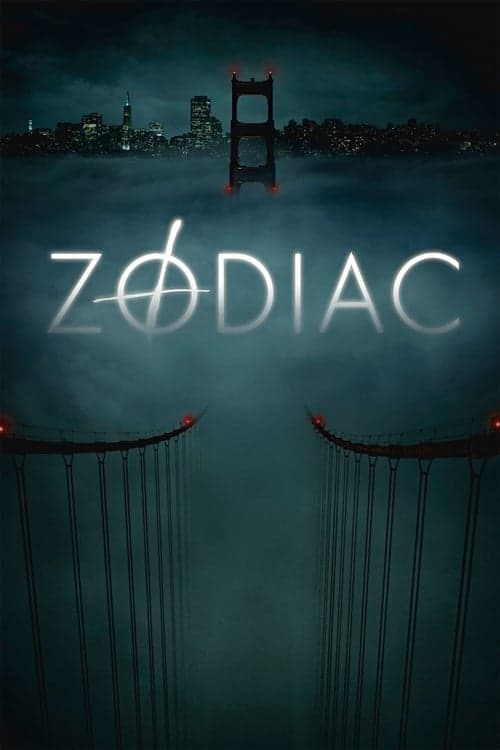
Zodiac (2007): Ending Explained
"There's more than one way to lose your life to a killer."
The Zodiac murders cause the lives of Paul Avery, David Toschi and Robert Graysmith to intersect.
7 min read
Release Year: 2007
Rating: 7.526/10
Runtime: 157 minutes
By Luna Sterling
Zodiac (2007): Ending Explained
Quick Recap
In the shadowed underbelly of 1960s and 1970s San Francisco, a chilling fog of fear descends as the Zodiac Killer unleashes terror through brutal murders, cryptic ciphers, and taunting letters that echo like whispers in the night. The film, directed by David Fincher, weaves a taut narrative around the real-life obsession that grips a cadre of unlikely allies: San Francisco police inspectors David Toschi (Mark Ruffalo) and William Armstrong (Anthony Edwards), whose days blur into sleepless nights chasing leads amid the city's humid tension; and San Francisco Chronicle reporters Robert Graysmith (Jake Gyllenhaal), a wide-eyed cartoonist drawn into the abyss, and the hard-living crime reporter Paul Avery (Robert Downey Jr.), whose bravado masks a growing unraveling.
As the Zodiac's menacing phone calls crackle through wires and his symbols—crosshairs and enigmas—scrawl across newspapers, these men become ensnared in a psychological web. The killer's taunts escalate, claiming victims in the dim glow of lovers' lanes and quiet suburbs, while the investigators and journalists pore over clues in smoke-filled rooms, their lives fracturing under the weight of an elusive phantom. What begins as a hunt for justice morphs into a personal descent, with relationships straining and sanity fraying as the case stretches across decades, leaving the air thick with unresolved dread.
What Happens in the Ending
The film's final act unfolds in a slow, suffocating exhale, years after the initial frenzy, as the relentless passage of time has weathered the once-fierce pursuit into something hollow and haunting. Robert Graysmith, now a family man and still the Chronicle's editorial cartoonist, navigates a domestic life shadowed by his unresolved fixation. In a poignant, dimly lit scene, he visits Paul Avery in a seedy Vallejo motel room, the air heavy with the stale scent of cigarette smoke and despair. Avery, gaunt and hollow-eyed, chain-smoking and paranoid, clutches a typewriter like a lifeline, his once-sharp wit dulled by addiction and the case's toll. Their conversation hangs in the humid air, a mix of faded camaraderie and quiet accusation, as Avery warns Graysmith of the killer's enduring shadow before succumbing to his demons.
Meanwhile, David Toschi, the charismatic inspector whose suspenders once symbolized unyielding resolve, faces demotion and reassignment, his office stripped bare in a sterile bureaucratic ritual that feels like a funeral for ambition. The camera lingers on his defeated posture, the echo of past stakeouts now silenced. Graysmith, driven by a compulsion that pulses like a distant heartbeat, finally confronts his prime suspect, Arthur Leigh Allen, in a tense, rain-slicked encounter at Allen's cluttered home. The air grows thick with unspoken menace as Graysmith steps into the dim, musty space filled with the faint whiff of old books and isolation. Allen, affable yet chillingly evasive, denies everything, his words dripping with a false warmth that leaves Graysmith—and the audience—teetering on the edge of revelation without crossing it.
The film closes on a stark, unresolved note: Graysmith's voiceover narrates the enduring mystery, accompanied by visuals of the unsolved ciphers projected against a black screen, their cryptic lines glowing faintly like ghosts in the void. No arrest, no closure—just the persistent hum of an open case, fading into silence as the Zodiac's symbol lingers, a final taunt etched in the darkness.
The Meaning Behind the Ending
At its core, the ending of Zodiac is a visceral meditation on the devouring nature of obsession, where the killer's ciphers serve as metaphors for the impenetrable chaos of truth itself—symbols that promise clarity but deliver only frustration, much like the fog-shrouded streets of San Francisco that swallow secrets whole. The lack of resolution isn't a narrative cop-out but a deliberate psychological gut-punch, symbolizing how evil like the Zodiac's doesn't always yield to human will; it lingers in the psyche, a tension that coils tighter with each unsolved thread. Fincher's direction amplifies this through sensory immersion: the damp chill of rain on pavement, the acrid bite of Avery's cigarettes, the claustrophobic press of Allen's home—details that evoke the inescapable grip of doubt, turning personal victory into a hollow echo.
Thematically, it underscores the film's exploration of truth's elusiveness in an era of media frenzy and institutional failure, where the Zodiac's taunts aren't just crimes but assaults on certainty. The ending represents the triumph of ambiguity over absolution, a reminder that some shadows refuse to lift, leaving characters—and viewers—in a state of perpetual unease, their breaths shallow in the lingering mist.
Character Arcs and Resolution
Robert Graysmith's arc culminates in a bittersweet stasis, his transformation from naive observer to dogged investigator complete, yet unfulfilled. By the end, he's traded the adrenaline of the chase for fatherhood, sketching cartoons in a sunlit home that feels worlds away from the case's nocturnal horrors—yet his eyes betray the unresolved itch, a psychological scar that defines his quiet victory. It's a resolution that's more about survival than triumph, his persistence a double-edged sword that saves his life but costs his peace.
Paul Avery's descent is the most visceral unraveling, his arc a cautionary spiral from swaggering journalist to broken recluse, the case's tension eroding his core like acid on film. His final scene with Graysmith pulses with raw vulnerability, resolving in tragic isolation, a man consumed by the very story he chased. David Toschi, the procedural heart, arcs toward institutional defeat, his reassignment a stark severing of passion from duty, leaving him adrift in the bureaucratic chill—his charisma dimmed, but his integrity intact. Collectively, their journeys converge on a shared theme of endurance amid erosion, where "resolution" means accepting the weight of what can't be solved, their psyches forever marked by the Zodiac's invisible fingerprints.
Alternate Interpretations
The ending's ambiguity invites multiple lenses, particularly around Arthur Leigh Allen's confrontation. One reading casts it as a near-miss revelation: Graysmith's hesitation in Allen's lair symbolizes the terror of unverified truth, suggesting the killer slipped away not through innocence but evasion, heightening the psychological dread of "what if." Alternatively, it could subvert expectations of closure, interpreting the unsolved ciphers as a meta-commentary on filmmaking itself—Fincher, like Graysmith, pieces together fragments without a definitive frame, leaving viewers to project their own shadows onto the blank screen.
A more optimistic take sees the ending as quiet empowerment: Graysmith's family life and narration imply that living beyond obsession is the true justice, the Zodiac's legacy diluted by time's indifferent flow. Yet, in the film's moody undertones, this feels like denial, the rain-swept ambiguity ensuring no interpretation fully dispels the unease.
Themes and Symbolism
The ending reinforces Zodiac's core themes of obsession's corrosive hunger and the fragility of truth, subverting the traditional crime thriller's catharsis by denying it—much like how the Zodiac's crosshair symbol, recurring in fades to black, symbolizes a perpetual targeting that misses its mark. Metaphors abound in the mundane: Avery's motel room, with its flickering neon and ashtray overflow, embodies the slow poison of fixation; Toschi's empty desk, the cold sterility of forgotten justice. Psychologically, it probes the human cost of pursuit, where tension builds not in violence but in the quiet rot of doubt, the ciphers standing as emblems of chaos theory—patterns that tease order but dissolve into entropy. Fincher subverts the hero's journey, transforming symbols of progress (typewriters, files) into relics of futility, amplifying the film's atmospheric dread: a world where mystery isn't solved but inhaled, settling like fog in the lungs.
Final Thoughts
Zodiac's ending is a masterstroke of restraint, its unresolved tension a visceral hook that lingers long after the credits, mirroring the real case's haunting perpetuity. By forgoing tidy bows, Fincher crafts an immersive psychological thriller that prioritizes mood over momentum, drawing viewers into the characters' fractured minds with subtle sensory cues—the patter of rain, the hush of empty rooms—that make the ambiguity feel intimately personal. It works brilliantly because it respects the audience's intelligence, inviting us to sit with the discomfort, much like Graysmith does in that final, shadowed home. In a genre often chasing spectacle, this ending's quiet devastation elevates Zodiac to timeless unease, a film where the real killer is the question that never dies.