Vivarium (2019): Ending Explained
"You're home. Forever."
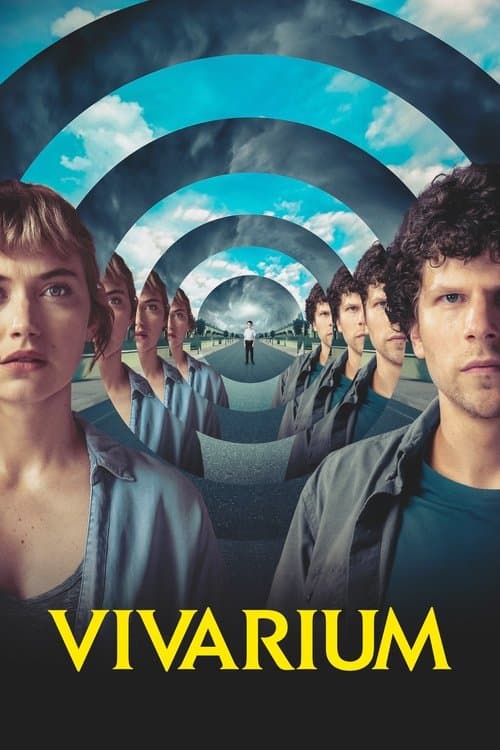
A young woman and her fiancé are in search of the perfect starter home. After following a mysterious real estate agent to a new housing development, the couple finds themselves trapped in a maze of identical houses and forced to raise an otherworldly child.
8 min read
Release Year: 2019
Rating: 6.045/10
Runtime: 99 minutes
By Luna Sterling
Vivarium (2019): Ending Explained
As Luna Sterling, I've long been fascinated by films that burrow under your skin like an unwelcome intruder, leaving a lingering chill that defies easy escape. Vivarium (2019), directed by Lorcan Finnegan, is one such nightmare wrapped in the mundane facade of suburban bliss. This eerie sci-fi horror doesn't just trap its characters in an endless loop of identical houses—it ensnares the viewer in a web of existential dread, questioning the very essence of home, family, and release. In this Vivarium ending explained, we'll dissect the film's haunting conclusion, peeling back layers of symbolism and psychological tension to reveal what lingers in the sterile air of Yonder long after the credits roll.
Quick Recap
Gemma (Imogen Poots) and Tom (Jesse Eisenberg), a young couple seeking their first home, stumble into Yonder, a labyrinthine housing development where every street and house mirrors the last in chilling uniformity. Lured by the cryptic real estate agent Martin, they tour a flawless model home before he vanishes, stranding them in this artificial purgatory. Their car runs dry on endless, looping roads, and escape attempts—by foot or fire—only circle back to House Number 9, where the air hangs heavy with unspoken isolation, the walls echoing their growing desperation.
Sustained by mysterious vacuum-sealed rations that taste of nothing but obligation, the couple's fragile bond frays under the weight of confinement. A new delivery arrives: an infant, alien in its rapid growth and eerie mimicry, accompanied by a note demanding they raise it for "release." The child accelerates from newborn to adolescent in days, its shrill cries piercing the tense silence like shards of glass, while fractal patterns flicker on the TV like hypnotic voids. Tom withdraws into obsessive digging in the garden, unearthing buried horrors, as Gemma grapples with reluctant maternal instincts. The Boy, as they dub it, matures into a rasping young adult, his throat sacs inflating with otherworldly menace, locking them out and dooming Tom to a slow, wheezing decline.
What Happens in the Ending
The finale of Vivarium unfolds with a visceral finality that tightens like a noose, blending raw physicality with an undercurrent of inescapable fate. As Tom's illness ravages him—his breaths ragged and labored in the stifling confines of the car—Gemma begs the Boy for medicine, her voice cracking against the unyielding facade of the house. The Boy's response is chillingly detached: "Maybe it's time he was released," a phrase that drips with the cold finality of the suburb's rules. Tom succumbs, his body zipped into a vacuum-sealed bag by the Boy, who drags it to the garden hole Tom dug obsessively, the earth swallowing it whole as grass seamlessly knits over the scar, leaving no trace but the faint, metallic tang of soil in the air.
Horror mounts as Gemma, fueled by grief and defiance, swings the pickaxe at the Boy, wounding him in a spray of unnatural ichor. He hisses—a guttural, serpentine sound that vibrates through the pavement—and crawls into a hidden labyrinth beneath the sidewalk, his form slithering like a shadow into the underbelly of Yonder. Gemma pursues, crashing through a concealed door into a disorienting warren of rooms bleeding into other houses. The air grows thick and fetid here, thick with the moans of trapped strangers: some withered in corners, others swinging from nooses in silent suicide, while more Boys tend to their "parents" with mechanical indifference. It's a visceral plunge into the suburb's rotten core, the walls pulsing with the collective despair of countless cycles.
Exhausted and broken, Gemma tumbles back into the familiar sterility of Number 9, her body collapsing in weak, moaning gasps on the cold floor. The Boy, ever the dutiful caretaker, tends to her with eerie calm, zipping her into a vacuum bag as she fades, whispering that "mothers die after raising their sons." He buries her alongside Tom, the ground reforming flawlessly, erasing their existence like a dream dissolved in dawn's light. The Boy then drives the couple's car back to the real estate office, the engine's hum a monotonous dirge against the endless green lawns. There, an ancient Martin lies wheezing on the floor, his skin like cracked parchment. The Boy takes his name tag, seals Martin's husk into a bag, and deposits it into a garbage chute masquerading as a file drawer—the click of the mechanism echoing like a final judgment. As a fresh couple enters, wide-eyed and hopeful, the Boy greets them with Martin's exact mimicry: a smile that doesn't reach his hollow eyes, perpetuating the trap in an infinite, suffocating loop.
The Meaning Behind the Ending
At its core, the ending of Vivarium is a brutal metaphor for the parasitic cycle of life and expectation, echoing the film's opening with the cuckoo's brood parasitism—a bird that invades nests, ejects the true offspring, and forces unwitting hosts to nurture its own. The Boy isn't just a child; he's an invader, draining Gemma and Tom's vitality until "release" reveals itself as death, the vacuum bags a grotesque symbol of preserved emptiness, sucking out life like the suburb's soul-less uniformity. The labyrinth beneath Yonder exposes the illusion of escape: it's not a way out but a revelation of the system's vast, hidden machinery, where countless victims feed the next generation of parasites. This visceral unraveling underscores the film's theme of entrapment—not just physical, but emotional and societal—where the pursuit of the "perfect" home devours individuality, leaving only mimicry and decay in the stale, recirculated air.
The psychological tension peaks in this denouement, as the mood shifts from simmering dread to outright horror, the sensory assault of hissing crawls and moaning voids amplifying the realization that freedom is a lie peddled by the very architects of confinement. "Release" twists from promise to punchline, a dark irony that the couple's rebellion only accelerates their end, symbolizing how societal pressures—marriage, parenthood, domesticity—can hollow out the spirit until nothing remains but a zipped-up shell.
Character Arcs and Resolution
Gemma and Tom's arcs trace a harrowing descent from hopeful couple to broken vessels, their journeys culminating in a resolution that's as merciful as it is merciless. Gemma evolves from reluctant observer to fierce protector, her initial denial of motherhood—"I'm not your mother!"—giving way to pity and violence, a visceral arc of imposed nurturing that costs her everything. Her pursuit into the labyrinth is her final act of agency, a desperate clawing through the darkness, only to emerge into the same trap, her moans fading as the Boy seals her fate. It's a poignant, gut-wrenching end to her psychological tethering, where maternal instinct becomes her undoing in this brood-parasite nightmare.
Tom, meanwhile, embodies withdrawal and futile resistance, his landscaping roots twisting into obsessive digging—a man reshaping earth that reshapes him back. From sarcastic quips to silent entombment in his own hole, his arc dissolves into illness and isolation, "released" not as escape but erasure. Their resolutions entwine in the garden burial, the grass's reformation a silent epitaph to their eroded bond, highlighting how Yonder's sterile perfection strips away humanity, leaving the couple as footnotes in an unending cycle.
Alternate Interpretations
Vivarium's ending invites ambiguity, its labyrinthine reveal opening doors to multiple readings without firm closure. One interpretation sees it as a literal alien invasion, the Boys as extraterrestrial breeders using humans as incubators in a vast, hidden network beneath suburbia— the office as the nerve center, perpetuating recruitment through mimicry. Yet, the film's grounded dread suggests a more metaphorical lens: Yonder as a stand-in for modern suburbia itself, a soul-crushing machine where couples are lured into cycles of consumption and conformity, "raising" the next generation only to be discarded, their deaths fueling the illusion of progress.
Another angle posits psychological allegory—Gemma and Tom's entrapment as manifestations of relational stagnation or prenatal anxiety, the Boy symbolizing an unwanted child that consumes their future. The ending's loop, with the Boy becoming Martin, could imply reincarnation or inherited trauma, where victims become perpetrators, blurring lines between monster and host in a tense, echoing void of inherited dread.
Themes and Symbolism
The ending reinforces Vivarium's core themes of isolation and artificiality, subverting the American Dream into a claustrophobic horror. Suburbia symbolizes the facade of normalcy—identical houses like uniform expectations, their flawless exteriors hiding buried corpses and moaning underbellies. Mimicry is a chilling motif, from Martin's parroting to the Boy's throat sacs and fractured TV patterns, representing lost identity in a world that demands replication over authenticity, the rasping sounds evoking a throat choked by unspoken conformity.
Parenthood emerges as a parasitic burden, the rapid-growth child a metaphor for how societal roles accelerate emotional exhaustion, with "release" subverting liberation into oblivion. The vacuum bags and reforming grass symbolize erasure and renewal's dark side—life persisting not through vitality, but through mechanical recycling, the air heavy with the psychological weight of inevitability.
Final Thoughts
Vivarium's ending lands like a vacuum seal snapping shut—tight, irrevocable, and profoundly unsettling, leaving you gasping in the quiet aftermath. It works masterfully because it doesn't resolve; it infects, mirroring the film's tension in its refusal to offer catharsis, instead amplifying the mood of trapped futility. For audiences craving ending explained clarity amid horror's ambiguities, this conclusion is a triumph of atmospheric dread, a visceral reminder that some homes aren't built to nurture—they're designed to devour. If you've felt the suburban itch turn to itch of unease, this film, and its looping finale, will haunt your own doorstep long after.