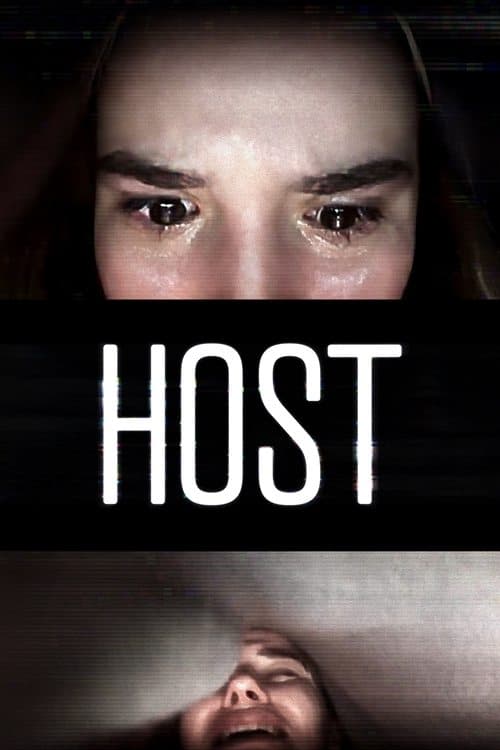
Host (2020): Ending Explained
Host ends mid-attack as the Zoom timer expires, refusing closure and making the call itself the horror
7 min read
Release Year: 2020
Rating: 6.6/10
Runtime: 57 minutes
By Luna Sterling
The short answer
The short answer
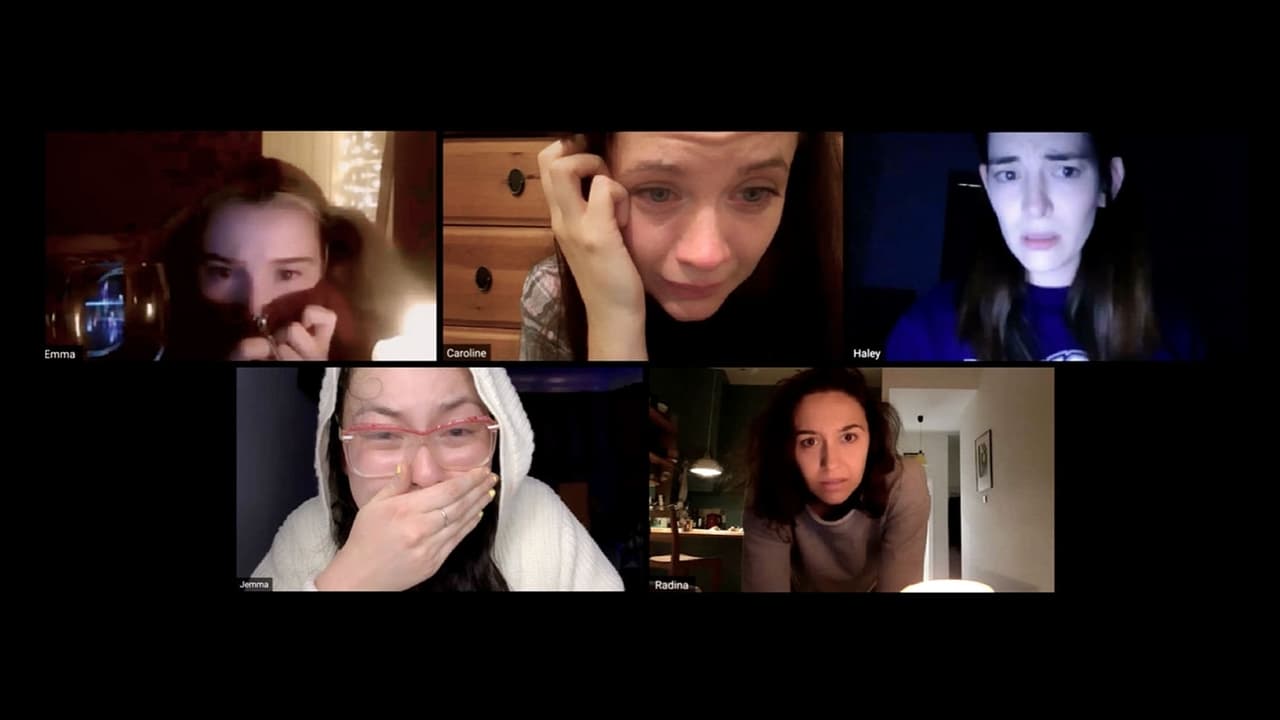
Nobody survives Host, and the film won't let you pretend otherwise. The ending doesn't resolve the demon, doesn't confirm Jemma and Haley's fates, and doesn't hand you an aftermath. It cuts to black mid-attack, the instant the Zoom call timer runs out. That's the whole point. The call is the movie's clock, its setting, and its killer, and when it expires, so does the film. Rob Savage built a 56-minute horror movie where the thing hunting these friends is also the thing holding the frame together. The monster and the container are the same object.
Three appearances, tracked
First appearance
Early on, Haley points her instant camera down her own hallway and takes a photo of the living room she's sitting in. The Polaroid develops and shows a figure hanging from the ceiling that isn't there. The flash didn't just illuminate the room. It revealed a room layered on top of it. At this point the camera is an instrument of knowledge: it shows Haley something true that her eyes can't.
The turn
By the end, that same camera is no longer showing anything. Jemma has broken into the house after the demon smashed a bottle against her head and tore through the kitchen. She finds Haley under the desk. Their escape plan is simple and desperate: move through the dark house and use the flash to see where they're going. The camera has flipped from a tool that reveals the hidden into a tool that just barely keeps the lights on. It stops being a window and becomes a torch.
The ending
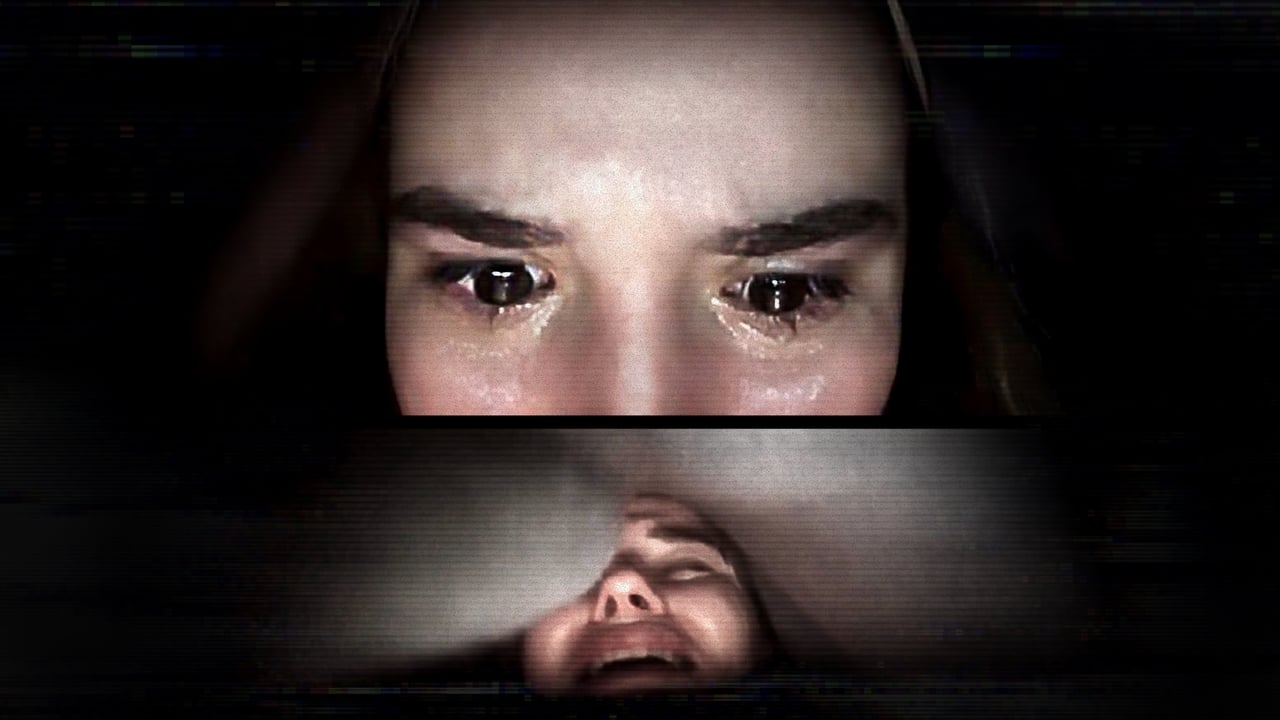
The demon shows up in the final flash. Jemma and Haley are cornered, the camera fires one last burst of light, and the thing is there inside it. Then the Zoom timer expires and the movie stops. The instant camera's last act isn't to expose the demon or drive it back or prove anything. It's to give the demon a place to be seen, one frame, and then the feed dies.
What changes across those three points is what the flash is for. First it's a detector. Then it's a survival tool. At the end it's a stage light for the thing that's about to kill them.
Where the motif breaks
Here's where Host stops behaving the way a haunted-camera movie is supposed to behave. The instant camera never becomes a weapon. In the earlier photograph, the flash gave Haley information she could act on: it told her there was a hanging figure in her home, which fed back into Seylan's explanation that the demon took the fabricated dead friend like a mask. The camera was doing work. It was part of the mechanism of the haunting.
At the end it does none of that. The flash fires and the demon is simply there, mid-rush, and then the timer kills the feed. The motif's expected payoff (light reveals the truth, truth gives you a chance) is denied. The light reveals the demon and the demon is already too close. The reveal and the death arrive in the same instant.
That break is the actual ending. Host isn't saying the demon can be seen, so it can be stopped. It's saying visibility is worthless when the monster is already in the room and the only clock that matters is the one in the corner of the screen counting down.
It had all the points, they were really fleshed out and detailed, but we improvised around a lot of stuff. And Rob would be typing on Zoom while we're in the middle of a scene, telling us what to say.
What it adds up to
What you saw the first time
The camera was the group's one piece of ghost-hunting equipment, the thing that caught the hanging figure and gave the séance a physical clue to work with. The ending just points it at the demon and runs out of clock.
What you see now
The camera was never the weapon. It was the demon's delivery system. The flash that first exposed the hanging figure is the same flash that frames the demon's final charge, which means the device that made the haunting legible is the device that stages the kill. The zoom timer expiring at that exact moment isn't a gimmick. It's the film admitting that the call itself, the thing that was supposed to keep six friends connected through lockdown, is what was holding them in the demon's reach the entire time.
The Zoom timer is the thread that ties the camera motif to the ending's cruelty. A weekly call has a beginning and an end. The friends joined it the way they'd joined every other one. But the timer doesn't care that there's a demon in the room. It hits zero and the meeting ends, and that mechanical, boring, everyday fact is what "Host" uses as its final image. The horror isn't just that the demon is in the house. It's that the software doesn't notice.
Consider what this does to the surviving characters' status. Haley and Jemma are the last two we see, cornered with the flash going off. There's no cut to a rescue, no shot of them running into the street, no morning. The film's runtime is 56 minutes and the call's timer is the film's runtime. There is no footage after the call ends because there is no frame to put it in. The demon wins by default, or the film refuses to say, and the refusal is the same gesture. You can't have an aftermath when the only recording device has stopped recording.
The other thread
The secondary thing the ending settles is Seylan. The medium gets disconnected twice: once early when her internet cuts out mid-séance, and again when the demon interrupts her while she's telling the girls how to close the circle. She never comes back. She never gets a final scene, never confirms whether her closing instructions worked, never witnesses what her warning about the mask actually produced. The film drops her the way the demon drops her: cut off, mid-sentence, no resolution.
That matters because Seylan is the only person in the film who understands the rules. She's the one who explains that Jemma's lie about the hanged school friend gave the demon a face to wear. When she's severed from the call, the group loses its only source of accurate information about what's happening to them, and nobody replaces her. Every decision after her second disconnection is made blind. Caroline, Radina, Emma, Teddy, Jinny, Alan: all of them die in the dark, with no medium on the line to tell them what they're dealing with.
The ending confirms that Seylan's absence was permanent and that it cost everyone. The demon didn't kill her on screen. It just removed her from the conversation, and the conversation is the only place where anything in this film gets figured out.
The verdict
The verdict
Host ends the way a call ends: abruptly, for reasons nobody in the room controls, with the conversation simply stopping. Savage, Hurley, and Shepherd made a film where the demon and the software are indistinguishable threats, and the closing shot of a rushing figure inside the last camera flash is the cleanest version of that idea. Jemma and Haley's fate is unresolved on purpose. Not because the film is coy about death (six characters die on screen, most of them badly) but because the film's subject was never survival. It was the helplessness of being trapped in a window on someone else's screen while something moves through the house behind you.
If you want an ending that tells you who lived, this isn't it. What Host gives you instead is the knowledge that the timer was always going to run out, that Seylan was always going to get disconnected, and that the instant camera was always going to show you exactly what's coming without giving you a second to do anything about it. That's the deal. The flash goes off, the demon arrives, and the meeting ends.