Us (2019): Ending Explained
"Watch yourself."
Husband and wife Gabe and Adelaide Wilson take their kids to their beach house expecting to unplug and unwind with friends. But as night descends, their serenity turns to tension and chaos when some shocking visitors arrive uninvited.
10 min read
Release Year: 2019
Rating: 7/10
Runtime: 116 minutes
By Luna Sterling
Us (2019): Ending Explained
By Luna Sterling
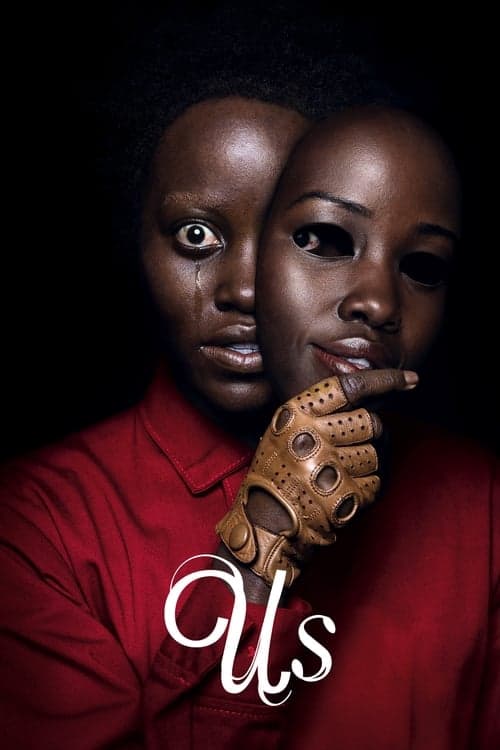
Jordan Peele's Us (2019) is a chilling descent into the shadows of the self, where the familiar beachside idyll of Santa Cruz twists into a nightmarish confrontation with our hidden doubles. As a film critic, I've long admired how Peele weaves psychological dread with visceral horror, turning everyday spaces into echoing voids of unease. The film's ending, with its gut-wrenching twist, lingers like the metallic tang of blood on the tongue—unsettling, inevitable, and profoundly disorienting. If you're here for the Us ending explained, buckle up: we'll unpack the literal chaos of the finale, the symbolic undercurrents, and the mind-bending ambiguities that make this conclusion a masterclass in cinematic unease.
Quick Recap
In 1986, a young Adelaide Thomas drifts from her parents amid the garish lights and echoing laughter of the Santa Cruz Beach Boardwalk. She steps into a funhouse, its mirrors warping her reflection into something sinister. There, in the dim, claustrophobic maze, she encounters Red—a silent, ragged girl who mirrors her every move, her eyes hollow with unspoken hunger. The meeting leaves Adelaide traumatized; she withdraws, her voice silenced, retreating into a shell of quiet isolation.
Fast-forward 33 years, and Adelaide—now married to Gabe Wilson, with children Zora and Jason in tow—returns to the same beach house for a reluctant family vacation. Joined by the boisterous Tyler family, the group savors sun-soaked days, but an undercurrent of tension simmers. Jason spots a eerie figure on the beach, arms outstretched like a supplicant, and later, a homeless man clutching a faded sign evokes Adelaide's buried memory. As night falls, the power flickers out, and the Wilsons' world shatters: their doppelgängers, the Tethered, emerge from the darkness. These underground clones—Red for Adelaide, Abraham for Gabe, Umbrae for Zora, and the scarred, unpredictable Pluto for Jason—invade with jerky, animalistic precision, their red jumpsuits stained with the grit of forgotten tunnels. Red, rasping through a throat scarred by years of silence, declares their intent to "untether" from the surface world's souls, mirroring every action above while starving below.
The night erupts into a frenzy of survival. The Wilsons fight back, killing Abraham in a brutal scuffle that leaves Gabe bloodied and resolute. They flee to the Tylers' home, only to witness the family's slaughter by their own doubles. Overpowering the attackers, the Wilsons glimpse the horror unfolding nationwide on TV: the Tethered forming a vast human chain, hands linked in a mocking echo of Hands Across America, encircling the city in silent rebellion. Racing toward escape along the coast, they dispatch Umbrae in a heart-pounding roadside clash, her body crumpling into the shadows. But the boardwalk beckons like a gravitational pull, drawing them back to the funhouse where it all began—and where the true unraveling awaits.
What Happens in the Ending
The finale unfolds with a suffocating intensity, the salty ocean air thick with the acrid smoke of burning wreckage. The Wilsons' car screeches to a halt at the boardwalk, now a slaughterhouse of twisted bodies and flickering emergency lights. A flaming vehicle blocks the road, its heat warping the night air into shimmering waves. Jason, his young face etched with the sharp instincts of survival, senses the trap: Pluto lurks nearby, match in hand, ready to ignite their escape. In a moment of cold brilliance, Jason walks backward, his steps deliberate and echoing on the cracked pavement. Pluto, tethered to his every motion, mirrors him unwittingly—stumbling straight into the inferno. Flames devour the doppelgänger in a roar of orange fury, his screams twisting into the wind like a final, guttural plea. Adelaide watches, her face a mask of conflicted sorrow, the firelight dancing in her eyes as the scent of charred flesh clings to the breeze.
Distracted by the blaze, the family misses Red's shadow slinking from the darkness. She snatches Jason, her grip iron-tight, dragging him toward the funhouse's yawning mouth. Its warped mirrors gleam under the moon, reflecting fractured versions of the pursuing Adelaide. She corners Red in the heart of the maze, discovering a concealed hatch that plunges them into an underground labyrinth—dank corridors alive with the skittering of white rabbits, their fur matted and eyes glowing like pale ghosts in the dim glow of forgotten bulbs. The air down here is fetid, laced with the earthy rot of abandonment and the faint, coppery whiff of raw meat.
In a derelict classroom, amid scattered desks and the soft thump of rabbit paws, Red confronts Adelaide. Her voice, a gravelly whisper honed by decades of subterranean rage, unveils fragments of their shared origin: the Tethered as failed government experiments, cloned to control the masses but discarded to mimic surface lives in mindless torment, subsisting on the bloody scraps of rabbits. Red rallied them, her "difference" sparking a revolution of vengeance. The women clash in a visceral ballet of fury—Adelaide's strikes glancing off Red's evasive form, the poker's cold metal whistling through stale air. But when Adelaide hesitates, Red lunges, only to be impaled and strangled, her neck snapping with a sickening crack that reverberates through the tunnels like a breaking tether.
Adelaide frees Jason from a locker, where he's huddled with a rescued rabbit, its warmth a fragile anchor in the chill. They emerge into the night, commandeering an ambulance as sirens wail in the distance. As the family speeds away, the camera lingers on Adelaide's reflection in the window, her smile serene yet shadowed. A final flashback pierces the veil: in 1986, it was the original Adelaide—choked unconscious by her doppelgänger—who was dragged below, trapped in the underground hell. The Tethered girl ascended, stealing her life, her voice, her family. Jason glances at his "mother," suspicion flickering in his eyes like a dying ember, as the Tethered's human chain stretches across the darkened countryside—a vast, silent silhouette against the horizon.
The Meaning Behind the Ending
At its core, the ending of Us is a razor-sharp metaphor for duality and displacement, the Tethered embodying the repressed underbelly of American privilege. The underground facility, teeming with those pale rabbits—symbols of innocence twisted into feral survival—represents the forgotten masses, cloned and abandoned to echo the lives they can never fully claim. Red's raspy monologue, delivered in the claustrophobic hush of the classroom, paints the Tethered as the invisible labor force, their souls "tethered" to the surface elite, mimicking joy while gnawing on scraps. The final twist—that Adelaide is the true Tethered, having usurped her original's life—flips the horror inward: the monster isn't the intruder, but the one we've embraced as our own. Her knowing smile in the ambulance seals this, a quiet triumph laced with the psychological weight of stolen identity, evoking the tension of imposter syndrome on a societal scale.
The human chain, mimicking Hands Across America, subverts a symbol of unity into one of uprising, hands clasped not in harmony but in vengeful solidarity. It's a visceral reminder of inequality's undercurrents—the Tethered's emergence from the shadows mirroring real-world reckonings with systemic shadows. Peele infuses this with atmospheric dread: the funhouse's mirrors don't just reflect; they fracture the self, forcing us to confront how privilege blinds us to the doubles we create and discard.
Character Arcs and Resolution
Adelaide's arc culminates in shattering revelation, transforming her from reluctant matriarch—haunted by childhood silence—to the architect of her own ascent. Her journey, marked by suppressed trauma and fierce protectiveness, resolves in the underground brawl: killing Red isn't just survival; it's reclaiming the agency she seized as a child, her hands around the throat echoing the chokehold she endured. Yet, this "resolution" is poisoned—her family's escape is built on a lie, her smile to Jason a fragile veil over the psychological chasm of her duality.
Gabe evolves from affable everyman to hardened survivor, his killing of Abraham forging a primal resolve that carries them through the chaos. Zora, the rebellious teen, finds maturity in Umbrae's dispatch, her act of mercy toward the dying double hinting at empathy amid the gore. Jason's arc shines brightest: the quiet observer becomes the strategist, his backward walk into fire a clever inversion of the tether, outwitting Pluto and saving them all. But his final glance at Adelaide introduces unresolved tension—his arc ends not in triumph, but in dawning doubt, the family's unity frayed by the truth lurking in their midst.
Alternate Interpretations
The ending's ambiguity thrives in its interpretive shadows, inviting multiple lenses on the twist. One reading posits Adelaide's doppelgänger switch as a literal theft of identity, emphasizing themes of class mobility: the Tethered girl "wins" by infiltrating the surface world, her success a biting commentary on the American Dream's underclass climbers. But what if the switch is metaphorical? The 1986 encounter could symbolize Adelaide's psychological dissociation—trauma birthing an internal "Red" that she suppressed, only for it to resurface in the Tethered uprising. Jason's suspicious look fuels this: does he sense the imposter, or is it projection, mirroring his own tethered rage?
Another ambiguity swirls around the Tethered's fate. Their chain encircles the countryside, but is it conquest or containment? Perhaps the Wilsons' escape is illusory—the chain's vastness suggests no true freedom, trapping everyone in eternal mimicry. Red's "difference" adds layers: was she truly unique, or did her leadership merely accelerate a collective awakening? These fractures keep the ending alive, each viewing a psychological Rorschach test of privilege, guilt, and the self's hidden fractures.
Themes and Symbolism
Us ending reinforces Peele's tapestry of themes: the horror of the familiar, where doppelgängers symbolize the doubles within society—rich and poor, oppressor and oppressed. The Tethered subvert the American ideal, their red jumpsuits evoking bloodied patriotism, while the rabbits multiply as emblems of unchecked proliferation, their white fur stained by underground desperation a stark contrast to surface leisure. The funhouse returns as a symbol of distorted perception, its mirrors amplifying the psychological tension of identity's fragility.
Broader subversion lies in unity's perversion: Hands Across America becomes a chain of retribution, hands linked in the dark not for aid, but to pull the world down. This ending probes inheritance—Adelaide's "stolen" life questions how trauma and opportunity tether generations, blending visceral horror with social allegory in a way that clings like fog rolling off the Santa Cruz coast.
Final Thoughts
Peele's ending in Us works masterfully because it doesn't resolve—it haunts. The twist reframes the entire film in a rush of cold realization, turning empathy for the Wilsons into complicity with the invader. Its atmospheric buildup—the flickering flames, the rabbit-scented tunnels, the chain's silent expanse—builds a mood of inescapable dread, making the psychological payoff as visceral as any gore. For general audiences, it's accessible terror: a family thriller that sneaks in profound unease about who we really are. If Us leaves you staring into mirrors a little longer, that's the point—it's cinema that tethers you to its shadows, long after the credits fade.