Vicious (2025): Ending Explained
"Give it something you hate, something you need, something you love."
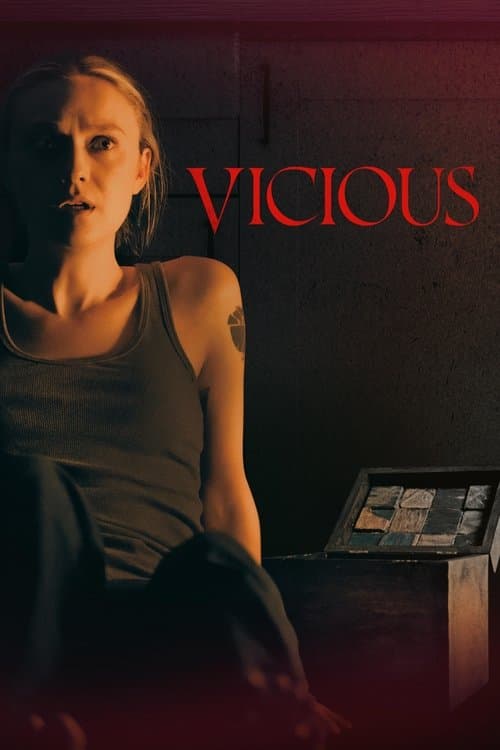
When Polly receives a mysterious box, it comes with one rule: place inside something she needs, something she hates, and something she loves. If she doesn’t obey, it will consume everything—and everyone—she’s ever known.
9 min read
Release Year: 2025
Rating: 5.964/10
Runtime: 98 minutes
By Luna Sterling
Vicious (2025): Ending Explained
Quick Recap
In Vicious, we follow Polly, a woman in her thirties adrift in the fog of unfulfilled potential—trapped in a soul-sucking job and teetering on the edge of restarting her education. She rents a modest house from her sister Lainie, finding fleeting warmth in doting on her young niece, Aly, whose innocent laughter cuts through the stifling quiet of her solitary life. As Polly steels herself for a pivotal job interview, an uninvited chill seeps into her world: an elderly woman appears at her door, pressing a small wooden box and an hourglass into her hands, whispering that death awaits her that very night. The air thickens with unease as Polly discards the ominous gift, only for it to slither back into her home like a shadow refusing to fade.
What begins as a dismissed eccentricity spirals into visceral horror when a spectral voice, masquerading as Polly's long-dead mother, demands obedience. The box hungers for offerings: something she hates, something she needs, something she loves—or it will devour her entire existence. Gagging on a key that erupts from her throat, Polly unlocks a hidden closet brimming with her father's relics, the scent of dust and faded grief clinging to the air. She sacrifices a cross necklace, a bitter emblem of the faith she resents after watching cancer claim her father. The box accepts it with a silent rumble, but the nightmare deepens. Accusations from Lainie—threatening calls, a ghostly sighting—fracture Polly's grip on reality. Desperation mounts as she severs her pinky toe in a haze of blood and pain, only for the box to crave more; her index finger follows, the metallic tang of sacrifice unlocking the front door at last.
Racing through the night to Lainie's home, Polly confronts a slaughterhouse tableau: her sister and niece lifeless, the metallic reek of blood hanging heavy. In a fevered bid for redemption, she clips a lock of Aly's hair—her deepest love—and feeds it to the box. A shuddering revival breathes life back into her family, but the respite is a cruel illusion. An apparition of Aly, eyes hollow with malice, lunges from the gloom, blade flashing in the dim light, plunging Polly into darkness once more.
What Happens in the Ending
The final act of Vicious unfolds in a suffocating crescendo of dread, the hourglass's grains slipping away like fleeting breaths in the oppressive hush of Polly's home. Awakening amid the remnants of her torment—the box's wooden surface still warm to the touch, etched with invisible scars—Polly grasps the truth: the curse isn't hers to bear alone. With the sands nearly spent, she clutches the artifact and flees into the night, the cool air biting at her bandaged wounds as she pounds on the door of Lainie's neighbor, Tara. No pleas or explanations; Polly forces the box into Tara's uncomprehending hands, the transfer sealing an unspoken pact. The door slams shut behind her, muffling Tara's confusion, and Polly stumbles back to her own shadowed sanctuary, pulse thundering in her ears.
But release is a phantom. As dawn's gray light filters through cracked blinds, the elderly woman—the box's enigmatic harbinger—materializes in a whirl of creaking floorboards and musty decay, her frail form twisting into something feral. She attacks with surprising ferocity, nails like claws raking the air thick with the scent of impending violence. Polly fights back in a brutal, sweat-slicked struggle, her hands closing around the woman's throat until life ebbs from those ancient eyes. In her dying rasp, the woman muses on the box's insatiable evil, a confession that hangs like smoke in the room, revealing her as just another victim ensnared in its web.
Polly emerges into the pale morning, the box vanished from sight, its absence a hollow victory. She reunites with Lainie and Aly, their embrace carrying the faint, comforting warmth of normalcy—the giggles of her niece a balm against the night's residue. Yet doubt lingers as Polly approaches Tara's door once more. Tara greets her with blank politeness, denying any knowledge of Polly or the box, her smile too tight, her gaze drifting to bandaged hands. The reveal cuts deep: Tara's parents lie slain within, and her fingers—severed in jagged offering—litter the floor, the box's hunger already claiming its new host. The screen fades on Polly's haunted expression, the cycle unbroken, the air humming with unspoken dread.
The Meaning Behind the Ending
At its core, the ending of Vicious crystallizes the film's exploration of inescapable inheritance, where the box serves as a grotesque metaphor for the burdens we pass along like tainted heirlooms. Polly's desperate act of offloading the curse onto Tara isn't triumph but a grim perpetuation—a visceral reminder that personal demons, once awakened, demand new vessels to survive. The old woman's final words, delivered in a gurgle of blood and regret, underscore this: the box's "evil nature" isn't supernatural malice alone but a mirror to human frailty, feeding on resentment, necessity, and love twisted into sacrifice. Sensory echoes amplify this—the persistent drip of blood from Polly's wounds, the hourglass's whispery cadence—evoking a psychological entrapment where escape means infection of another.
Symbolically, the box embodies the cycle of trauma, its wooden confines a claustrophobic stand-in for the mind's locked closets of grief. Polly's offerings—hate (the necklace), need (her fingers, symbols of agency), love (Aly's hair)—represent the fragmentation required to appease inner voids, only for the entity to rebirth in violence. The ending's quiet horror lies in its subtlety: no explosive resolution, just the creeping realization that salvation is illusory, the morning light casting long shadows over "normal" life. It critiques how we offload pain—onto family, neighbors, strangers—leaving the original wound to fester in quiet complicity.
Character Arcs and Resolution
Polly's arc traces a harrowing descent from numb stagnation to frantic agency, her directionless life shattered by the box's intrusion like a crack in fragile glass. Initially passive, fretting over interviews and school amid the sterile routine of her rented home, she evolves through layers of mutilation and revelation, each sacrifice peeling back her emotional armor. The finger-severing scenes, with their raw, pulsing pain and the box's insatiable growl, mark her shift from victim to survivor—yet her "resolution" is bittersweet. By passing the box, she reclaims a sliver of control, reuniting with Lainie and Aly in a fragile normalcy that hints at healing. But the haunted flicker in her eyes as she witnesses Tara's downfall reveals unresolved scars; she's no longer adrift but forever marked, her arc a cautionary tale of survival at the cost of perpetuating harm.
Supporting characters like Lainie and Aly serve as anchors to Polly's humanity, their brief revival a psychological lifeline that underscores her love as both strength and vulnerability. The old woman, revealed as a prior victim, completes a chain of reluctant tormentors, her death at Polly's hands a cathartic but hollow closure. Tara's swift ensnarement closes the loop, transforming her from bystander to successor, emphasizing how the curse preys on isolation—much like Polly's own.
Alternate Interpretations
The ending's ambiguity invites multiple lenses, its open-ended chill leaving viewers to grapple with the unseen. One reading posits a temporary reprieve for Polly: the box's disappearance and her family's embrace suggest the cycle might fracture if the host resists, with Tara's denial hinting at potential rejection of the curse. The old woman's musings could imply the entity's power wanes with each pass, allowing Polly a genuine escape into the dawn's tentative light—her killing of the harbinger as a symbolic severing of the past.
Conversely, a darker interpretation sees unbreakable perpetuity: Tara's mutilations confirm the box's relocation, not destruction, turning Polly into an unwitting vector. The "reunion" with Lainie and Aly might be another illusion, the stabbing apparition's echo suggesting Polly's reality remains fractured, her survival a delusion sustained by the hourglass's final grains. This view amplifies psychological horror—did the box ever leave, or has it burrowed into her psyche, waiting to resurface? The sensory haze of the finale—blurred edges, echoing whispers—fuels this uncertainty, blurring literal events into subjective torment.
Themes and Symbolism
Vicious weaves themes of inherited trauma and the cost of emotional unburdening, subverting horror tropes by grounding supernatural dread in psychological realism. The box symbolizes generational curses—not just familial loss like Polly's father, but the broader weight of resentment and unmet needs that fester in isolation. Its demands mirror life's cruel bargains: hating parts of ourselves (religion's hollow comfort), needing to amputate flaws (fingers as tools of creation lost to survival), loving recklessly (Aly's hair, innocence commodified). The ending reinforces cyclical violence, subverting redemption arcs by showing resolution as deferred doom, the neighbor's home a microcosm of Polly's own violated space.
Broader motifs evoke bodily violation and sensory invasion—the vomited key's slimy intrusion, the box's rumbling acceptance like a heartbeat in the walls—heightening tension around autonomy. It critiques modern disconnection: Polly's dead-end existence parallels Tara's vulnerability, suggesting the box thrives in the cracks of unexamined lives. Ultimately, it probes empathy's dark side—passing the burden feels like mercy, yet sustains the monster.
Final Thoughts
The ending of Vicious lingers like a half-remembered nightmare, its atmospheric restraint amplifying the psychological gut-punch without resorting to cheap shocks. By thrusting the curse onto Tara, director [redacted for spoilers] crafts a conclusion that's intellectually satisfying yet viscerally unsettling, forcing us to confront our own tendencies to displace pain. It works brilliantly as a metaphor for trauma's persistence, though some may find its ambiguity frustrating amid the film's building intensity. For horror fans craving depth over jump scares, this finale cements Vicious as a chilling meditation on what we leave behind—proving that some boxes are better left unopened, their contents echoing eternally in the quiet after the scream.