Until Dawn (2025): Ending Explained
"Every night a different nightmare."
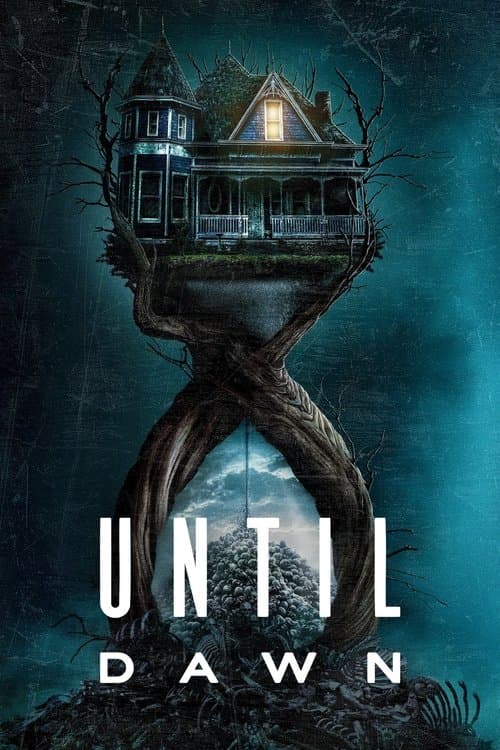
One year after her sister Melanie mysteriously disappeared, Clover and her friends head into the remote valley where she vanished in search of answers. Exploring an abandoned visitor center, they find themselves stalked by a masked killer and horrifically murdered one by one...only to wake up and find themselves back at the beginning of the same evening.
9 min read
Release Year: 2025
Rating: 6.396/10
Runtime: 103 minutes
By Luna Sterling
Until Dawn (2025): Ending Explained
As Luna Sterling, I've spent years dissecting the shadows of cinema, where the line between reality and nightmare blurs like fog over a forsaken valley. "Until Dawn" (2025), a chilling time-loop horror that pulses with the dread of inescapable repetition, delivers an ending that lingers like the metallic tang of rain-soaked earth. Directed with a taut grip on psychological tension, this film transforms a simple search for a missing sister into a visceral descent into the mind's darkest crevices. If you're here for the "Until Dawn ending explained," buckle up—we're unraveling the final act's literal events, its haunting symbolism, and the ambiguities that leave you questioning every reset. Spoilers ahead, naturally; this is no mere slasher flick, but a mirror to our buried fears.
Quick Recap
One year after her sister Melanie's inexplicable disappearance, Clover gathers her fractured circle—ex-boyfriend Max, friends Nina and Megan, and Nina's boyfriend Abe—for a grim pilgrimage into Glore Valley, a forsaken mining town shrouded in whispers of the lost. What begins as a quest for closure at an abandoned visitor center spirals into nightmare when a masked assailant begins picking them off one by one, their screams echoing through rain-lashed halls. But death isn't the end; it's a cruel rewind. They awaken each time at the evening's start, haunted by faint echoes—a new signature in the guestbook, posters of their own faces among the missing—trapped in a time loop governed by an ominous hourglass in the main room.
As loops stack like layers of damp rot, horrors escalate: possessions, wendigo-like creatures emerging from the woods' inky depths, and the metallic bite of contaminated water that erupts bodies in grotesque bursts. Clover glimpses Melanie, twisted into something feral, while gas station attendant Hill emerges as a cryptic guide, his voice crackling over a radio with promises of escape. Fractures widen—the group argues, betrays, dies in thirteen permutations of agony—until their bodies begin to warp, skin paling like moonlit stone, on the fateful thirteenth night. With memories fraying and Megan vanishing into the tunnels, they arm themselves against the encroaching dread, chasing truths buried deeper than the collapsed mines below.
What Happens in the Ending
The thirteenth loop dawns with a suffocating weight, the air thick with the musty scent of decay as the group's forms show the toll: veins darkening like roots under frostbitten skin, eyes hollowed by the wendigo curse creeping in. No recollection of prior cycles clings to them, only an instinctive pull toward resolution. Reviewing fragmented phone footage, they piece together futile pursuits of Hill, nights devoured by slaughter from masked blades and snarling beasts. Megan's absence gnaws like an open wound; they've lost her trail to the depths, where she—miraculously surviving a prior loop—has ventured alone after Hill.
United in desperation, Clover, Max, Nina, and Abe descend into the labyrinthine tunnels, the drip of unseen water amplifying every ragged breath, shadows twisting like living veins on the walls. Wendigos lunge from alcoves, their guttural howls vibrating through the stone, forcing brutal skirmishes—claws raking flesh, improvised weapons slick with ichor. Clover branches off, her pulse thundering in her ears, and confronts the spectral remnants of Melanie in a chamber reeking of mildew and regret. With a mercy that tastes like ash, she ends her sister's torment, the act a visceral severance that echoes through her core.
The path converges at a derelict sanatorium, its corridors humming with the low buzz of fluorescent decay. There, Megan cowers, ensnared with a wendigo's feral presence, while Hill—revealed not as savior but architect—looms in clinical detachment. He confesses: the creatures, the loop, all manifestations born from his experiments on survivors of Glore Valley's mining cataclysm, where the earth swallowed hundreds in a roar of dust and screams. For Clover, it's personal—the horrors are projections of her depression, her unspoken grief over Melanie, weaponized in this subterranean therapy gone rancid.
In a moment of taut ingenuity, Clover doesn't strike; she manipulates. Noticing water dripping from a cracked ceiling—laced with the explosive taint that's claimed so many—she shifts Hill's coffee mug beneath it. He sips, oblivious, and erupts in a spray of crimson mist, his form bursting like overripe fruit under the loop's merciless logic. Chaos erupts: Clover frees Megan as the others dispatch the masked assailant in a frenzy of shadows and steel, his final gurgle swallowed by the din. The group bolts through the tunnels, the hourglass's sands sifting to their end in the visitor center above, sunlight piercing the gloom like a hesitant promise. They pile into the car, tires churning mud as they flee the valley, the loop shattering with the dawn's pale light.
Yet, as their taillights fade into the mist, the camera lingers in Hill's abandoned office. Surveillance feeds flicker to life, shifting from the valley to a remote snowy cabin. A car crunches over fresh powder, headlights cutting the night, and Hill's whistle—jaunty, insidious—cuts through the speakers. The screen fades to black, leaving the echo of that tune hanging in the air.
The Meaning Behind the Ending
At its core, the ending of "Until Dawn" isn't just a breakout from temporal chains; it's a psychological exorcism, where escape demands confronting the self's rot. The loop symbolizes the cyclical trap of trauma—Clover's depression manifesting as wendigos, those gaunt, insatiable spirits of Native American lore repurposed here as metaphors for unchecked grief. Melanie's transformation into one underscores the devouring nature of loss: what we love can become the monster that stalks us, its hunger a visceral echo of emotional voids. Hill, the false therapist, embodies exploitative "healing"—his experiments twist suffering into spectacle, suggesting that some cures poison the soul.
The explosive demise via tainted water reinforces the film's theme of internal corruption: survival isn't passive endurance but active sabotage of one's demons. Clover's subtle trick—redirecting the drip—mirrors therapy's redirection of harmful patterns, turning the valley's curse against its keeper. Yet the final whistle subverts triumph, implying the horror's reach extends beyond the personal; it's a systemic infestation, where one loop's end births another's shadow. The dawn's light feels fragile, tainted by the cabin's chill, evoking the uneasy truce we make with our fears—relief laced with the dread of recurrence.
Character Arcs and Resolution
Clover's journey arcs from numb seeker to empowered survivor, her final kill of Melanie a cathartic rupture that severs the grief's hold, allowing her to weaponize her insight against Hill. It's a transformation steeped in tension, her hands trembling with the weight of sisterly love turned lethal, emerging scarred but whole. Max, the loyal ex, evolves from hesitant observer to steadfast ally, his death in earlier loops forging resolve; his role in slaying the assailant cements redemption, a quiet anchor in the storm.
Nina and Abe's bond frays under pressure—her pickaxe betrayal in one loop highlights fractured trust—but their tunnel stand against the horrors resolves in mutual survival, a gritty affirmation of flawed connection. Megan, the quiet observer, endures isolation to uncover Hill's trail, her rescue symbolizing the value of the overlooked; she emerges not broken, but battle-hardened. Collectively, their escape resolves the group's isolation, forging unity from betrayal, though the physical toll—faint wendigo marks lingering—hints at lasting psychological scars, a reminder that some nights leave indelible stains.
Alternate Interpretations
The ending's ambiguity thrives in that final surveillance twist, opening doors to darker readings. One view: the loop truly breaks, and the cabin scene is Hill's pre-recorded echo, a red herring to unsettle—a meta-commentary on how trauma's "end" feels illusory, like footage replaying in the mind. Alternatively, it suggests expansion: Hill's whistle implies he's initiated a new cycle elsewhere, pulling innocents into the experiment, positioning the valley as ground zero for a broader horror network. Is the escape genuine, or have they merely shifted the curse, becoming unwitting carriers?
A psychological lens posits the entire finale as Clover's delusion— the cabin her subconscious warning that depression's manifestations persist, Hill's return a symbol of unresolved therapy. For optimists, it's closure with a chill: they've survived, but vigilance is eternal. These layers keep the tension coiled, inviting rewatches where every shadow whispers doubt.
Themes and Symbolism
"Until Dawn" weaves time loops as metaphors for mental health's repetitive grind, subverting the genre's gore with psychological depth—the wendigos not mere monsters, but symbols of isolation's erosion, their howls mirroring internal screams stifled by societal silence. The mining disaster's legacy symbolizes buried traumas: Glore Valley's sinkhole mirrors the characters' emotional collapses, hundreds lost to the earth as grief swallows the living.
Symbolism drips like the film's contaminated water— the hourglass as fleeting sanity, sands slipping into madness; missing persons posters as echoes of the unseen self, faces fading into the wallpaper of forgotten pain. The ending reinforces themes of agency in horror: passivity (barricading, fleeing) breeds explosion, while confrontation yields fragile dawn. It subverts slasher tropes by internalizing the killer—Hill's experiments expose how external threats often cloak inner voids—leaving audiences with the uneasy truth that true monsters lurk within, waiting for the next loop.
Final Thoughts
"Until Dawn" crafts an ending that works through its immersive dread, blending visceral kills with cerebral unease to deliver a payoff that's as satisfying as it is sinister. The literal escape thrills, but the psychological undercurrents—the way Clover's fears manifest as clawing beasts—elevate it beyond jump scares, making the final whistle a masterstroke of lingering terror. It's not flawless; the rapid-fire revelations in the sanatorium can feel rushed amid the chaos, diluting some emotional beats. Yet, in a genre often content with blood-soaked resets, this film dares to probe the mind's valleys, leaving you breathless, questioning if your own nights ever truly end. A must for horror fans craving depth—watch it when the rain taps insistently, and feel the loop tighten.