Untamed (1955): Ending Explained
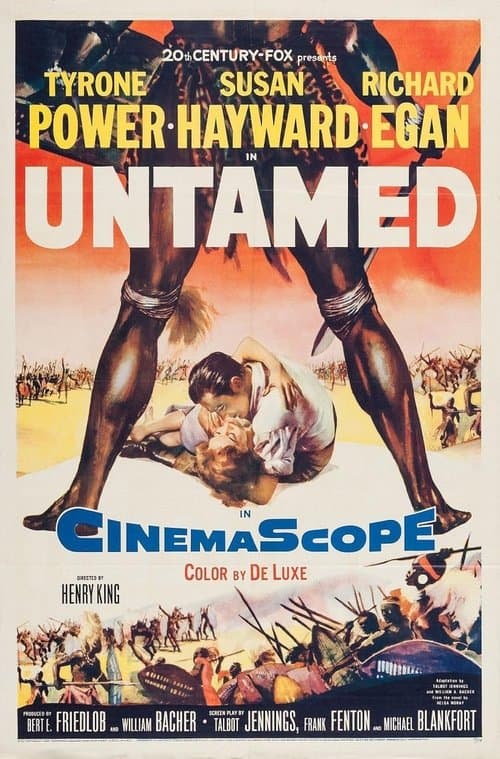
"It's AFRICOLOSSAL! in CINEMASCOPE"
When the great potato famine hits Ireland, the diaspora begins as thousands emigrate. Among those leaving the Emerald Isle is Katie O'Neill and her husband, who decide that the promised land is South Africa and make their way there. Once there, they discover the hardships that are the reality of the homesteader experience.
8 min read
Release Year: 1955
Rating: 5.6/10
Runtime: 111 minutes
By Ellis Carver
Untamed (1955): Ending Explained
In the sweeping epic Untamed (1955), directed by Henry King and starring Tyrone Power and Susan Hayward, the film weaves a tale of love, loss, and unyielding ambition against the backdrop of 19th-century South Africa's turbulent frontier. As audiences search for an Untamed ending explained, this article delves into the film's climactic resolution, unpacking its literal events, symbolic layers, and profound thematic resonance. We'll explore how the ending ties together the characters' psychological journeys, highlighting the moral complexities of duty, desire, and survival in a land shaped by colonial strife and human resilience.
Quick Recap
The story begins in famine-ravaged Ireland in 1847, where Boer commander Paul van Riebeck (Tyrone Power) arrives to purchase horses and encounters the spirited Katie O'Neill (Susan Hayward). Though sparks fly, Paul remains devoted to forging a new nation in South Africa, leaving Katie behind. Devastated by her father's death amid the Great Famine, Katie marries the steadfast Shawn Kildare (John Justin) and emigrates with him, their friend Aggie O'Toole, and other settlers on a grueling 800-mile trek to the promise of free farmland in Hoffen Valley.
The journey tests their endurance, especially through Zulu territory where Paul's escort fails to materialize. A brutal Zulu attack claims Shawn's life, but Paul arrives just in time to save the group. In the aftermath, Paul and Katie confess their love, yet Paul's commitment to his commando pulls him away, leaving Katie to build a life alone. Pregnant and resilient, she manages the farm with Aggie's help, fending off unwanted advances from the obsessive Kurt Hout, son of the trek leader. A violent storm destroys their homestead, but Katie gives birth to a second son, named Paul in quiet defiance, and begins rebuilding. Her fortunes shift dramatically when she trades for a massive diamond, catapulting her into wealth and luxury in Cape Town. Yet prosperity brings isolation; years pass, and Paul's dream materializes with the birth of the Dutch Free State. Their paths cross again in Cape Town, reigniting passion but ending in bitter quarrel as Katie demands he leave. Stripped of her riches, Katie ventures to the outlaw-infested Kolesburg with her sons and Aggie, seeking diamonds once more—setting the stage for a fateful confrontation.
What Happens in the Ending
The film's finale unfolds in the lawless diamond fields of Kolesburg, a once-thriving settlement now overrun by outlaws, where Katie arrives with her young sons and Aggie, undeterred by warnings of danger. Her determination to reclaim stability leads her straight into peril: she discovers that the embittered Kurt Hout, maimed and vengeful from their past encounter, has risen as the ruthless leader of the bandit gang. Kurt's obsession with Katie has twisted into dominance, a shadow of the unrequited love that once fueled him.
Tensions erupt as Paul, now a key figure in the newly formed Dutch Free State, leads his men to retake Kolesburg for the government, aiming to restore order amid the region's volatile politics. Kurt, sensing the threat, orchestrates an ambush, but Paul's tactical cunning turns the tables—he outmaneuvers the outlaws, capturing most of Kurt's men in a tense standoff. In the chaos, Kurt seizes Paul's young son as a hostage, cornering the unarmed Paul and preparing to execute him in a bid for ultimate revenge. The moment hangs on a knife's edge, underscoring Kurt's descent into moral abyss.
Salvation comes from an unexpected ally: Tschaka, the loyal native scout who has shadowed Paul throughout the film, hurls his spear with deadly precision, striking Kurt down and ending his threat. With the danger neutralized, Paul approaches Katie amid the settling dust of conflict. In a poignant, wordless gesture, he slips a wedding ring onto her finger—a simple act symbolizing commitment long deferred. The couple, weathered by years of separation and hardship, finally unites. Hand in hand, with their sons and Aggie in tow, they set out for Hoffen Valley, the original promised land of their dreams, riding into an uncertain but hopeful future as the screen fades.
The Meaning Behind the Ending
At its core, the ending of Untamed represents a hard-won reconciliation between personal longing and collective destiny, where individual love triumphs not through conquest but through quiet perseverance. The wedding ring, slipped on in the aftermath of violence, serves as a powerful metaphor for enduring bonds forged in adversity—it's not a grand romantic flourish but a practical vow, echoing the film's theme of love as a resilient force amid chaos. Kurt's death by Tschaka's spear, meanwhile, symbolizes the perils of unchecked obsession and bitterness; his fall literalizes the self-destructive path of those who let resentment consume them, contrasting sharply with Katie and Paul's mutual growth.
This resolution also layers in societal commentary on colonialism and migration. Kolesburg, a microcosm of South Africa's diamond-fueled boom and bust, reflects the moral ambiguities of frontier expansion—wealth extracted from the earth at the cost of human lives and ethical compromises. Paul's victory restores order, but it's tinged with the violence inherent in nation-building, inviting viewers to contemplate whether such "progress" justifies the human toll. Ultimately, the ending affirms that true fulfillment lies in balancing ambition with intimacy, a contemplative nod to the human truth that survival demands both independence and connection.
Character Arcs and Resolution
Katie O'Neill's arc culminates in a profound evolution from famine orphan to self-made pioneer, her journey a testament to unyielding agency in a patriarchal world. Starting as a lovesick girl in Ireland, she transforms through widowhood, single motherhood, and financial ruin into a woman who commands her fate—trading for diamonds, rebuilding farms, and facing outlaws head-on. The ending resolves her isolation by granting her partnership with Paul, yet it honors her independence; the ring is an equal exchange, not submission, allowing her to embrace love without surrendering her strength. Her sons, symbols of her legacy, accompany her to Hoffen, underscoring her role as nurturer and builder of futures.
Paul van Riebeck, the duty-bound visionary, completes his arc from solitary commander to integrated family man. His dedication to the Dutch Free State drove early separations, creating moral tension between personal happiness and national ideals—a classic psychological conflict of the self-sacrificing hero. By retaking Kolesburg, he fulfills his broader purpose, but slipping the ring on Katie's finger marks his emotional resolution, humanizing him as someone who learns that true leadership includes vulnerability. Their union suggests growth: Paul tempers his zeal with tenderness, while Katie's fire complements his resolve.
Kurt Hout's tragic trajectory, from enamored trekker to one-legged outlaw kingpin, resolves in downfall, exposing the psychological rot of entitlement and rage. His assault on Katie and hostage-taking reveal a man warped by rejection, his death a cathartic release that clears the path for the protagonists' healing.
Alternate Interpretations
While the ending appears resolute, its ambiguities invite multiple readings, particularly around the sustainability of Paul and Katie's reunion. Optimists might see their departure for Hoffen as a fairy-tale closure, with the valley representing reclaimed innocence and shared dreams. Yet a more skeptical view could interpret the ring as a fragile promise—Paul's history of choosing duty over love raises doubts about lasting harmony, especially in a volatile South Africa where political unrest looms. Is this a true "happily ever after," or a momentary respite before new trials? The film's contemplative tone leaves room for this tension, mirroring real-life complexities of relationships tested by ambition and circumstance. Additionally, Tschaka's pivotal role could be read as subversive commentary on native agency in colonial narratives, or simply as plot convenience—interpretations that hinge on whether one views the film through a lens of historical romance or critical hindsight.
Themes and Symbolism
The ending reinforces Untamed's central themes of resilience amid displacement and the moral complexities of pioneering spirit. Migration from Ireland's famine to South Africa's frontiers symbolizes the universal human drive for reinvention, but the film subverts romanticized notions by grounding it in gritty realities—Zulu attacks, storms, and outlawry highlight how societal upheavals expose personal frailties. Love versus duty emerges as a core tension, with Paul and Katie's bond as a metaphor for the heart's persistence against ideological walls.
Symbolism abounds: the diamond fields evoke fleeting wealth and buried potential, much like the characters' suppressed emotions; the spear that fells Kurt represents indigenous retribution woven into the colonial tapestry, adding layers to themes of interracial alliance and exploitation. Hoffen Valley, as the endpoint, symbolizes not just physical homecoming but psychological wholeness—a promised land earned through sacrifice, subverting the idea of effortless manifest destiny with a call for ethical introspection.
Final Thoughts
Untamed's ending works masterfully as a contemplative capstone to its epic scope, blending high-stakes action with intimate emotional payoff to leave viewers pondering the delicate interplay of fate, choice, and forgiveness. It avoids tidy moralism, instead embracing the gray areas of human ambition and connection, which feels refreshingly substantive for a 1950s Western romance. While some might wish for more ambiguity in the lovers' future, the resolution's optimism resonates as a human truth: even in untamed lands, love can be tamed through mutual endurance. For fans dissecting this overlooked gem, the finale cements Untamed as a thoughtful exploration of what it means to build not just nations, but lives worth living.