Never Let Go (2024): Ending Explained
"One touch is all it takes."
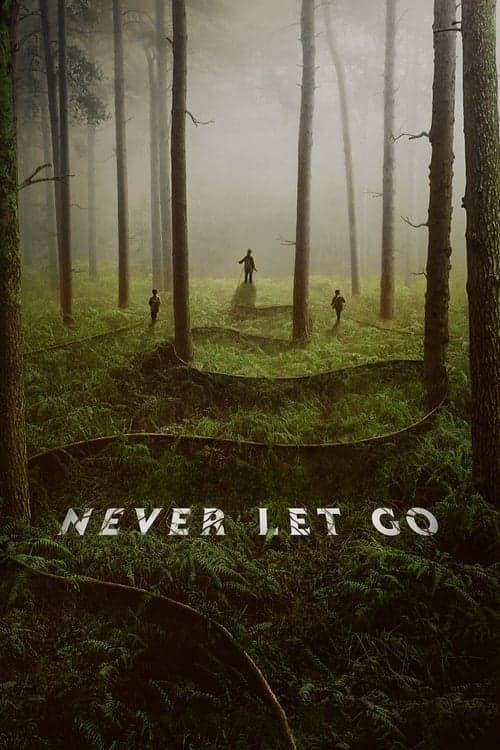
As an evil takes over the world beyond their front doorstep, the only protection for a mother and her twin sons is their house and their family’s protective bond.
9 min read
Release Year: 2024
Rating: 6.12/10
Runtime: 101 minutes
By Luna Sterling
Never Let Go (2024): Ending Explained
In the shadowy grip of Never Let Go (2024), director Alexandre Aja weaves a tale of isolation and fractured bonds that lingers like the chill of an unending forest fog. This psychological horror-thriller, starring Halle Berry as the fiercely protective Momma and her twin sons Nolan (Percy Daggs III) and Samuel "Sam" (Anthony B. Jenkins), plunges viewers into a world where the line between guardian and captor blurs under the weight of unspoken terrors. As the film's climax unfolds, the air thickens with desperation, the crackle of flames echoing the boys' unraveling psyches, leaving audiences to sift through the ashes for truth.
Quick Recap
Deep in a vast, whispering forest, Momma raises her young twins, Nolan and Sam, in a remote cabin that she insists is their sole sanctuary against "The Evil"—a malevolent supernatural force that has devoured the world beyond their doorstep. Bound by ropes that tether them to the house like lifelines in a storm, the family clings to rituals: daily prayers of gratitude to their wooden protector, foraging hunts laced with paranoia, and an unyielding creed that any touch from the Evil means possession and doom. Momma's visions haunt her—ghostly apparitions of her dead parents and the mutilated forms of her sons—driving her to enforce these rules with a fervor that borders on frenzy, the scent of damp earth and pine needles mingling with the metallic tang of fear.
As winter's iron grip squeezes their supplies dry, tensions fracture the family's fragile unity. Nolan, the more skeptical twin, begins to question Momma's tales after an accident where he severs Sam's rope, leading to a brutal fall and a glimpse of doubt in the boy's eyes. Starvation looms like a predator in the underbrush; they gnaw on tree bark, and Momma decrees the sacrifice of their loyal dog, Kodda, to survive. Nolan rebels, locking Momma in the greenhouse to prove the Evil's nonexistence, but her encounter with a spectral vision of her mother drives her to self-destruction, her blood staining the frost-kissed glass. Left alone, the brothers' bond sours—Nolan vows protection, but Sam's grief twists into accusation, the cabin's creaking walls amplifying their isolation as hunger gnaws at their resolve.
Nolan's daring ventures yield a glimmer of hope: an empty road, a concerned hiker offering rescue. But Sam's paranoia erupts in violence, a crossbow bolt piercing the air with a deadly whistle, sealing the hiker's fate. As the boys teeter on the edge of collapse, an enigmatic girl appears at their door, her presence stirring the shadows and igniting the final, inferno-like confrontation that tests the limits of their tether.
What Happens in the Ending
The film's denouement erupts in a visceral blaze of chaos and revelation, the cabin's familiar warmth twisting into a hellish pyre. After Sam, seemingly possessed following his pursuit of the mysterious girl—who reveals herself as the Evil and touches him—returns to the house with eyes wild and movements jerky, like a puppet jerked by invisible strings. The air grows heavy with the acrid bite of smoke as Sam, his face contorted in unnatural rage, attempts to slaughter Nolan, his own brother, with a frenzy that shatters the remnants of their shared innocence. He douses the cabin in accelerant, flames licking up the walls with a hungry roar, the heat pressing in like a suffocating embrace.
Nolan, cornered and desperate, drags a spectral vision of Momma—the Evil manifesting in her likeness, her skin peeling away to reveal a grotesque, scaled creature beneath—into a cramped crawlspace beneath the floorboards. The space is a womb of dust and splintered wood, the fire's distant crackle underscoring their labored breaths. In a moment of raw, primal connection, Nolan and the apparition embrace, their hug a defiant anchor amid the inferno. The creature dissipates into ethereal wisps, as if the bond's warmth dissolves its hold, leaving Nolan trembling in the dim, soot-choked confines.
The house succumbs fully to the blaze, embers swirling like malevolent fireflies into the night sky. Sam, amid the destruction, snaps the last photo with Momma's old Polaroid camera, the click a hollow punctuation to their nightmare. As dawn breaks with the wail of sirens, paramedics sift through the smoldering ruins, pulling Nolan from the crawlspace. He's airlifted away in a helicopter, the thrum of rotors drowning out his frantic questions about Sam. Glimpsing below, Nolan sees Kodda bounding after them on a paved street, alive and free, while Sam is also rescued, bundled onto a stretcher. The chopper soars toward a bustling civilization—skyscrapers piercing the horizon, traffic humming like a living pulse—exposing Momma's tales as fabrications, the world beyond untouched by any Evil. In the quiet hum of flight, Sam leans close, whispering with chilling intimacy, "She loves me more." The screen fades on the developed Polaroid: Sam's shoulder gripped by a shadowy, scaled hand, its claws a subtle promise of lingering darkness.
The Meaning Behind the Ending
At its core, the ending of Never Let Go unravels the illusion of protection, symbolizing how fear can forge chains stronger than any rope. The burning cabin represents the collapse of Momma's constructed reality—a pyre that consumes the physical tether to her delusions, much like the ropes that once bound the family in ritualistic safety. The Evil, whether spectral or psychological, embodies inherited trauma; Momma's visions of her slain husband and parents suggest a cycle of violence passed down like a poisoned heirloom, with the scaled creature's shedding skin evoking the shedding of false skins to reveal raw, festering truths.
The final hug in the crawlspace pulses with thematic weight: it's a visceral reclamation of human connection over monstrous isolation, the warmth of embrace dissolving the Evil's cold grip. Yet, the Polaroid's scaled hand lingers as a metaphor for unresolved shadows—perhaps the enduring scar of Momma's lies, whispering that survival demands confronting the darkness within, not fleeing it. The transition to civilization underscores liberation's double edge: freedom from the cabin's womb-like prison brings light, but the whisper "She loves me more" hints at possessive love's toxic residue, a psychological haunt that no helicopter can outrun.
Character Arcs and Resolution
Nolan's journey arcs from wide-eyed believer to defiant truth-seeker, his guilt over Momma's death forging a protective resolve that culminates in the crawlspace embrace—a moment where he embodies the familial bond Momma preached, but on his terms. Rescued and airborne, his arc resolves in tentative hope, eyes widening at the world's vibrancy, yet shadowed by Sam's whisper, suggesting his guardianship may extend into an uncertain future.
Sam, conversely, spirals from loyal adherent to fractured antagonist, his possession (or breakdown) amplifying the film's tension between faith and doubt. His erratic violence and final photo capture a stunted arc: trapped in Momma's narrative, the scaled hand on his shoulder signals incomplete resolution, his whisper a possessive echo of her favoritism, leaving him as the story's lingering enigma—saved physically, but perhaps ensnared emotionally.
Momma's arc, though truncated by suicide, bookends the tale as tragic architect; her lies, born of her own traumas (implied patricide and spousal murder), resolve in spectral redemption through Nolan's hug, her form a bridge between deception and genuine love's faint afterglow.
Alternate Interpretations
The ending's ambiguity invites layered readings, blurring supernatural horror with psychological descent. One view posits a literal Evil: the girl's touch truly possesses Sam, the scaled hand confirming its survival in him, with the world's normalcy a cruel irony—Momma's warnings partially true, but her isolation excessive. Nolan's hug banishes it temporarily, yet Sam's whisper foreshadows its spread, turning rescue into unwitting contagion.
Alternatively, a fully psychological lens sees no monsters, only the corrosive power of isolation and grief. Momma's "Evil" is her mental unraveling—hallucinations from guilt over past killings—mirrored in the boys' starvation-induced paranoia. Sam's "possession" becomes a psychotic break, the scaled hand a hallucination in the Polaroid, his whisper a jealous delusion rooted in sibling rivalry. The fire symbolizes self-destruction from repressed truths, with civilization's reveal affirming that the real evil was Momma's control, leaving the brothers to heal or perpetuate the cycle.
A hybrid interpretation lingers in the tension: perhaps the Evil is metaphorical, manifesting as trauma's physical toll (e.g., Sam's injury fueling aggression), the hand a visual cue for inherited mental fragility, challenging viewers to question if bonds save or doom.
Themes and Symbolism
Never Let Go reinforces themes of toxic familial bonds and the peril of blind faith, subverting the "protective mother" trope into a cautionary specter. The ropes symbolize enmeshment—lifelines that strangle independence—while the cabin, a fortress turned tomb, evokes womb-like regression, its destruction birthing the boys into reality's harsh light.
Symbolism saturates the sensory fabric: the forest's oppressive hush mirrors internal silence, broken by fire's roar as cathartic release; Kodda's survival bounds loyalty's resilience; the Polaroid captures frozen moments of deception, its final image a visual metaphor for unseen threats. Broader, the film probes survival's cost—how fear forges unity but devours the self—subverting horror's external monsters to expose the psychological ones within, where love's whisper can be as chilling as any claw.
Final Thoughts
Never Let Go's ending masterfully balances visceral terror with introspective unease, its flames not just destroying a home but illuminating the fragility of truth in a world of shadows. By leaving Sam's fate tantalizingly open—the scaled hand a shiver down the spine—it avoids tidy closure, mirroring life's ambiguities and inviting rewatches to peel back its layers. For audiences craving horror that haunts the mind over the jump-scare, this conclusion excels, a smoldering reminder that the greatest evils often wear the faces we love most. If the film's tension ever frays under its own intensity, the emotional core—those frayed bonds—holds firm, making it a standout in psychological thrillers that demand we never let go of questioning the stories we tell ourselves.