Good Boy (2025): Ending Explained
"Trust his instincts."
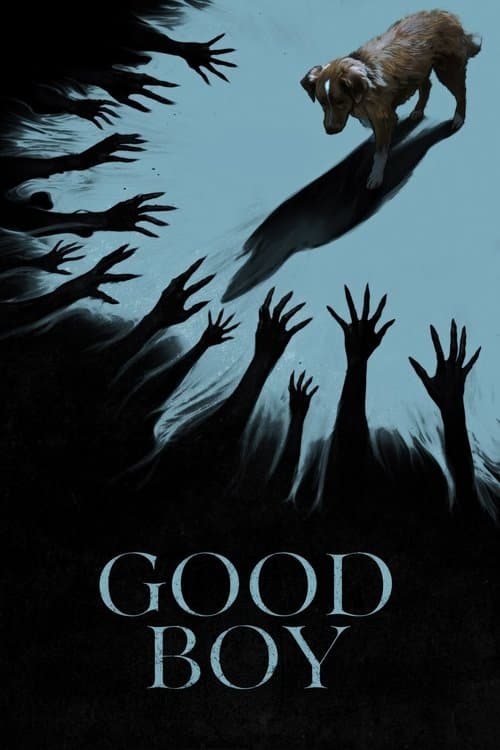
A loyal dog moves to a rural family home with his owner Todd, only to discover supernatural forces lurking in the shadows. As dark entities threaten his human companion, the brave pup must fight to protect the one he loves most.
8 min read
Release Year: 2025
Rating: 6.837/10
Runtime: 73 minutes
By Luna Sterling
Good Boy (2025): Ending Explained
Quick Recap
In Good Boy (2025), we follow the perspective of a loyal dog who relocates with his owner, Todd, to a secluded rural family home. The shift from urban bustle to the whispering isolation of the countryside sets an immediate tone of unease, with the dog's heightened senses picking up on subtle disturbances—the creak of floorboards at odd hours, shadows that twist unnaturally in the moonlight filtering through cracked windows. As Todd settles into the new life, oblivious at first to the encroaching dread, the dog senses malevolent presences lurking just beyond the familiar warmth of hearth and home. These supernatural forces manifest as elusive dark entities, their forms hinted at through flickering lights and a pervasive chill that seeps into the bones, turning the once-safe haven into a labyrinth of tension.
The narrative builds through the dog's instinctive vigilance, as he patrols the dim corridors and overgrown yard, growling at invisible threats that brush against his fur like icy tendrils. Todd, grappling with his own unspoken burdens—perhaps the weight of isolation or unresolved grief—begins to notice the dog's agitation, dismissing it initially as adjustment jitters. But as the entities grow bolder, their whispers echoing in the night air like distant thunder, the dog's protective drive intensifies. The film masterfully blends the mundane rhythms of rural life with escalating psychological horror, where every rustle of leaves or howl of wind carries the promise of something far more sinister, forcing the audience to question the boundaries between loyalty and the unknown.
Leading into the climax, the dog's encounters with the shadows escalate into direct confrontations. Todd's safety hangs in precarious balance as the entities close in, their presence thickening the air with a suffocating dread that mirrors the dog's growing desperation. The story hurtles toward a visceral showdown, where the pup's unwavering devotion becomes the fragile thread holding back the abyss.
What Happens in the Ending
The final scenes of Good Boy unfold in a pulse-pounding crescendo within the rural home's shadowed heart, where the line between protector and prey blurs under the weight of unrelenting night. As the dark entities converge, their forms materializing as swirling voids of inky blackness that pulse with an otherworldly hunger, the dog positions himself as the unyielding barrier between them and Todd. The air grows heavy, laced with the metallic tang of fear-sweat and the faint, acrid scent of something ancient and decayed seeping from the walls. Todd, cornered in the dimly lit living room, his breaths ragged and eyes wide with dawning terror, clutches a flickering lantern that casts erratic shadows dancing like mocking specters across the peeling wallpaper.
In a raw display of primal fury, the dog lunges into the fray, his barks echoing like thunderclaps that shatter the oppressive silence. Fur bristling, muscles taut against the chill that claws at his skin, he tears at the entities' ephemeral edges, each snap of jaws drawing ethereal wisps that dissolve into acrid smoke. The entities retaliate with tendrils that lash out, coiling around the dog's limbs with a cold, vise-like grip that sends shivers through the audience's own nerves. Todd, roused from paralysis, grabs a nearby tool—perhaps a rusted fireplace poker—and joins the desperate melee, his strikes more symbolic than effective against the supernatural onslaught.
The turning point arrives in a heart-wrenching moment of sacrifice and resolve: the dog, bloodied and panting, channels his loyalty into a final, ferocious charge that disrupts the entities' core, causing them to fracture and retreat into the home's crevices with a collective wail that vibrates through the floorboards. As dawn's first pale light pierces the grimy windows, the shadows recede, leaving behind an exhausted silence broken only by the dog's labored breaths and Todd's trembling sobs of relief. The screen fades on the pair huddled together, the dog's watchful eyes scanning the lingering gloom, suggesting the threat may not be entirely vanquished.
The Meaning Behind the Ending
At its core, the ending of Good Boy symbolizes the indomitable power of unconditional love as a bulwark against encroaching darkness, both literal and metaphorical. The dog's triumph isn't just a physical expulsion of the entities but a profound affirmation that loyalty can pierce the veil of isolation and fear. The rural home, with its musty corners and whispering winds, serves as a metaphor for the hidden traumas we carry into new chapters—shadows from the past that fester in solitude. Todd's arc, culminating in his active participation, underscores how protection is reciprocal; the dog's devotion awakens Todd's own capacity for guardianship, transforming passive victimhood into shared resilience.
Psychologically, the entities represent the insidious doubts and unseen forces that erode human connections, their shadowy forms evoking the tension of mental fragility under stress. The visceral sensory details—the cold grip, the dissolving wisps—heighten this, immersing us in the dog's sensory world to convey how instinctual bonds can illuminate the psychological murk. Ultimately, the ending posits that true horror lies not in the supernatural, but in the vulnerability of losing what anchors us; the dog's victory reaffirms that love, fierce and unyielding, is the light that banishes such voids.
Character Arcs and Resolution
The dog's journey resolves as a poignant evolution from vigilant companion to heroic sentinel, his arc peaking in the ending's raw exertion that leaves him scarred yet steadfast. This culmination reinforces his role as the emotional core, his unwavering protection of Todd highlighting themes of instinct over intellect, where survival hinges on heart rather than cunning. For Todd, the resolution marks a cathartic awakening; initially adrift in the rural isolation, his final stand signifies reclaiming agency, the act of fighting alongside his dog mending the fractures in his spirit and forging a deeper, symbiotic bond.
Together, their arcs intertwine to illustrate mutual salvation—the dog's bravery not only saves Todd physically but emotionally, pulling him from the brink of despair. This resolution leaves them forever altered, the home's atmosphere shifting from oppressive to tentatively hopeful, with the dog's lingering vigilance suggesting ongoing guardianship. It's a satisfying closure that honors their growth without erasing the scars, emphasizing that true resolution comes through enduring partnership.
Alternate Interpretations
The ending's ambiguity lingers in the entities' incomplete banishment, inviting multiple lenses. One interpretation sees it as a pyrrhic victory: the shadows retreating but not destroyed, implying the supernatural forces are manifestations of Todd's unresolved inner demons—perhaps grief or guilt—that resurface in quiet moments. The dog's watchful gaze at fade-out could signal an eternal vigil, dooming them to perpetual tension rather than peace.
Alternatively, a more optimistic view posits the entities as external curses tied to the rural home's history, fully exorcised by the dog's purity of intent. Here, the dawn light symbolizes renewal, with Todd's embrace of protection heralding a fresh start. A psychological reading might dismiss the supernatural altogether, framing the climax as the dog's imagined heroism amid Todd's mental breakdown, where loyalty becomes a metaphor for therapeutic intervention. These layers keep the ending open-ended, rewarding rewatches with shifting depths.
Themes and Symbolism
The ending reinforces core themes of loyalty as defiance against isolation, subverting the trope of the helpless pet by elevating the dog to mythic guardian. Symbolically, the dark entities embody the unknown fears that prey on vulnerability—their shadowy, tactile presence contrasting the warmth of fur and firelight to highlight companionship's redemptive glow. The rural setting amplifies themes of hidden rural horrors, where nature's serenity masks psychological undercurrents, and the dog's sensory attunement subverts human obliviousness.
Broader motifs include the fragility of domestic sanctuaries, with the home's creaking intimacy turning claustrophobic, only redeemed through visceral struggle. The film subtly critiques modern detachment, using the dog's primal bond to advocate for reconnecting with instinctual ties in an alienating world. This ending doesn't just resolve the plot; it weaves these elements into a tapestry of quiet empowerment, where love's tension holds the darkness at bay.
Final Thoughts
Good Boy (2025) delivers an ending that lingers like the faint chill of retreating shadows, blending heart-pounding action with introspective depth to create a resonant close. Its strength lies in the atmospheric immersion—the sensory heft of every growl and grasp—that makes the triumph feel earned and the ambiguities tantalizing. While some might crave clearer closure, the subtle unease elevates it, mirroring life's own unresolved edges. This is horror that warms the soul, proving that in the face of the abyss, a good boy's loyalty is the ultimate beacon. A must-watch for fans of psychological thrillers with emotional bite.