Drop (2025): Ending Explained
"Everyone's a suspect."
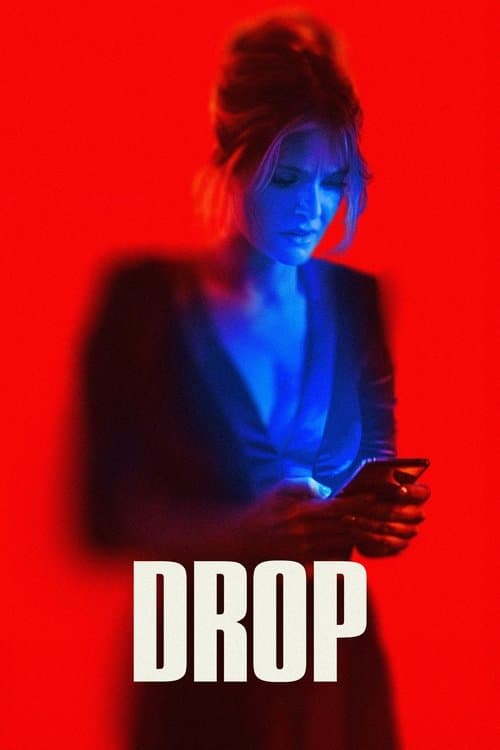
Violet, a widowed mother on her first date in years, arrives at an upscale restaurant where she is relieved that her date, Henry, is more charming and handsome than she expected. But their chemistry begins to curdle as Violet begins being irritated and then terrorized by a series of anonymous drops to her phone.
8 min read
Release Year: 2025
Rating: 6.389/10
Runtime: 95 minutes
By Luna Sterling
Drop (2025): Ending Explained
Quick Recap
In Drop, directed by Christopher Landon, we follow Violet (Meghann Fahy), a widowed mother stepping tentatively back into the world of dating after years of solitude. Her first outing in ages takes her to an upscale restaurant in the heart of the city, where the soft clink of silverware and murmur of conversations promise a night of reconnection. She's pleasantly surprised when her date, Henry (Brandon Sklenar), turns out to be more charismatic and handsome than his profile suggested—his easy smile and warm gaze cutting through the fog of her nerves like a brief ray of sunlight piercing overcast skies. For a moment, the air feels charged with possibility, the candlelight flickering gently across the table as they share tentative laughs and stories from lives marked by loss.
But the evening's fragile warmth unravels thread by thread as Violet's phone begins to vibrate with a relentless rhythm, each buzz slicing through the ambient hum like a whispered threat. Anonymous "drops"—starting as innocuous, oddly personal memes that poke at her insecurities—escalate into something far more sinister. The messages burrow into her psyche, revealing intimate details about her life, her home, her family. A hooded figure lurks in the grainy feed of her home security cameras, a shadowy specter watching her young son and babysitting sister. The instructions are clear and chilling: tell no one, follow every command, or the people she loves most will pay the price. As the drops intensify, Violet's irritation morphs into raw terror, her hands trembling as she hides the screen from Henry, the restaurant's opulent glow now feeling like a gilded cage closing in around her.
The chemistry between Violet and Henry curdles under the weight of her secret, every glance at her phone amplifying the tension coiling in her chest. The whodunit unfolds with Landon's signature playful intensity, turning every patron in the vicinity into a potential suspect—or victim. Violet navigates a minefield of directives, her mind racing with paranoia as the unseen tormentor tightens their grip, forcing her to question not just her date, but the very ground beneath her feet.
What Happens in the Ending
The final scenes of Drop plunge us into a suffocating crescendo of dread, the restaurant's once-inviting atmosphere now thick with unspoken menace. Violet's phone has become an extension of her racing pulse, each drop landing like a drop of ice water down her spine—cold, insistent, inescapable. The messages have evolved from mocking memes to explicit threats, laced with glimpses of her home's interior that make her skin crawl, the hooded figure's presence a constant, looming void in the background.
As the night wears thin, Henry's attempts at charm feel increasingly hollow to Violet, his questions probing too close to the fractures she's desperately concealing. The air grows heavy, scented with the metallic tang of her fear-sweat mingling with the rich aromas of untouched entrees. Then comes the final drop: a stark, unyielding command that shatters any illusion of escape. The unseen tormentor, having orchestrated this psychological siege with surgical precision, issues their ultimate directive—kill Henry. The screen glows with the words, the words hanging in the digital ether like a noose tightening around her throat. Violet's breath catches, her vision tunneling as the restaurant blurs into a haze of shadows and suspicion. The scene lingers on her face, etched with the visceral torment of a mother torn between survival and savagery, the weight of the command pressing down like an invisible hand on her shoulder. The film cuts to black on this precipice, leaving the execution—or refusal—of the act suspended in ambiguity, the final buzz of her phone echoing like a heartbeat in the silence.
The Meaning Behind the Ending
At its core, the ending of Drop symbolizes the erosion of trust in an hyper-connected world, where the veil between public persona and private vulnerability is paper-thin. The "drops" aren't just messages; they're invasive tendrils snaking into Violet's mind, representing how technology amplifies our deepest fears, turning everyday devices into weapons of psychological warfare. The final directive to kill Henry serves as a brutal metaphor for the sacrifices demanded by unseen forces—be they digital stalkers, societal pressures, or the ghosts of personal trauma. Violet's predicament evokes the tension of a spider's web, each vibration pulling her tighter, underscoring themes of isolation and control in the digital age.
Psychologically, the ending delves into the visceral unraveling of the self under duress. The restaurant, with its polished surfaces and muffled intimacy, becomes a microcosm of Violet's fractured psyche—elegant on the surface but riddled with hidden cracks. Henry's charm, once a beacon, twists into a potential trap, mirroring how the film interrogates the illusions we project in relationships. The hooded figure, forever obscured, embodies the anonymous malice of online trolls, their escalating demands a commentary on how small intrusions can balloon into life-altering horrors. Ultimately, this climax represents a reckoning: the point where personal agency collides with coerced violence, forcing Violet—and us—to confront the darkness lurking just beyond the screen's glow.
Character Arcs and Resolution
Violet's arc is a harrowing descent from cautious optimism to cornered desperation, her journey as a widowed mother reclaiming her life brutally interrupted by the drops. What begins as a tentative step toward vulnerability ends in a crucible that tests her maternal instincts against her moral core. The final directive resolves her arc not with triumph, but with a raw, unresolved fracture—her hands, once steady in caring for her son, now poised on the edge of unthinkable action. It's a resolution that feels psychologically authentic, leaving her forever altered, the weight of the night's shadows etched into her resolve.
Henry, initially a symbol of potential redemption, evolves—or devolves—into an unwitting pawn in Violet's torment. His arc peaks in oblivious warmth clashing against her mounting panic, humanizing the collateral damage of her ordeal. Though his fate hangs in the balance, his presence reinforces Violet's isolation; even in intimacy, she's utterly alone. The ending ties their arcs together in tragic irony, highlighting how external threats can poison the fragile bridges we build toward connection, leaving Violet to carry the psychological scars alone.
Alternate Interpretations
The ambiguity of Drop's ending invites multiple lenses, keeping audiences ensnared in its web long after the credits. One interpretation posits that Violet complies, stabbing or strangling Henry in a frantic, sensory-overloaded blur—perhaps in the restaurant's dim back alley, the night's chill biting at her skin as blood warms it unnaturally. This reading frames the film as a stark cautionary tale on the inescapability of digital coercion, with her act symbolizing the total surrender of self to survival, her son's safety bought at the cost of her soul.
Alternatively, viewers might see defiance in the silence: Violet discards her phone, alerting authorities or confronting Henry, turning the tables on her tormentor. Here, the ending subverts thriller tropes, emphasizing resilience over victimhood—the hooded figure's command exposed as a hollow bluff, the memes revealed as the desperate ploy of a nearby patron driven by jealousy or obsession. This optimistic take explores themes of empowerment, suggesting that breaking the cycle of silence can shatter the illusion of control. A third, more meta interpretation lingers on the cut to black as a commentary on voyeurism itself; we, like the drops, are complicit observers, our desire for resolution mirroring the troll's hunger for chaos. These layers ensure the ending's psychological grip, replaying in the mind like an unanswered notification.
Themes and Symbolism
Drop weaves broader themes of vulnerability in the surveillance era, with the ending reinforcing how anonymity breeds monstrosity. The phone drops symbolize the insidious drip of modern anxiety—each one a corrosive element eroding privacy, much like water wearing down stone. The upscale restaurant stands as a symbol of false security, its luxurious facade masking the primal terror beneath, subverting expectations of romance into a pressure cooker of paranoia.
The film also subverts traditional whodunit conventions, using the drops to blur lines between perpetrator and victim, real and digital. Psychological tension permeates every frame, the hooded figure a metaphor for internalized fears—Violet's widowhood, her parenting guilt—externalized through technology. By ending on the kill directive, Drop challenges us to question complicity: in a world of endless pings, who truly holds the power, and at what cost do we ignore the shadows on our screens?
Final Thoughts
Drop's ending is a masterstroke of atmospheric restraint, coiling tension into a visceral knot that lingers like the aftertaste of a bitter wine. Christopher Landon's direction, infused with Blumhouse's sharp edge, crafts an immersive thriller that doesn't just explain the dread—it makes you feel it in your bones, the phantom buzz of a phone in a quiet room. For general audiences, it's accessible yet probing, turning a simple date night into a mirror for our wired anxieties. This ambiguous close works brilliantly, denying easy catharsis to heighten its psychological impact, leaving us to ponder: in the face of unseen eyes, how far would we drop to protect what's ours? A chilling triumph that demands a second watch, just to catch the memes we missed.