Don Quixote (1933): Ending Explained
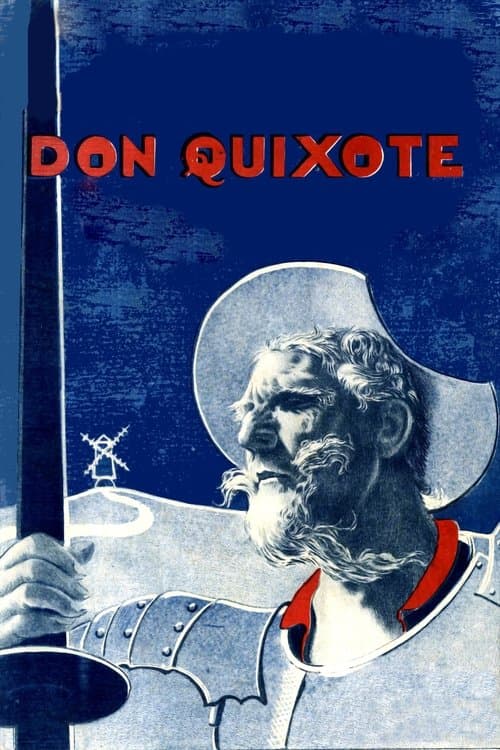
Inflamed by his readings of chivalric novels, Don Quixote, a knight with a sad face, accompanied by Sancho Panza, a peasant steeped in common sense, decides to set off across the world in search of improbable adventures.
8 min read
Release Year: 1933
Rating: 5.7/10
Runtime: 89 minutes
By Ellis Carver
Don Quixote (1933): Ending Explained
As Ellis Carver, I've long admired how adaptations of Cervantes' timeless tale capture the fragile dance between illusion and reality. The 1933 film Don Quixote, directed by G.W. Pabst and starring the inimitable Fyodor Chaliapin as the titular knight, distills the sprawling novel into a poignant meditation on human aspiration. In this ending explained, we'll unpack the film's haunting conclusion, probing its layers of symbolism, character evolution, and moral ambiguity. If you've just watched this silent-era gem or are revisiting it for its philosophical depth, this analysis reveals why the finale lingers like a half-remembered dream.
Quick Recap
Don Quixote (1933) follows the elderly Alonso Quixote—no, in this version, he's steadfastly Don Quixote, never reverting to his mundane name—as he becomes consumed by tales of chivalry. A retired gentleman with a melancholic gaze, he dons makeshift armor and recruits the earthy peasant Sancho Panza as his squire, embarking on quests to right wrongs and woo the imagined Dulcinea. The film, true to its condensed form, reorders and simplifies Cervantes' epic adventures, blending pathos with subtle humor. Quixote mistakes a theatrical production for reality, getting "knighted" by a traveling actor playing a king, setting the tone for his blurred boundaries between fiction and life.
Their journeys unfold across a patchwork of encounters: battling what he sees as giants (but are windmills, saved for later), rescuing the simple milkmaid Dulcinea whom he idealizes, and clashing with the world's prosaic harshness. Sancho, ever the voice of practicality, tempers Quixote's fervor, yet their bond deepens through shared folly. As the story builds toward disillusionment, Quixote's unyielding idealism invites ridicule from villagers and even Dulcinea herself, who laughs off his affections. The narrative crescendos with the iconic windmill assault, repositioned near the climax, underscoring Quixote's tragic defiance against an indifferent reality. By this point, the knight's spirit is fraying, his adventures a mirror to the human cost of chasing impossible dreams.
What Happens in the Ending
The film's finale unfolds with a raw, unflinching intensity, departing boldly from Cervantes' source material to deliver a visually arresting and emotionally charged resolution. It begins with the delayed windmill episode, a pivotal set piece that symbolizes Quixote's collision with unyielding modernity. As mill workers trudge home from their labors, Quixote charges the towering structures, convinced they are marauding giants. Unlike the novel's violent tumble, he's ensnared by the machinery but not hurled to the ground. The workers halt the windmill's motion, intervening with a mix of bewilderment and pity, then aid Sancho in lowering the dazed knight to safety. This moment marks Quixote's physical defeat, his body battered but his delusion intact—yet it's the prelude to a deeper unraveling.
Utterly vanquished, Quixote is carted back to his village not on horseback, but imprisoned in a crude cage, a humiliating echo of his knightly aspirations reduced to spectacle. The townsfolk, including his niece, the village priest, and her fiancé Sanson Carrasco, gather in mockery, their laughter a chorus of communal rejection. Dulcinea, the once-idealized milkmaid, joins in the jeers with particular cruelty, her dim-witted glee shattering any romantic illusion. Inside the cage, Quixote beholds the ultimate betrayal: his cherished books of chivalry, the spark of his transformation, are consigned to flames by his loved ones, who see them as the root of his madness.
The shock proves fatal. Quixote collapses in Sancho's arms, his life ebbing away as the peasant cradles him with unwavering loyalty. In a swift turn, the jeering crowd falls silent, moved to reverence; they kneel before the dying "knight," their scorn giving way to a profound, if belated, respect. The scene culminates in a striking bit of trick photography: rather than being devoured by the fire, the pages of the original 1605 edition of Cervantes' novel rise ethereal from the blaze, unscathed and ascending like spirits. This visual metaphor seals Quixote's transcendence, his story enduring beyond the mortal coil.
The Meaning Behind the Ending
At its core, the ending of Don Quixote (1933) wrestles with the bittersweet immortality of the dreamer in a world that demands conformity. The cage isn't mere punishment; it's a societal indictment, caging the imagination itself, forcing Quixote to confront the chasm between his noble fantasies and the villagers' grounded scorn. His death from the sight of burning books symbolizes the death of innocence—not through violence, but through the erasure of the very stories that fueled his soul. Yet Pabst subverts tragedy with hope: the rising pages from the flames represent the indestructibility of narrative. Quixote doesn't just die; he ascends into legend, his "madness" revealed as a higher truth that outlives the pyre.
This finale probes moral complexity, questioning whether idealism is delusion or defiance. The townsfolk's shift from laughter to kneeling highlights humanity's dual nature—we mock the outlier until his purity convicts us. Dulcinea's laughter adds a layer of irony; Quixote's chivalric love elevates her, but she, embodying unadorned reality, rejects it, underscoring the film's commentary on unrequited aspiration. The windmill sequence, with its halted machinery and helping hands, suggests that even in defeat, there's a quiet communal grace, a nod to the shared human struggle against mechanized fate.
Character Arcs and Resolution
Don Quixote's arc is a contemplative descent from fervent knight-errant to broken idealist, his psychology laid bare in the ending's quiet devastation. What begins as liberating delusion ends in mortal clarity; the book-burning strips his illusions, forcing a confrontation with reality that his heart cannot endure. His death in Sancho's arms resolves his journey not in triumph, but in poignant vulnerability, affirming that true knighthood lies in unyielding belief, even unto death.
Sancho Panza, the commonsense foil, evolves from reluctant companion to devoted guardian, his arc culminating in selfless fidelity. Carrying Quixote down from the windmill and holding him at the end, Sancho embodies the moral anchor, his practicality revealing a deeper empathy that outshines the villagers' superficiality. The niece, priest, and Sanson Carrasco represent societal pressure, their book-burning a misguided attempt at "cure," but their kneeling signifies growth—acknowledging Quixote's influence on their souls. Dulcinea's arc is tragically static; her laughter exposes the limits of Quixote's projection, resolving his romantic quest in heartbreak. Collectively, these resolutions humanize the characters, showing how one man's dream ripples through others, fostering unexpected redemption.
Alternate Interpretations
The ending's ambiguities invite multiple lenses, particularly around the crowd's transformation and the rising pages. One reading sees the townsfolk's kneeling as genuine contrition, a societal epiphany that Quixote's "madness" exposed their own spiritual poverty—his death as a Christ-like sacrifice awakening communal conscience. Alternatively, it could be performative pity, a superficial gesture masking their relief at silencing the disruptor, highlighting the film's critique of fickle social morality.
The trick photography of the ascending pages offers further divergence: optimistically, it's Quixote's apotheosis, his story eternally vital against censorship's flames. Pessimistically, it might underscore irony—the very book that birthed his torment persists, dooming future dreamers to similar fates, a commentary on literature's double-edged sword. The windmill's gentle resolution could symbolize mercy in modernity, or merely delay, as the cage awaits—ambiguities that reflect Cervantes' own ambiguities, adapted here for a 1930s audience grappling with rising authoritarianism.
Themes and Symbolism
The ending reinforces core themes of idealism versus pragmatism, with Quixote as the eternal rebel against a prosaic world. Symbolically, the windmills stand for industrial encroachment, their halted spin a fleeting victory for the human spirit, while the cage evokes imprisonment of the soul by convention. The burning books symbolize the fragility of inspiration, yet their resurrection subverts destruction, affirming art's resilience—a meta-commentary on Cervantes' novel itself.
Broader societal critique emerges in the villagers' arc, exposing how communities punish nonconformity while secretly yearning for its poetry. Moral complexity abounds: Is Quixote a fool or a prophet? The ending subverts easy answers, suggesting that true heroism lies in the pursuit, not the prize, and that stories like his endure to challenge our complacency. Dulcinea's role adds gendered nuance, her laughter a symbol of earth's indifference to lofty romance, grounding the film's exploration of unfulfilled longing.
Final Thoughts
Pabst's ending for Don Quixote (1933) works masterfully because it honors the source's spirit while forging something uniquely cinematic—visually poetic, emotionally raw, and thematically resonant. By killing Quixote through heartbreak rather than farce, it elevates the tale from comedy to tragedy, inviting us to contemplate our own cages of doubt. In an era of economic despair, this finale's message of enduring legacy feels profoundly hopeful, reminding us that even defeated dreamers can inspire reverence. If the film leaves you with a quiet ache, that's its genius: it doesn't resolve the madness, but immortalizes it, much like those rising pages. A must-rewatch for anyone pondering the cost of chasing windmills.