D-Railed (2018): Ending Explained
"Full scream ahead"
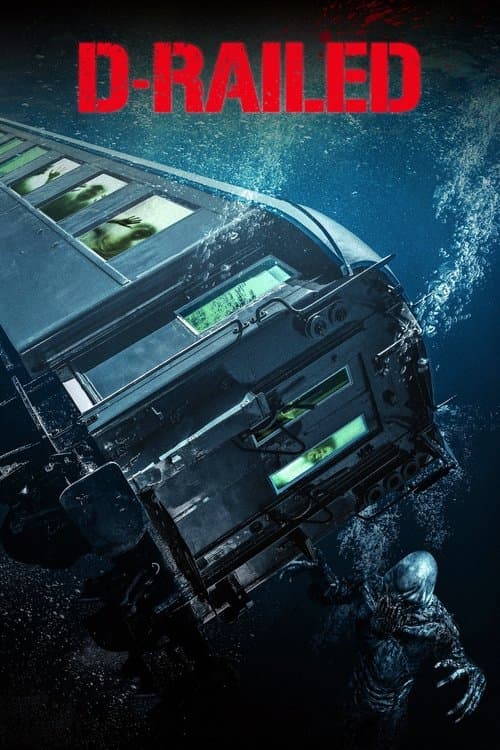
Passengers on a murder mystery train that crashes into a river must decide whether to risk waiting for help in the wreckage or take their chances in the murky depths below.
7 min read
Release Year: 2018
Rating: 5.916/10
Runtime: 80 minutes
By Luna Sterling
D-Railed (2018): Ending Explained
In the gritty underbelly of Seoul's shadowy streets, D-Railed (2018) weaves a tense tale of desperation, betrayal, and the razor-thin line between survival and self-destruction. Directed with a raw edge that pulses with urban unease, the film follows a ragtag gang of runaway youths scraping by on petty crimes and fleeting scams. At its core is Jin-il (Choi Min-ho), a brooding leader haunted by past sins, and Ga-young (Jung Da-Eun), his fierce yet vulnerable partner in this precarious dance of deceit. Their world unravels when a botched prostitution scam draws the ire of Hyung-suk, a ruthless karaoke bar owner who peddles underage girls like commodities. What starts as a simple theft spirals into a web of abductions, forced labor, and vengeful pursuits, all underscored by the humid night air thick with the scent of rain-slicked asphalt and unspoken regrets.
As the gang fractures under pressure—Bong-gil's accidental stabbing lands him in custody, forcing Jin-il to confess solo to shield his friends—the stakes escalate into a psychological pressure cooker. Jin-il's arrest exposes Hyung-suk's brothel front, but a bungled police sting leaves Ga-young trapped deeper in the web. In a haze of bloodied knuckles and flickering neon, Jin-il turns the tables by kidnapping Hyung-suk's daughter, demanding Ga-young's freedom. The air grows heavier with the metallic tang of impending violence as old flames and new enemies converge, pulling the characters toward an inevitable collision on a windswept rooftop. Here, the film's claustrophobic tension reaches a fever pitch, blurring the boundaries between redemption and ruin.
What Happens in the Ending
The climax unfolds on the desolate rooftop of a looming train station, where the distant rumble of trains below echoes like a muffled heartbeat in the night. Jin-il, battered and resolute, reunites with Ga-young at the agreed spot, wrapping her in a desperate embrace. His voice cracks with weary finality as he whispers that he's going away for good—the police sirens wailing in the distance confirm his surrender is imminent. The wind whips through their clothes, carrying the faint, acrid smell of city exhaust, heightening the sense of exposure on this precarious ledge.
Chaos erupts as Sung-hoon, Ga-young's ex and Jin-il's betrayed former ally—fresh from prison thanks to his family's influence—storms the rooftop with his henchmen. His eyes burn with possessive fury, intent on reclaiming Ga-young and settling scores with Jin-il for the past snitching that landed him behind bars. A brutal melee ensues: fists connect with sickening thuds, bodies slam against rusted railings, and the metallic screech of shifting metal underscores the frenzy. Hyung-suk arrives moments later, having secured his daughter, and unleashes his own rage—first freeing Ga-young from Sung-hoon's grasp, then turning on Jin-il for the abduction. Ga-young's pleas halt the assault, her voice a fragile thread in the storm.
As police lights flash below like predatory eyes, Sung-hoon sneers at Jin-il, promising a future reckoning once they're both out of prison. But in a final, visceral surge of defiance, Jin-il staggers forward and shoves Sung-hoon over the edge. The two men plummet together, locked in a fatal tangle, several stories to the unforgiving concrete below. The camera lingers on the aftermath: amid the twisted forms, Jin-il twitches weakly, his breaths ragged and labored, before the screen fades to credits. No clear resolution—did they survive the fall? The ambiguity hangs like a shroud, the rooftop's chill wind the last sensory echo.
The Meaning Behind the Ending
This rooftop plunge isn't just a physical fall; it's a metaphorical nosedive into the abyss of the characters' fractured lives, symbolizing the inescapable gravity of their choices. The train station rooftop serves as a liminal space—a threshold between the chaotic streets below and an uncertain void above—mirroring the gang's perpetual state of derailment from societal norms. Jin-il's act of pushing Sung-hoon over the edge, dragging himself down too, embodies a pyrrhic victory: in sacrificing himself, he severs the cycles of abuse and revenge that ensnared Ga-young, but at the cost of his own fragile hope for redemption. The weak movements post-fall evoke a lingering pulse of life amid death, suggesting that survival in this world is as much torment as triumph, a psychological scar that festers long after the impact.
Themes of entrapment and fleeting agency permeate the ending, with the sirens' wail representing an indifferent justice system that arrives too late to heal. The sensory isolation—the howling wind, the cold bite of metal railings—amplifies the characters' emotional desolation, turning the scene into a visceral meditation on isolation. Ultimately, the ending underscores the film's core irony: in a story derailed by crime and betrayal, true escape demands a leap into the unknown, where freedom and oblivion blur into one shadowy descent.
Character Arcs and Resolution
Jin-il's journey arcs from reluctant leader to tragic martyr, his initial bravado crumbling under the weight of guilt for past betrayals like snitching on Sung-hoon. By the rooftop, his confession to police and daughter's kidnapping reveal a man clawing for control in a life that's slipped its tracks—his fall resolves this by granting Ga-young autonomy, even as it likely claims him, completing his shift from predator to protector in a haze of blood and regret.
Ga-young evolves from scam artist's pawn to symbol of resilient escape, her interventions on the rooftop marking her break from victimhood. Freed from Hyung-suk's contract and Sung-hoon's obsession, she stands as the lone survivor, her arc a quiet triumph amid the carnage, though scarred by the psychological echoes of exploitation.
Hyung-suk, the embodiment of predatory capitalism, finds fleeting paternal vulnerability in reclaiming his daughter, humanizing his arc just enough to subvert his villainy—yet his rage-fueled intervention reinforces his role as an enabler of the very cycles he perpetuates. Sung-hoon's vengeful return cements his as the unyielding antagonist, his taunts a final nail in the coffin of unresolved grudges, resolved only in mutual destruction.
Alternate Interpretations
The ending's ambiguity—Jin-il's weak movements leaving survival in doubt—invites multiple lenses. One reading sees it as a redemptive suicide: Jin-il deliberately dooms himself to end the threats to Ga-young, his twitches a defiant last breath against a system that would incarcerate rather than rehabilitate. Alternatively, it could be interpreted as accidental tragedy, the shove a panicked reflex in the adrenaline-fueled brawl, with both men's survival implying an endless loop of prison releases and renewed vendettas, trapping them in eternal psychological limbo.
A more cynical view posits the fall as illusory escape—perhaps Jin-il lives, maimed and broken, to face a worse fate in custody, underscoring the film's theme that the streets' dangers pale against institutional indifference. These layers keep the tension alive, mirroring the characters' unsettled psyches and inviting viewers to ponder if death or mere endurance is the true derailment.
Themes and Symbolism
The ending reinforces D-Railed's exploration of cyclical violence and the illusion of agency in a predatory society, subverting the typical crime thriller by denying cathartic closure. Symbolically, the rooftop railing acts as a fragile barrier between order (the streets below) and chaos (the fall), much like the gang's flimsy scams that teeter on exposure. The train station itself evokes stalled journeys—passengers derailed by circumstance—while the sirens symbolize a justice that's reactive, not restorative, amplifying themes of class disparity: Sung-hoon's wealth buys early release, perpetuating inequality.
Psychologically, the scene delves into trauma's visceral grip, with the wind's chill and blood's warmth evoking the characters' internal turmoil. It subverts redemption tropes by suggesting that breaking free requires mutual destruction, a haunting commentary on how personal sins derail collective futures in Seoul's unforgiving shadows.
Final Thoughts
D-Railed's ending masterfully captures the film's atmospheric dread, leaving viewers with a knot of unease that lingers like the rooftop's chill. By embracing ambiguity, it elevates a straightforward revenge tale into a profound psychological puzzle, forcing us to confront the blurred lines between survival and surrender. While some might crave clearer resolution, this open wound of an ending—raw, immersive, and unflinchingly human—propels the film into memorable territory, a stark reminder that in life's derailed tracks, the fall often feels more like home than any safe harbor. If you're dissecting indie thrillers with emotional depth, this one's atmospheric punch makes it essential viewing.