Twixt (2011): Ending Explained
"Between the living and the dead, evil is waiting."
A washed-up horror novelist arrives in a sleepy town on a book tour, only to stumble into a string of eerie murders. Haunted by dreams of a ghostly girl named V and guided by the spirit of Edgar Allan Poe, he’s drawn into a nightmarish world where fiction and reality blur—and the story he’s chasing leads back to his own buried guilt.
8 min read
Release Year: 2011
Rating: 5.074/10
Runtime: 88 minutes
By Luna Sterling
Twixt (2011): Ending Explained
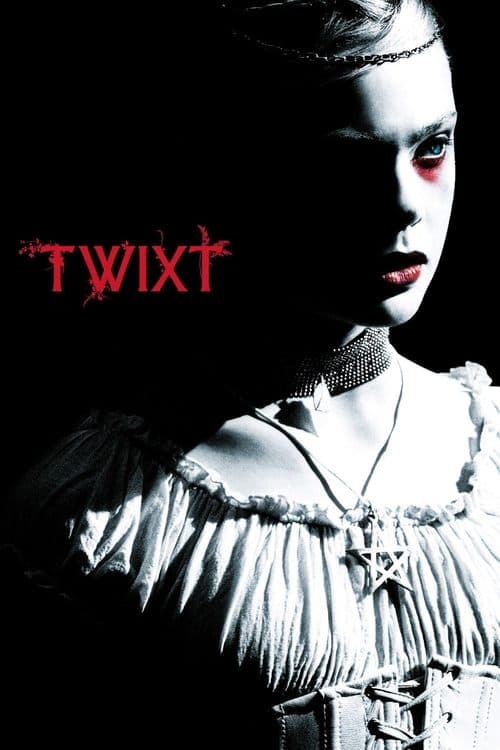
In Francis Ford Coppola's enigmatic Twixt (2011), the boundaries between reality and nightmare dissolve like mist over a fog-shrouded river. Starring Val Kilmer as a tormented writer grappling with his past, the film weaves a tapestry of guilt, ghosts, and gothic intrigue. As a washed-up horror novelist arrives in a sleepy town plagued by eerie murders, he's pulled into a spectral realm guided by the spirit of Edgar Allan Poe and haunted by visions of a ghostly girl named V. What begins as a book tour spirals into a psychological descent, blurring fiction with the raw ache of buried trauma. The ending, shrouded in ambiguity and emotional resonance, leaves viewers questioning the veil between the living and the lost, much like the flickering shadows in a dream you can't quite shake.
Quick Recap
The story unfolds in a somnolent town where our protagonist, a jaded horror writer, checks into a motel amid whispers of recent murders. The air hangs heavy with unease, the kind that prickles the skin like unseen eyes watching from the dark. Drawn by the mystery, he encounters the spectral V, a pale girl in Victorian garb whose ethereal presence tugs at his subconscious, revealing fragments of a drowned community and vampiric secrets. Guided by the acerbic ghost of Edgar Allan Poe, who materializes in opium-tinged visions, the writer delves into the town's underbelly—flashbacks to a tragic past, including the loss of his own daughter, mirror the horrors he's penned.
As the narrative fractures like cracked glass, the writer pieces together a tale of revenge and redemption. The murders echo his own unresolved guilt, pulling him into a nightmarish alternate reality where the living town's clock tower chimes with otherworldly dread. Tension builds through hallucinatory sequences: the metallic tang of blood in the air, the chill of ghostly fingers brushing his neck, and the relentless pulse of Poe's commentary. Leading into the finale, the writer confronts the heart of the mystery—a vampiric figure tied to the town's founder and his own paternal failures—setting the stage for a climactic unraveling where dreams bleed into waking life.
What Happens in the Ending
The final scenes of Twixt pulse with a claustrophobic intensity, the screen awash in desaturated hues that mimic the pallor of exhaustion. After a rooftop chase thick with the acrid scent of gunpowder and desperation, Sikes—Fagin's ruthless ally—plummets from the heights, her body twisting in the night air like a shadow severed from its source, shot by Fagin in a moment of vengeful clarity. The impact echoes with finality, the wind carrying faint, guttural cries that linger like smoke.
A week passes, the tension easing into an uneasy calm, as if the town exhales a held breath. Twist, the nimble young protagonist, meets Detectives Bedwin and Brownlow at a dimly lit café, the clink of porcelain cups underscoring the mundane facade of justice. He slips them an envelope and a key, his fingers trembling slightly with the weight of secrets, before vanishing into the crowd. Over the phone, his voice—hushed, laced with sly satisfaction—hints to Brownlow that the coveted Hogarth painting was "right next to them the whole time," a revelation that unravels like a thread pulled from a frayed seam.
The envelope spills its truths: documents exposing the painting's legitimate owners, stolen long ago by the corrupt art dealer Losberne. The key unlocks a hidden locker in his possession, brimming with pilfered masterpieces—canvases stacked like forgotten sins, their colors muted under dust. Losberne's arrest follows swiftly, the metallic click of handcuffs a stark punctuation. Fagin, unmasked as the betrayed Isaac Solomon, slips away from the gang, his departure marked by a heavy silence, eyes shadowed with the ghosts of old partnerships. In a poignant twist, it's revealed that during his daring van escape, Twist had secreted away a painting by his late mother, Molly—a vibrant, heartfelt work now destined for the hallowed walls of the National Gallery, its display evoking the faint, warm glow of hearthside memories amid the cold institutional gleam.
The film closes on Twist rallying the gang—Dodge, Batesey, and the others—in their graffiti-scarred den, the air thick with the sharp scent of spray paint and possibility. "Stop stealing," he urges, voice steady yet infused with the raw edge of transformation, "and start selling paintings." As he and Red share a tentative kiss, the camera lingers on their entwined hands, the moment soft against the film's earlier jagged tension, fading to black on a whisper of hope amid the ruins.
The Meaning Behind the Ending
At its core, the ending of Twixt symbolizes a shedding of shadows, where the visceral pull of inherited guilt gives way to tentative rebirth. The rooftop fall of Sikes isn't mere violence; it's a cathartic purge, her descent mirroring the protagonist's plunge into his subconscious, purging the toxic alliances that bind the soul. The envelope and key serve as metaphors for illumination—unlocking not just physical treasures, but the obscured truths of betrayal and loss, much like Poe's guidance peels back layers of the writer's psyche.
Thematically, it grapples with redemption's fragile texture: Twist's choice to legitimize their talents transforms theft's adrenaline-fueled haze into creative empowerment, echoing the writer's own journey from haunted isolation to confronting his daughter's ghost. The mother's painting on display represents legacy's quiet triumph over erasure, a visceral reminder that art endures beyond the graves it outlives. Psychologically, the ending evokes the tension of limbo—the "twixt" state between crime's dark allure and morality's pull—leaving a lingering unease, as if the past's damp chill still seeps through the cracks of resolution.
Character Arcs and Resolution
Twist's arc crescendos from orphaned vulnerability to empowered agency, his parkour grace evolving from survival instinct to a tool for justice. By hiding the real painting and exposing Losberne, he resolves his smitten infatuation with Red into a mature partnership, their kiss sealing a bond forged in shared peril. This closure heals the wound of his mother's death, her artwork's ascension affirming his artistic inheritance.
Fagin's revelation as Isaac Solomon marks a poignant full circle; his departure from the gang severs the cycle of vengeance, allowing a weary redemption that feels earned yet bittersweet, his silhouette fading like a specter released. Red sheds her role as distraction and lover-in-shadows, emerging as Twist's equal, her arc underscoring themes of loyalty amid treachery. For the detectives, the handover provides narrative vindication, but it's Twist's internal resolution—trading shadows for light—that anchors the emotional core, leaving him forever marked by the thrill, yet unburdened.
Alternate Interpretations
Twixt's ending invites multiplicity, its dreamlike edges blurring intent. One reading casts the entire heist as Twist's fevered imagination—a psychological metaphor for processing Molly's death, with the paintings symbolizing fragmented memories reassembled. Sikes' fall could represent suppressed rage toward parental figures, her demise liberating Twist from cycles of abandonment.
Alternatively, it's a subversive twist on redemption tales: perhaps Twist's "honest" pivot to selling art is illusory, a sly continuation of exploitation in the art world's underbelly, where true owners remain footnotes. The hint about the painting "next to them" might imply ongoing deception, suggesting the gang's dissolution is temporary, the envelope a feint to evade deeper scrutiny. These layers amplify the film's psychological tension, turning resolution into a hall of mirrors where certainty dissolves like fog at dawn.
Themes and Symbolism
The ending reinforces Twixt's obsession with duality—the twixt realms of illusion and truth, theft and creation. Symbolism abounds: the rooftop as a precipice of moral choice, wind howling like unspoken regrets; the key as Pandora's unlocker, spilling both justice and the Pandora's box of stolen histories. Broader themes of artistic authenticity subvert heist tropes, positing that true value lies not in possession but legacy—Molly's painting elevates personal loss to cultural reverence.
Guilt's psychological vise, echoed in the writer's hauntings, manifests in the gang's fractured loyalties, subverting redemption by grounding it in gritty realism rather than fairy-tale absolution. The National Gallery's glow contrasts the den's grit, symbolizing art's transcendence, yet the ending subtly critiques commodification, leaving a moody undercurrent: in chasing ghosts, do we ever truly escape them?
Final Thoughts
Twixt's ending works its moody magic through restraint, eschewing bombast for introspective whispers that resonate long after the credits. It's a fitting capstone to Coppola's atmospheric puzzle, blending visceral thrills with profound unease to mirror life's unresolved edges. For audiences craving closure, it might frustrate with its ambiguities, but that's its strength—immersing us in the twixt, where hope flickers amid shadows. A haunting meditation on art, loss, and reinvention, it lingers like a half-remembered dream, inviting rewatches to chase the truths just out of reach. If you're drawn to films that unsettle as much as they satisfy, this finale seals Twixt as a gem worth unraveling.