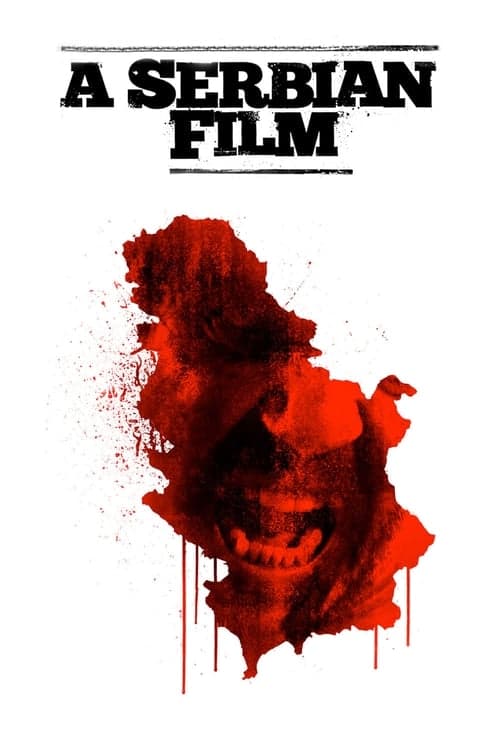
A Serbian Film (2010): Ending Explained
"Not all films have a happy ending"
Retired porn star Milos leads a normal family life trying to make ends meet. Presented with the opportunity of a lifetime to financially support his family for the rest of their lives, Milos must participate in one last mysterious film. From then on, Milos is drawn into a maelstrom of unbelievable cruelty and mayhem.
10 min read
Release Year: 2010
Rating: 5.445/10
Runtime: 104 minutes
By Luna Sterling
A Serbian Film (2010): Ending Explained
By Luna Sterling
In the dim underbelly of extreme cinema, A Serbian Film (2010) directed by Srđan Spasojević claws its way into the psyche like a fever dream laced with rust and regret. This notorious Serbian horror-drama plunges viewers into a vortex of depravity, where the line between art, exploitation, and raw human darkness blurs into a suffocating haze. As a film critic who's dissected countless tales of moral decay, I approach this ending with a mix of trepidation and fascination—its visceral punch lingers like the metallic tang of blood on the tongue, forcing us to confront the shadows we all harbor. If you're searching for a breakdown of A Serbian Film's shocking finale, you've come to the right place. We'll unpack the literal events, peel back the layers of symbolism, and explore how this conclusion seals the film's unrelenting assault on the soul.
Quick Recap
Miloš, a semi-retired porn star in Belgrade, clings to a fragile domestic bliss with his wife Marija and their young son Petar. Financial pressures gnaw at him, amplified by his brother Marko—a corrupt cop seething with envy and unspoken lust for Marija. When former co-star Lejla dangles a lucrative "art film" gig from the enigmatic director Vukmir, Miloš bites, desperate to secure his family's future. Vukmir, a ex-psychologist with ties to children's TV and state security, lures Miloš into a web of escalating horrors under the guise of boundary-pushing cinema. The shoot kicks off at an orphanage, where Miloš, guided by an earpiece from Vukmir's one-eyed driver Raša, navigates scenes dripping with unease: a nurse's fellatio amid screens flickering with a young girl Jeca sucking an ice pop, escalating to forced acts with Jeca's mother while the child watches.
As the production spirals, Vukmir unveils his twisted vision— "newborn porn" footage of a fresh birth violated by Raša—prompting Miloš to flee in disgust. But a seductive encounter with Vukmir's female doctor at a roadside junction pulls him back into the abyss. Days blur into blackout; Miloš awakens bloodied at home, memory shattered. Returning to the abandoned set, he uncovers tapes revealing his drugged descent: injected with a cocktail inducing aggression, arousal, and suggestibility, he savagely beats, rapes, and decapitates Jeca's mother; endures sodomy from Vukmir's guards in a catatonic stupor; witnesses Lejla's brutal death—teeth yanked, throat violated by a masked man until she suffocates. Further horrors unfold: at Jeca's home, her grandmother hails him as a hero for the killing and offers the girl as a "virgin commune," which Miloš rejects before escaping. A frantic call to Marko for rescue ends with Raša's arrival, dragging him back to Vukmir's warehouse lair. The tension coils tighter, the air thick with impending doom, as the final act ignites.
What Happens in the Ending
The warehouse pulses with a claustrophobic dread, shadows clinging to the walls like congealed sweat. Vukmir's doctor, her movements precise yet laced with an undercurrent of frenzy, administers another dose of the mind-warping drug to Miloš. But this time, the serum surges through him differently—empowering rather than enslaving. In a blur of rage, he overpowers her, plunging the syringe deep into her throat. She staggers away, a gurgling silhouette against the dim light.
Miloš is herded into a dimly lit room, where two shrouded forms lie beneath stained sheets on the floor, their outlines eerily still. Guided by unseen hands, he mounts one, the fabric cool and yielding against his skin, oblivious at first to the warm slickness of blood seeping from beneath. A masked figure— the same from Lejla's tape—enters and claims the other body with equal ferocity. Vukmir's voice cuts through the haze like a rusty blade, unveiling the horror: the masked man is Marko, Miloš's own brother. The sheet tears away to reveal Marko's victim as Marija, her body limp and violated, eyes vacant in the flickering gloom. Miloš's partner? His six-year-old son, Petar, the innocence shattered in a pool of rectal blood that stains the concrete.
Chaos erupts as the doctor reenters, her clothes disheveled, vaginal area a crimson ruin, clutching a blood-smeared metal pipe—evidence of her own drug-fueled self-destruction, masturbating to fatal hemorrhage. She collapses in a heap, twitching, as the room descends into primal fury. Miloš lunges at Vukmir, smashing his skull against the unyielding floor in a frenzy of cracks and gasps. Marija, stirring from her ordeal, sinks her teeth into Marko's jugular, the hot spray of arterial blood painting her face before she grabs a nearby sculpture and bludgeons him to death, his body crumpling with wet thuds. Miloš wrests a gun from a guard, bullets ripping through the air—guards fall in sprays of red mist—until only Raša remains. In a grotesque crescendo, Miloš forces his erect penis into Raša's empty eye socket, the driver's final gurgles echoing like a deflating bellows. Vukmir, dying on the floor, whispers praise: Miloš's rampage is "truly worthy of a film," his words hanging in the metallic reek of death.
Memories flood back to Miloš—the drugged haze lifting like fog from a graveyard. He recalls locking Marija and Petar in the basement earlier, a precaution born of his fractured mind. He races home through the night, the city's indifferent hum mocking his torment. Freeing them, the family huddles in silence, the weight of shared violation pressing like a suffocating blanket. No words are needed; their eyes lock in mutual despair. They climb into bed, bodies entwining in a final, tender embrace—skin warm, breaths syncing in the dim bedroom glow. Miloš presses a gun to his temple, the barrel cold against his skin, and fires once. The shot pierces through him, Petar, and Marija in a single, muffled crack, their forms slumping together in crimson unity.
Dawn creeps in, pale light filtering through curtains like an unwelcome intruder. A new film crew breaches the door—the bald man from Miloš's early wary encounter at the helm. As one crew member unzips his fly with mechanical detachment, the director's voice slices the quiet: "Start with the little one." The cycle renews, the room's stale air now thick with the promise of fresh atrocity.
The Meaning Behind the Ending
This finale isn't just a blood-soaked punctuation; it's a mirror held to society's festering wounds, reflecting the inescapable cycle of exploitation and trauma. The family suicide represents ultimate surrender—a poisoned chalice of mercy in a world that devours innocence. Miloš's bullet through all three symbolizes intertwined fates, their deaths a defiant erasure of the film's commodification of pain. Yet the arriving crew twists this into irony: even in death, they're props for Vukmir's successors, the "art" of cruelty perpetuating itself like an infection in the veins.
Symbolically, the warehouse brawl evokes a ritualistic purge, bodies colliding in a symphony of vengeance that reeks of sweat and gunpowder. Vukmir's dying acclaim underscores the film's meta-commentary: violence as spectacle, where the audience (us) becomes complicit in the gaze. The doctor's self-annihilation mirrors the drug's corrupting hunger, her pipe a phallic totem of unchecked desire bleeding out in grotesque excess. Petar's violation cements the theme of innocence's fragility, his small form under the sheet a silent scream against the adult world's predatory maw. The ending whispers that redemption is illusory; trauma metastasizes, leaving only echoes in the dark.
Character Arcs and Resolution
Miloš's journey arcs from reluctant provider to unwitting monster, then vengeful destroyer, culminating in sacrificial guardian. His initial hesitation—torn between family security and past demons—shatters under the drugs, forging him into Vukmir's puppet. The finale's clarity restores agency: his killings purge the immediate evil, but the suicide resolves his arc in tragic stasis, choosing oblivion over a tainted life. It's a psychological anchor, the tension of his fractured mind snapping into resolute despair.
Marija evolves from curious wife to survivor-warrior, her bite and bludgeoning a raw eruption of maternal fury amid the bedroom's intimate horror. Petar, the wide-eyed innocent, embodies collateral ruin—his arc ends not in growth, but as the heart-wrenching catalyst for the family's pact, his presence a haunting reminder of lost purity. Marko, the envious brother, meets poetic justice: his lust-fueled betrayal exposed, his death at Marija's hands seals his descent from familial shadow to abject villain. Vukmir, the orchestrating sadist, dies fulfilled in his "art," his arc a chilling affirmation of the artist's god-complex. Resolutions feel visceral, not neat—each death lingers like a bruise, underscoring how arcs entwine in mutual destruction.
Alternate Interpretations
The ending's ambiguity simmers in its final shot: is the new crew's intrusion literal, or a nightmarish hallucination from Miloš's dying mind? One reading posits it as cyclical inevitability—the porn industry's hydra, regrowing heads to feast on the vulnerable, with the bald man's return signaling endless replication. "Start with the little one" could imply Petar's corpse as the next "star," perpetuating Vukmir's legacy in a post-Yugoslav Serbia of moral rot.
Alternatively, it might symbolize psychological eternal recurrence: Miloš's suicide doesn't end the horror but replays it internally, the crew as manifestations of his guilt-ridden subconscious. This interpretation leans into the film's drug-induced unreality, where reality frays like bloodied sheets—did the family truly die, or is this a looped purgatory? A third lens views it as societal allegory: the "film crew" as opportunistic powers (media, state) exploiting tragedy for profit, the bedroom a microcosm of national trauma. These layers invite unease, the mood shifting from closure to infinite dread, depending on whether you see escape or entrapment.
Themes and Symbolism
The ending amplifies A Serbian Film's core obsessions: the commodification of suffering, where bodies become canvases for "art" that reeks of control and violation. Themes of power's corruption pulse through Vukmir's earpiece directives and the drugs' fog, symbolizing how authority—be it directorial, fraternal, or societal—strips autonomy, leaving only visceral instincts. Innocence's desecration, embodied by Petar and Jeca, subverts familial sanctuary; the bed's embrace turns lethal, a metaphor for love's fragility in a predatory world.
Symbolism drips with atmospheric weight: the sheets as veils of deception, concealing horrors until the reveal's gut-wrenching rip; blood as life's profane currency, pooling in patterns that mock purity. The eye socket penetration twists sight into blindness, Raša's gaze extinguished in ironic reversal. Broader, the film subverts redemption arcs—vengeance offers catharsis, but the crew's arrival reinforces entrapment, themes of cyclical abuse echoing Serbia's war-torn scars without resolution. It's a tense meditation on voyeurism, the camera's unblinking eye complicit in the mood's suffocating intimacy.
Final Thoughts
A Serbian Film's ending works as a sledgehammer to the senses, its atmospheric vise of tension and psychological unraveling leaving viewers adrift in a sea of unease. It doesn't just explain closure; it indicts our fascination with the extreme, the final crew's whisper a chilling hook that ensures the film's notoriety endures. For all its visceral excess—the coppery bite of violence, the clammy dread of revelation—this finale succeeds in being unforgettable, a haunting elegy for shattered lives. Yet its unrelenting bleakness risks alienating, turning insight into overload. If cinema is meant to provoke, this one scars deeply—approach with caution, and let its shadows linger.