Raat Akeli Hai (2020): Ending Explained
When a newly married landlord is murdered, a misfit cop’s investigation is complicated by the victim’s secretive family and his own conflicted heart.
8 min read
Release Year: 2020
Rating: 6.849/10
Runtime: 149 minutes
By Luna Sterling
Raat Akeli Hai (2020): Ending Explained
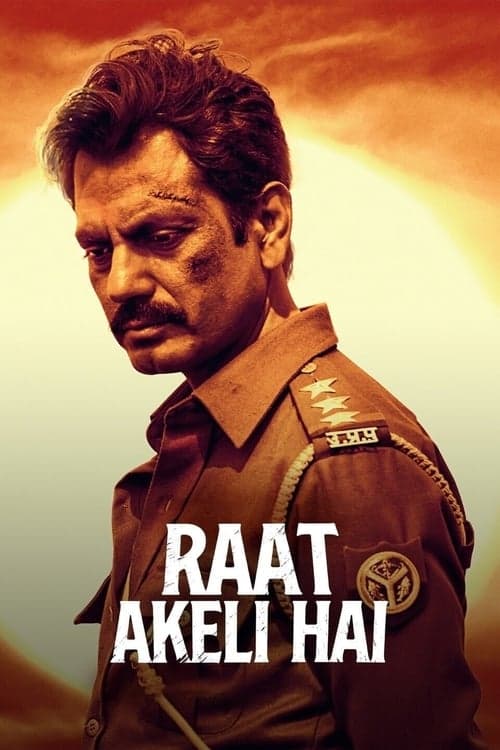
In the shadowy underbelly of a sprawling Indian manor, Raat Akeli Hai (2020) weaves a tense web of family secrets, buried traumas, and simmering betrayals. Directed by Honey Trehan and starring Nawazuddin Siddiqui as the brooding Inspector Jatil Yadav, this Hindi neo-noir thriller unravels the murder of wealthy patriarch Raghuveer Singh on his wedding night to young bride Radha. As Jatil digs deeper, the air thickens with unspoken horrors, from illicit affairs to long-festering wounds, all set against the humid, oppressive nights of rural Uttar Pradesh. If you're searching for a Raat Akeli Hai ending explained, this article breaks down the chilling finale, its psychological layers, and why it leaves a lingering chill in the soul.
Quick Recap
The film opens with a visceral prologue: a car chased by a menacing truck, crashing into oblivion before the occupants—a man and a woman—are dragged out and dissolved in acid at a remote factory, the acrid fumes hinting at the violence to come. Five years later, we meet Inspector Jatil Yadav, a solitary cop haunted by his mother's relentless matchmaking, thrust into investigating Raghuveer Singh's murder. Shot with his own gun on his wedding night, Raghuveer's death exposes a fractured family: his resentful children Karuna and Karan; scheming sister-in-law Pramila and her ambitious son Vikram; volatile son-in-law Ravi; loyal maid Chunni; and the fragile new bride Radha, treated as an outsider.
As Jatil probes the manor's labyrinthine corridors—its back stairs whispering of hidden passages and illicit rendezvous—he uncovers layers of deceit. Radha, whom Jatil once saved from suicide, emerges as a sympathetic figure amid the family's cold hostility. Clues pile up: erotic magazines stashed in Raghuveer's room, a plastic bead under the bed, phone records linking Vikram and Radha in a secret affair, and the suspicious death of Chunni, her nails clawing at a killer's burnt skin. Jatil's pursuit leads to chases through rain-slicked streets and a tense train escape with Radha, where they overpower a pursuing butcher tied to local MLA Munna Raja. Back at Raghuveer's Gwalior farmhouse, medical reports and wedding footage reveal abortion secrets and a badge from Vasudha's boarding school, pulling Jatil toward the family's darkest core. The investigation crescendos as alliances fracture—Jatil's colleague Narendra turns informant—and Radha faces imminent arrest under a bridge, only for a brutal shootout to erupt, leaving her wounded but the truth tantalizingly close.
What Happens in the Ending
The finale unfolds in the dim, suffocating glow of the family bungalow, where the air hangs heavy with the scent of incense and unspoken dread. Jatil arrives with a bandaged Radha, her eyes wide with quiet fear, and gathers the family like suspects in a confessional. The tension coils like smoke from a dying fire as he lays bare the revelations, his voice steady but laced with the weight of unearthed graves.
First, he accuses Ravi Sisodia of supplying drugs to Karan, a secret Raghuveer once covered up to protect the family name. Then, the true architect of the past emerges: the butcher, his hands scarred by acid from that long-ago disposal, murdered Raghuveer's first wife and her driver on orders from Munna Raja. The first wife had discovered Raghuveer's depravity—peering through a farmhouse window to see him abusing his niece Vasudha, capturing perverse photos and driving her to an abortion that expelled her from school. Enraged, she confronted him, but he mocked her pain, urging her to end her own life. Vasudha, seething with years of violation, snatched his gun and shot him point-blank in a haze of fury and despair. To frame Radha, Vasudha slipped her dupatta—marked by that telltale plastic bead—into the bride's bag, a subtle plant noticed only in the flickering wedding video.
The bombshell deepens: the first wife, tipped off by the farmhouse caretaker, called Pramila to expose the incestuous abuse of her own daughter Vasudha. Shocked yet opportunistic, Pramila orchestrated the murder to bury the scandal and secure the family estate, brokering a deal with Raghuveer for a share transferred to Vikram. She begged the first wife to return to Kanpur instead of fleeing to her brother's, sealing her fate. Munna Raja, the family's corrupt ally, even "bought" Radha from her father to sate Raghuveer's desires, turning the young bride into unwitting collateral.
As the truths spill like blood on the floor, reactions fracture the family: Vikram recoils in disgust, shunning his mother; Karuna weeps in disbelief at the web of lies; Karan watches silently, his innocence shattered; Vasudha stands teary-eyed, gutted that her mother protected her abuser for property's sake. Overwhelmed by exposure, Pramila takes her own life to "save face," her suicide a final, desperate grasp at control. In the aftermath, during Pramila's cremation—flames crackling against the night sky, the pyre's heat mirroring the family's incinerated bonds—Vasudha confesses the full extent of her torment to Jatil, her voice breaking like fragile glass.
The film closes on a quieter, almost tender note. Jatil returns to his mundane life, enduring his mother's matchmaking over a simple meal, the domestic warmth a stark contrast to the manor's chill. Spotting Radha's train departing, he races alongside it, the rhythmic clatter echoing his hesitant heart. In a subtle exchange through the window, he proposes they build a life together; she accepts with a shy smile, the horizon blurring into possibility as the train pulls away.
The Meaning Behind the Ending
This ending isn't just a resolution—it's a visceral purge, the manor's shadows finally pierced by Jatil's unyielding light. Symbolically, the bungalow confrontation evokes a ritual exorcism, where family ties, once a fortress of silence, crumble under the corrosive acid of truth, much like the prologue's dissolving bodies. The plastic bead on Vasudha's dupatta serves as a metaphor for overlooked trauma—small, innocuous, yet pivotal in unraveling the facade. Pramila's suicide represents the ultimate internalization of patriarchal poison: a woman complicit in horror, choosing death over disgrace in a society that values honor over healing.
Psychologically, the finale delves into the tension of suppressed rage. Vasudha's murder of Raghuveer isn't glorified vengeance but a fractured response to years of grooming and abuse, her tears in the revelation underscoring the psychological scars that linger. Radha's escape with Jatil symbolizes fragile redemption, a beacon amid the film's brooding atmosphere of isolation. The train's departure, with its fleeting connection, hints at hope's transience—love as a quiet rebellion against the cycle of violence that engulfs the elite.
Character Arcs and Resolution
Jatil Yadav's journey from irritated loner to empathetic avenger culminates in quiet triumph. His "misfit" status—evident in clashes with superiors and personal detachment—evolves through Radha's vulnerability, mirroring his own saved-from-suicide past. By the end, he's not a hero in capes but a man reclaiming agency, proposing to Radha as a step toward the family life his mother craves, resolving his internal conflict with subtle warmth.
Radha, the scapegoated bride, arcs from silent victim to survivor. Sold into a nightmare, her shy acceptance of Jatil's offer marks emotional liberation, her knife-wielding train defense a spark of agency that blooms into partnership. Vasudha's arc is the film's gut-wrenching core: from abused silent sufferer to reluctant killer, her cremation-side confession offers catharsis, though her shock at Pramila's betrayal leaves her adrift in unresolved pain. Pramila's self-destruction seals her as the tragic enabler, her opportunism born of desperation now exposed as hollow. The family—Karuna's tears, Vikram's rejection, Karan's watchful silence—fragments irreparably, their arcs underscoring how secrets erode bonds, leaving isolation in their wake.
Alternate Interpretations
While the ending ties most threads neatly, ambiguities linger in the family's fractured aftermath. One reading sees Vasudha's confession as incomplete redemption—did she plant the dupatta purely for self-preservation, or was there a flicker of protecting Radha from the family's wrath? Her tears could imply lingering loyalty to Pramila, suggesting the abuse cycle persists subtly. Another interpretation questions Jatil and Radha's future: the train proposal feels idyllic against the film's gritty realism, perhaps symbolizing illusory escape. Is their union genuine healing, or a projection of Jatil's savior complex, doomed by Radha's trauma? These open ends invite viewers to ponder if justice truly severs the roots of corruption, or if the manor's shadows merely shift.
Themes and Symbolism
The ending reinforces Raat Akeli Hai's core themes of patriarchal decay and the cost of silence in elite Indian families. Incest and abuse subvert the archetype of the benevolent patriarch, with Raghuveer's farmhouse—a supposed idyll—symbolizing corrupted sanctity, its Polaroids like frozen ghosts of violation. Corruption permeates through Munna Raja's tannery, where bodies dissolve in acid, mirroring how society "erases" women's pain. The back stairs, slick with secrets, embody hidden power dynamics, while the wedding video's flickering light exposes planted lies, symbolizing technology's role in piercing illusions.
Yet the finale subverts fatalism: Jatil's persistence challenges institutional rot (SSP's complicity), and Radha's agency upends victimhood tropes. Broader themes of class and gender emerge—Radha's sale by her father echoes Vasudha's exploitation, critiquing how power preys on the vulnerable under humid, starless nights.
Final Thoughts
Raat Akeli Hai's ending works masterfully because it balances visceral shocks with psychological depth, leaving viewers unsettled yet satisfied. The confrontation's raw intensity—family faces crumpling like wet paper—delivers catharsis without cheap thrills, while the tender train coda offers breathing room amid the tension. It's not flawless; some might crave more ambiguity in Vasudha's fate, but this resolution amplifies the film's mood of brooding unease, reminding us that truth, once exhumed, reshapes lives in unpredictable, haunting ways. If you're dissecting this thriller, the finale cements it as a standout in Indian noir—immersive, unflinching, and profoundly human.