To Kill a Mockingbird (1962): Ending Explained
"A father must expose his children to a small town's outraged passions… and can only protect them with his love."
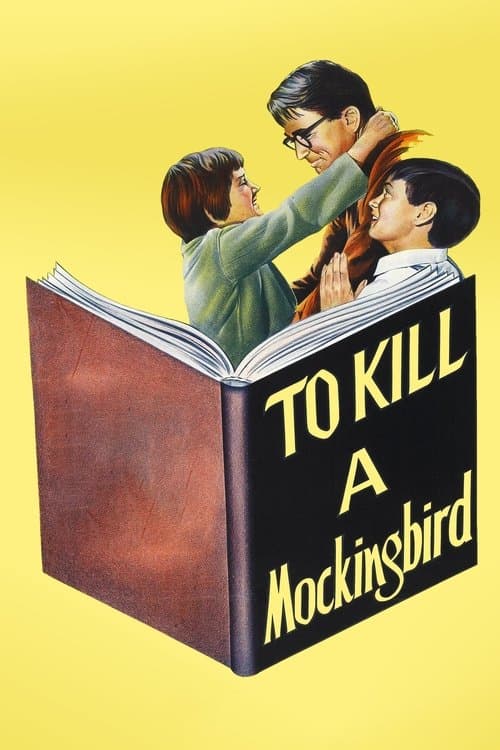
Scout Finch, 6, and her older brother Jem live in sleepy Maycomb, Alabama, spending much of their time with their friend Dill and spying on their reclusive and mysterious neighbor, Boo Radley. When Atticus, their widowed father and a respected lawyer, defends a black man named Tom Robinson against fabricated rape charges, the trial and tangent events expose the children to evils of racism and stereotyping.
8 min read
Release Year: 1962
Rating: 8/10
Runtime: 129 minutes
By Ellis Carver
To Kill a Mockingbird (1962): Ending Explained
By Ellis Carver
As a film critic who's revisited Harper Lee's timeless tale through Robert Mulligan's poignant 1962 adaptation countless times, I find the ending of To Kill a Mockingbird to be one of cinema's most quietly profound resolutions. Starring Gregory Peck as the steadfast Atticus Finch and Mary Badham as the spirited Scout, this film doesn't just wrap up its plot— it lingers in the soul, inviting us to confront the fragile line between innocence and prejudice. In this ending explained, we'll unpack the final scenes, their layered meanings, and how they illuminate the human condition in a divided world. If you're searching for a To Kill a Mockingbird ending breakdown that dives deep without spoiling the journey, you've come to the right place.
Quick Recap
Set against the backdrop of the Great Depression in the sleepy Southern town of Maycomb, Alabama, To Kill a Mockingbird follows young Scout Finch and her brother Jem as they navigate childhood curiosity and harsh realities. Their widowed father, Atticus, a principled lawyer, teaches them empathy and justice amid the town's simmering racial tensions. The siblings, along with summer friend Dill, become fascinated by their reclusive neighbor, Boo Radley, spinning myths about the man they've never truly seen. Small gifts left in a tree hint at Boo's hidden kindness, but the children's world shifts dramatically when Atticus is appointed to defend Tom Robinson, a Black man falsely accused of raping Mayella Ewell, the daughter of the abusive, racist Bob Ewell.
The trial becomes the film's emotional core, exposing the ugliness of prejudice. Atticus dismantles the prosecution's case, revealing inconsistencies—like Tom's crippled left arm making him incapable of the left-handed assault described—and suggesting Mayella was beaten by her own father. Yet, the all-white jury convicts Tom anyway, a gut-wrenching verdict that crushes Jem's faith in fairness. Atticus plans an appeal, but tragedy strikes when Tom is shot dead by authorities while "trying to escape" from jail. Bob Ewell, humiliated by the trial, confronts Atticus with venom, spitting in his face. As autumn falls, the children grapple with loss and disillusionment, unaware that their games of make-believe are about to collide with real danger. This sets the stage for the film's climactic confrontation in the woods, where the threads of innocence, protection, and hidden humanity finally intertwine.
What Happens in the Ending
The final act unfolds on a tense Halloween night, as Scout, dressed in a ham costume for a school pageant, and Jem head home through the dark woods after the event. Their path feels ominous, shadowed by the recent threats from Bob Ewell, who's been nursing a grudge since the trial exposed his lies. Suddenly, an attacker—Bob Ewell himself—ambushes them. In the scuffle, Jem is overpowered; his arm snaps with a sickening crack, and he's knocked unconscious. Scout, hampered by her bulky costume, can only flail helplessly as the assailant turns on her, his knife glinting in the moonlight.
Amid the chaos, a shadowy figure intervenes, wrestling Ewell away and ultimately killing him—though the details remain obscured in the struggle. Scout glimpses a stranger carrying her limp brother toward home, his face pale and unfamiliar. Back at the Finch house, Atticus, ever the vigilant father, summons the doctor for Jem and Sheriff Tate for the unfolding mystery. As Scout recounts the attack in halting, tearful words, Atticus gently draws her attention to a shy man lingering behind the bedroom door: Arthur "Boo" Radley, their enigmatic neighbor, revealed as the rescuer.
The sheriff arrives at the scene to find Ewell dead, a knife plunged into his own ribs. Atticus, piecing together the violence, assumes Jem must have stabbed Ewell in self-defense during the fight. But Tate, with a knowing glance, insists otherwise: Ewell fell on his own knife in a drunken stumble, a fabrication to shield Boo from scrutiny. Atticus grapples with the moral weight of this lie, but ultimately yields, recognizing the greater good in protecting the fragile soul who saved his children. In a tender coda, Scout escorts Boo home, her small hand in his. Pausing on the Radley porch, she stands in his shoes—literally—gazing out at the world from his vantage point, seeing her own home and life anew. The film closes with adult Scout's narration, reflecting on that fateful night and the image of Atticus keeping vigil by Jem's bedside, a symbol of unwavering parental love and quiet resilience.
The Meaning Behind the Ending
This ending isn't a thunderous climax but a contemplative exhale, rich with symbolism that underscores the film's exploration of unseen empathy in a world blinded by hate. Boo's emergence from isolation to protect the children flips the script on the myths the kids once spun about him; he's no monster, but a guardian angel, embodying the "mockingbird" Atticus warned against harming—innocent, harmless, and deserving of protection. The knife that kills Ewell, ruled an accident by Tate, symbolizes the self-destructive nature of prejudice: Bob's rage, fueled by his own moral rot, turns inward, sparing Boo the trial's glare and affirming that some truths are too delicate for the courtroom's harsh light.
At its core, the ending meditates on moral complexity—Atticus's reluctant acceptance of the sheriff's lie challenges his black-and-white code of integrity, revealing that justice sometimes demands nuance. Scout's moment on the porch is the emotional pinnacle, a literal and figurative act of stepping into another's perspective, teaching us that true understanding dissolves fear. It's a human truth: empathy isn't abstract; it's born from quiet acts of kindness, like Boo's gifts in the tree or his final intervention, piercing the veil of societal division.
Character Arcs and Resolution
Atticus Finch's arc reaches its zenith in quiet compromise, evolving from the idealist who fights for Tom's innocence to a father who bends his principles to safeguard innocence anew. His vigil by Jem's bed reaffirms his role as moral compass, but the ending humanizes him—flawed, weary, yet resolute—showing that heroism lies in everyday endurance against systemic evil.
Scout's journey from feisty tomboy to empathetic observer culminates on the porch, where her childlike curiosity matures into profound compassion. Having witnessed racism's toll through the trial, the attack forces her to confront vulnerability, and Boo's reveal completes her arc: she learns to see beyond appearances, echoing Atticus's lessons on human dignity.
Jem, whose faith in justice shatters with Tom's verdict, ends broken in body but perhaps mended in spirit—his injury mirrors the town's fractures, yet his survival, thanks to Boo, hints at hope's quiet persistence. Boo himself arcs from spectral myth to flesh-and-blood savior, his reclusion a psychological armor against a judgmental world; his act of protection resolves his isolation, allowing a fleeting connection that affirms his inherent goodness. Even in death, Tom lingers as a tragic anchor, his unavenged loss underscoring the characters' growth amid unresolved pain.
Alternate Interpretations
While the ending is largely unambiguous—Boo clearly kills Ewell to defend the children—its deliberate ambiguities invite layered readings. One interpretation sees Tate's lie as a subversion of Atticus's truth-telling ethic, suggesting that in a flawed society, protecting the innocent sometimes requires deception, a commentary on the limits of legal justice. Alternatively, some might view Boo's intervention as a metaphor for suppressed goodness rising against evil, with Ewell's "accidental" death symbolizing how prejudice implodes under its own weight—no heroic trial needed, just human intervention.
A more contemplative take questions whether Scout's porch epiphany fully erases the scars of racism; her adult narration implies lingering reflection, leaving room for doubt about whether Maycomb's divides can ever truly heal. These nuances ensure the ending resonates differently for each viewer, mirroring the moral grayness it portrays.
Themes and Symbolism
The ending reinforces core themes of innocence versus prejudice, with the mockingbird motif subverted triumphantly: Boo, like Tom, is a mockingbird—harmed by societal scorn yet preserved through protective lies and empathy. It critiques Southern racism's human cost, showing how Bob Ewell's bigotry breeds isolation and violence, while Atticus's family embodies quiet resistance.
Symbolism abounds: the woods represent the unknown fears children (and society) harbor, the ham costume Scout's cumbersome innocence, and the porch a threshold between worlds—Boo's hidden life and the Finches' open one. These elements weave a tapestry of societal commentary, urging us to value the overlooked "Boo Radleys" in our midst and recognize that moral complexity demands compassion over condemnation.
Final Thoughts
What makes To Kill a Mockingbird's ending so enduring is its refusal to tie every thread neatly—Tom's death remains a raw wound, racism's shadow unbanished—yet it offers a beacon of human connection in Boo's quiet heroism and Scout's revelation. It's a masterful close that doesn't just resolve the plot but elevates the film's themes, leaving us contemplative about our own capacity for empathy in divided times. For a story born from the Depression era's truths, this resolution feels timeless, a subtle reminder that protecting innocence often means seeing the world through another's eyes. If you've just watched the film, revisit that porch scene; it's where the real magic—and meaning—unfolds.