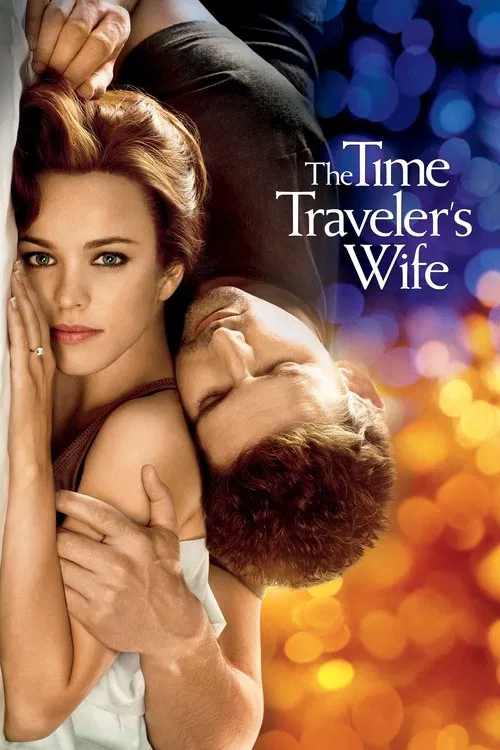
The Time Traveler's Wife (2009): Ending Explained
Clare's father accidentally shoots Henry while hunting elk; Henry dies in Clare's arms, and years later a younger Henry tells her to stop waiting.
7 min read
Release Year: 2009
Rating: 7/10
Runtime: 107 minutes
By Ending Explained Team
The short answer
The short answer
Henry DeTamble dies in Clare's arms. He has jumped again, and Clare's father, hunting elk, accidentally shoots him. Henry lands back in his own time long enough to die with Clare holding him. Some years after that, a younger Henry appears to Clare and their daughter Alba. The visit gives Clare hope that he will visit again, but Henry tells her not to spend her life waiting for him, hoping the encounter provides proper closure for Clare and Alba.
How the ending plays out

The body gives out
A jump goes wrong and Henry comes back with severe frostbite. He spends a stretch in a wheelchair. His body is failing, and Clare is the one who has to watch it happen.
The shot
Henry jumps and lands in the path of Clare's father, who is out hunting elk. He is accidentally shot. The man who has spent the whole film unable to control where he goes lands, one last time, somewhere he can't leave.
The death
Henry makes it back. He dies in Clare's arms. A middle-aged wounded Henry had briefly arrived from another time earlier, leaving the couple concerned about how long Henry will live.
The visit
Years later, a younger Henry shows up to Clare and Alba. For a second it looks like the old pattern: he's here, so maybe he'll always be here. The visit gives Clare hope that he will visit again.
The release
Henry tells Clare not to spend her life waiting for him. He hopes the visit gives Clare and Alba proper closure. The film plays it as a gift, not a goodbye.
The ledger
What he gains
Henry DeTamble gets the one thing his condition never gave him: a say. He chooses the words that close the loop for Clare and Alba. He dies in Clare's arms rather than alone in some field.
What he pays
Henry DeTamble pays with his life, and he pays for a mistake he didn't make. Clare's father fired the shot. Henry just happened to be standing where the bullet went. He also pays the years he doesn't get, the future he already knows about and hides from Clare.
Clare married a man whose disorder she couldn't control, and the film has her discover his impending death at Alba's fifth birthday party, then sit with it. She pays the last stretch twice: once watching Henry in the wheelchair, once losing him to her father's accidental shot. What she gets is the visit, a younger Henry alive in front of her and Alba, telling her to stop waiting. That's more than most people get after a death like this.
Alba gets her father back, briefly, as the younger Henry who visits her and Clare. She's a time traveler too, with more control than Henry ever had, so the visit isn't the last word for her the way it is for her mother. She pays by knowing. She tells Henry, as a pre-teen, exactly when he dies. She visits her younger self to prepare her for it. She's the one carrying the schedule nobody asked her to carry.
Clare's father gains nothing the film lets him keep. He's hunting, he fires, and the man he kills is his son-in-law. He pays for a shot he couldn't have known not to take. The film doesn't give him a reckoning scene, which is its own kind of verdict.
The irony

Clare spends the entire film waiting. As a kid she waits for Henry with clothes. As a wife she waits for him to come back from jumps he can't control. After he dies she waits again, because that's the only move the relationship ever taught her. Then a younger Henry shows up and tells her to stop.
That's the trap the ending sets. The visit that looks like the answer is the thing that forbids the answer. If Henry had never come back, Clare could have kept waiting forever, and the film would have been a tragedy about a woman standing in a field. By coming back, he takes the waiting away from her. He gives her the one thing she never wanted from him: permission to stop.
Henry gets what he wants. He wanted Clare to have a life after him. The film is honest enough to show that getting it costs her the version of him she was still holding onto. She doesn't get to keep the hope and the closure. She gets the closure, and the closure means the hope has to go.
Did anyone get a warning
Everyone did. The film is almost cruel about how early it tells you.
Henry meets Alba as a pre-teen, before she's born, and she tells him plainly that he dies when she's five. He hides it from Clare. Then Alba's pre-teen self keeps visiting young Alba specifically to prepare her for it. And before any of that, Clare and Henry watch a middle-aged, wounded Henry arrive from another time, and they both understand what they're looking at.
The clearest warning is the one Clare gets at Alba's fifth birthday party, when she discovers Henry's impending death. From that moment she's living inside a countdown. Everything after that, the wheelchair, the frostbite, the shot, is just the countdown running out.
I've got my little movie that runs in my head. And I'm kind of afraid that will be changed or wiped out by what somebody else might do with it. And it is sort of thrilling and creepy because now the characters have an existence apart from me.
The verdict
The verdict
The film admits Clare deserved better, then hands her a consolation and calls it peace.
Look at what she actually gets. Henry dies in her arms, which the movie frames as a mercy, and then a younger Henry shows up years later to tell her to move on. That's the ending Robert Schwentke and Bruce Joel Rubin chose to land on, and it's a softer one than the premise earns. Clare has waited since childhood, and her reward is being told to stop. The film treats that as a kindness. I'd argue it's the last in a long line of decisions made for Clare by Henry: he has the vasectomy without telling her, he hides the death date, he comes back to close the loop. The ending is Henry's final say over Clare's life.
Does she deserve it? She doesn't deserve the loss. She married into a condition she couldn't fix and a man she couldn't keep, and I'd argue none of that was her fault. What she deserves is a version of this story where she gets to make one of the calls. She never does. The younger Henry's visit is the closest thing to agency she's offered, and it's still him talking and her listening.
So who comes out worse? Henry is dead, which is worse by any measure, but he's also the one who gets to choose his final words to Clare. The shooting is accidental, and he controls neither the timing nor the destination of his jumps. Clare survives into a life she didn't pick, holding a goodbye she didn't ask for. The film thinks it gave her peace. What it actually gave her is a man's permission to stop grieving him, delivered by the man himself, because even in death Henry can't stop showing up to manage the situation. That's the ending's real sting. Clare finally gets to stop waiting, and she gets there on his schedule, not hers.