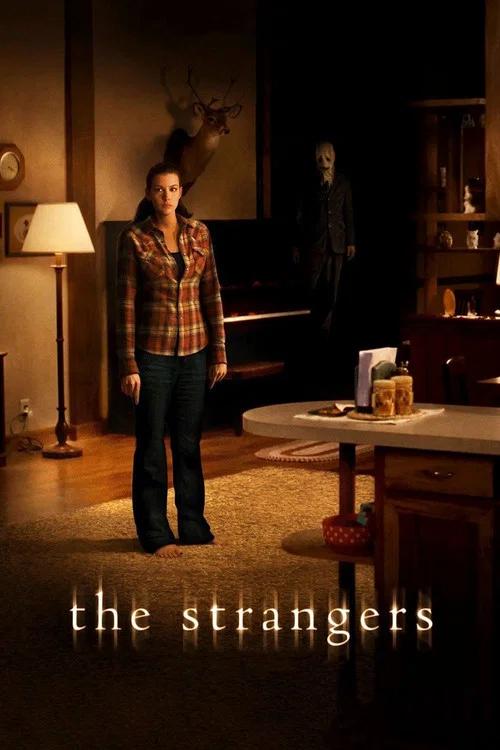
The Strangers (2008): Ending Explained
The Strangers ends with 'Because you were home': the strangers unmask, stab James and Kristen, and drive off; Kristen wakes screaming.
8 min read
Release Year: 2008
Rating: 6.1/10
Runtime: 86 minutes
By Ending Explained Team
The short answer
The short answer
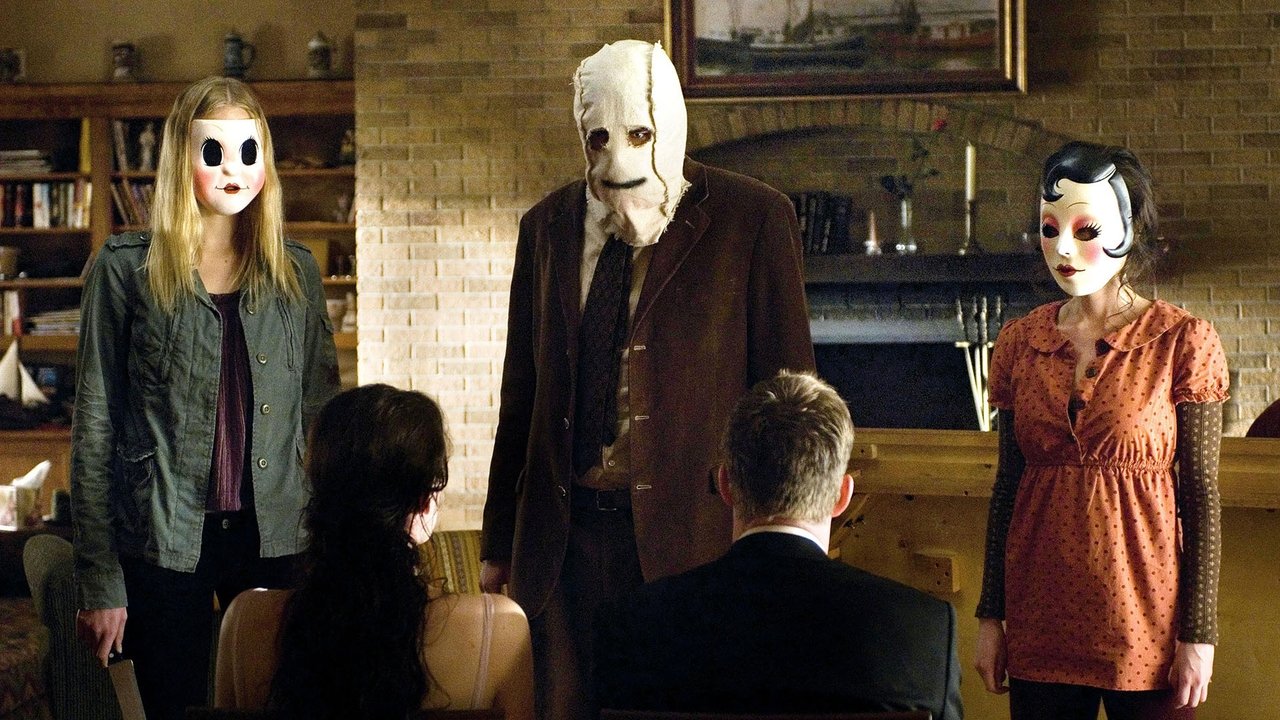
James Hoyt and Kristen McKay wake at dawn tied to chairs in the living room of James' childhood summer home. Kristen demands to know why the three masked intruders are doing this, and Dollface answers: "Because you were home." The strangers unmask, take turns stabbing the couple, and drive away. On the road they pass two young boys handing out Mormon religious tracts; one boy gives Dollface a tract, and as the strangers pull off, Pin-Up Girl says, "It will be easier next time." The boys then reach the house and find the bloodied bodies of Kristen, James, and Mike. When one of the boys examines the bodies, Kristen suddenly comes back to consciousness, grabs his hand, and screams.
That scream is the last thing in the movie. James is dead. Kristen was stabbed and left for dead, and the film ends with her alive and screaming. The killers are not caught, not punished, not even hurried.
The contract
The first act of The Strangers sells you a very particular kind of night. James and Kristen arrive at the house after a friend's wedding, raw from Kristen turning down his proposal. He calls his friend Mike to come get him in the morning. There's a knock, a young woman asking for someone named Tamara, a fire built for Kristen, a pack of cigarettes he goes out to buy. It's a relationship drama with the lights low, and the film is in no hurry. Bryan Bertino lets you sit in the awkwardness of two people who love each other and can't say it right.
The promise is that the intrusion, when it comes, will be the pressure that forces that relationship to resolve. That's the shape the genre has trained you to expect: the couple under siege, the crisis that strips away pretense, the confession in the dark, the survival that earns a new beginning. The threat is terrible, but it's also useful. It makes people say the true thing.
The film reinforces this by making the threat mysterious rather than stupid. The smoke detector Kristen dropped earlier is now sitting on a chair, and that single moved object tells her someone has been inside. Dollface peers through the door. The car is ransacked, the tires slashed. Pin-Up Girl rear-ends them in a pickup. This is a film promising a puzzle as much as a chase. Who are these people? Why this house?
The breach
The breach is the unmasking. Everything before it has been building toward a reveal, and the reveal is that there's nothing behind the masks worth knowing.
The question
Tied to chairs at dawn, Kristen asks the intruders to explain themselves. She's not begging yet. She wants a reason, she asks as though she still expects an answer. Dollface gives her four words: "Because you were home."
The unmasking
The three offenders take off their masks. This is what the film has been withholding, and it plays as nothing. No faces worth the wait, no motive arriving with them. The barrier between killer and victim comes down and what's on the other side is just people.
The stabbing
They take turns. That's the detail that lands hardest. Not a struggle, not a frenzy, a rotation, as if this is a chore they've agreed to share. James and Kristen are stabbed and left for dead.
The tract
Driving away, the strangers meet two boys distributing Mormon religious tracts. One boy hands Dollface a tract. She takes it. Pin-Up Girl says, "It will be easier next time," and they go.
The discovery
The boys reach the house and find the bodies of Kristen, James, and Mike. One boy examines them. Kristen suddenly regains consciousness, grabs his hand, and screams.
The contract said the siege would mean something. The breach is the film telling you, flatly, that it won't. There's no confession, no reconciliation, no reason, and the killers don't even get the dignity of a pursuit. They drive away after Dollface is handed the tract, Pin-Up Girl promising it will be easier next time.
"No one is getting at anything in The Strangers, except the cheapest, ugliest kind of sadistic titillation."
Why it does it
Here's where the film's defenders and its detractors are actually describing the same mechanism and disagreeing about whether it's a feature. Steven Rea, writing in The Philadelphia Inquirer, called it "the cheapest, ugliest kind of sadistic titillation." Mick LaSalle in the San Francisco Chronicle split the difference: the film "uses cinema to ends that are objectionable and vile," but "it does it well, with more than usual skill." Roger Ebert, in the Chicago Sun-Times, landed on the same tension from the craft side: "The movie deserves more stars for its bottom-line craft, but all the craft in the world can't redeem its story."
That's the argument the ending forces. The craft is real. Scott Tobias of The A.V. Club called it "an exercise in controlled mayhem" where "horror movies don't get much scarier." The control is the point. Bertino shows the killers taking turns, and my read is that he shoots it with the same patience he gave the proposal aftermath, so the violence arrives with no more weight than the quiet start of their night did. The film refuses to inflate it.
What the breach does, functionally, is take away the consolation the genre normally smuggles in. Most home-invasion movies let you leave believing the ordeal meant something, even if what it meant was grim. The Strangers closes that door. "Because you were home" is the anti-motive, and the film spends its last minutes proving it means what it says. The killers aren't caught. The couple doesn't get a final moment of grace. The only witnesses to Kristen's survival are two boys, and whether they can help her is something the film never shows.
You can read the tract exchange as the film's coldest joke: violence and evangelism passing each other on the same road, each an offer nobody asked for. I'd argue it's doing something narrower and meaner. It's showing that the world the strangers drive back into is completely ordinary, and that the ordinary world will absorb what happened here.

What the film becomes
What it looks like
A home-invasion thriller with a mystery at its center. Masked strangers, a couple under siege, a question mark hanging over the whole night: who are these people and what do they want. The first act even primes a relationship drama, as if the siege will be the crisis that resolves James and Kristen.
What it is
A film about the absence of a why. The masks come off and there's no answer underneath, just people who could have picked them up at any store. James dies and Kristen is left for dead, and the film ends with her waking. The killers leave with a pamphlet and a promise to do it again. What you're watching by the end isn't a mystery being solved. It's a mystery being declared permanently unsolvable.
The genre shift is from puzzle to void. The film spends an hour teaching you to lean forward, asking who and why, and then it tells you to sit back, because there is no who and no why, only a house that happened to have people in it.
The verdict
The verdict
The Strangers is a cruel film and it knows exactly how cruel, which is the thing its harshest critics can't quite forgive and its defenders can't quite defend. Rea is right that there's no larger point being made, and that's not a bug in the ending. It's the ending. Bertino builds you up to expect meaning, then withholds it at the exact moment you've been trained to demand it, and the withholding lands because he did the setup work. Elizabeth Weitzman, in the New York Daily News, called the couple "colossally stupid and frustratingly passive," and that reading has teeth, but it also misses what the passivity is for. James and Kristen aren't failing to fight back because the script is lazy. They're failing because the film won't let competence matter. The radio gets destroyed. James, mistaking his friend Mike for an intruder, accidentally shoots him dead. Every attempt to be a person who acts gets answered with the same flat nothing.
The unmasking is where I'd plant the flag. A lesser film saves that beat for a scare or a twist, some final face that reframes the night. This one gives you the removal and then gives you nothing, and the nothing is the whole argument. The scream Kristen lets out as a boy examines her body isn't a cry for help, because help isn't coming and the film has spent its runtime proving that. It's the sound of a person discovering that the worst thing that can happen to her has no reason behind it at all. That's not a satisfying ending. It's not supposed to be. It's the ending the film earned by promising you sense and then taking it away.