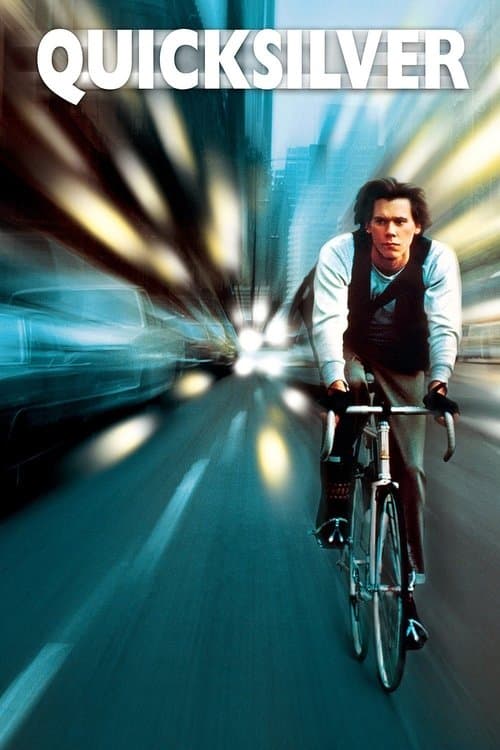
Quicksilver (1986): Ending Explained
"Kevin Bacon is Jack Casey. He traded in his three-piece suit for a ten-speed and the streets."
Jack Casey used to be a hot-shot stock market whiz kid. After a disastrous professional decision, his life in the fast lane is over. He loses his nerve and joins a speed delivery firm which relies on bicycles to avoid traffic jams of San Francisco, is attracted to a fellow bicycler, Terri, and befriends Hector, a budding entrepreneur. Can Jack regain his nerve and his self-respect, and rebuild his life on a more sound basis?
8 min read
Release Year: 1986
Rating: 5.5/10
Runtime: 105 minutes
By Ellis Carver
Quicksilver (1986): Ending Explained
As a film critic with a penchant for unpacking the quiet revolutions in character-driven stories, I've always found Quicksilver (1986) to be a understated gem. Directed by Tom Donnelly and starring Kevin Bacon as the disillusioned Jack Casey, this tale of a fallen financial hotshot pedaling his way back to self-worth resonates in its exploration of risk, redemption, and the raw pulse of urban survival. In this ending explained, we'll dissect the film's climactic moments, peeling back layers of symbolism and psychology to reveal how it ties into broader human truths about ambition and reinvention. If you've just watched Quicksilver or are piecing together its narrative from afar, stick around—there's more to this bicycle-fueled odyssey than meets the eye.
Quick Recap
Quicksilver follows Jack Casey, a once-promising young floor trader on the Pacific Exchange whose high-stakes gamble wipes out his company's and family's savings, shattering his confidence and sending him spiraling into disillusionment. Quitting the cutthroat world of stocks, Jack reinvents himself as a bicycle messenger in the traffic-choked streets of San Francisco, trading pinstripes for pedals in a bid to reclaim some semblance of freedom and purpose. There, he navigates the camaraderie of a ragtag crew of messengers, including the street-smart Hector, an aspiring entrepreneur with dreams of owning a hot dog stand, and Terri, a troubled young woman drawn into Jack's orbit amid her own brushes with danger from a local gang led by the menacing drug dealer Gypsy.
As Jack settles into this lower-stakes life, he grapples with familial disappointment—his parents and ex-girlfriend view his new gig as a step down—and the moral ambiguities of his surroundings. Yet, the job's physical demands and unexpected bonds awaken something dormant in him. Jack lends his financial savvy to help his coworkers, even as darker elements intrude: Terri's entanglement with Gypsy pulls Jack into a web of intrigue involving threats, chases, and life-or-death decisions. The story builds toward a crossroads where Jack must confront whether his past prowess can coexist with the grounded realities he's embraced, culminating in a high-wire act that blends his old world of markets with the precarious rhythm of the streets.
What Happens in the Ending
The finale of Quicksilver unfolds in a whirlwind of action and resolution, literally propelling Jack from the pedals back into the fray while tying up the personal and perilous threads of his journey. After a series of escalating confrontations, including Jack's decision to wade into the dangers surrounding his friends, the story pivots to the trading floor. Jack returns to the Pacific Exchange for a single, audacious day, channeling his recovered nerve into a bold play: he buys shares of a plummeting penny stock, riding out the volatility with steely resolve until it rebounds. This gamble pays off spectacularly, not only restoring his family's lost fortune but also securing enough capital to help Hector realize his dream by funding the hot dog stand he's long coveted.
Parallel to this financial redemption, the interpersonal stakes reach a fever pitch. Terri, once again threatened by Gypsy and his gang, finds herself in peril, but she's swiftly rescued by the tight-knit band of bike messengers, showcasing their loyalty forged in the city's underbelly. In a pulse-pounding retaliation, Jack leads an extended car-versus-bike chase through San Francisco's labyrinthine streets, outmaneuvering Gypsy's vehicle with the agility of his two-wheeled expertise. The pursuit climaxes dramatically as Gypsy's car careens off the end of an uncompleted highway, plunging into presumed oblivion and neutralizing the threat once and for all.
The film then flashes forward, offering a glimpse of stability: Jack is seen applying for more conventional jobs, signaling a tentative step toward normalcy, while Terri commits to training as a paramedic, channeling her resilience into a helping profession. The pair shares a lighthearted moment buying hot dogs from Hector's newly opened stand, a simple scene that underscores their hard-won peace amid the vendors and bustle.
The Meaning Behind the Ending
At its core, the ending of Quicksilver symbolizes a harmonious fusion of Jack's dual lives—the high-risk abstractions of finance and the tangible grit of street-level survival—suggesting that true self-respect emerges not from rejecting one's past but integrating its lessons. The penny stock trade isn't just a plot device; it's a metaphor for the film's central tension between calculated gambles and impulsive dashes, mirroring how Jack "holds on" through market dips much like he endures the bike chases. Gypsy's fatal plunge off the unfinished highway evokes the perils of unchecked aggression in an incomplete society, a commentary on how the city's fragmented infrastructure reflects broader moral voids, where the vulnerable like Terri are preyed upon until communal bonds intervene.
Thematically, this resolution probes the psychology of reinvention, illustrating how Jack's arc from "smiling" trader to humbled messenger uncovers the illusion of control in both worlds. The hot dog stand, a humble emblem of entrepreneurial grit, represents grounded ambition over Wall Street's fleeting highs, while the flash-forward hints at ongoing flux—Jack's job hunt implies that redemption is iterative, not absolute. Societally, the film subtly critiques the 1980s obsession with financial excess, positing the bicycle messengers as unsung heroes whose physical labor and loyalty offer a purer form of risk-taking, free from the ethical corrosion of unchecked capitalism.
Character Arcs and Resolution
Jack Casey's journey resolves with a profound psychological shift, evolving from a deflated prodigy haunted by failure to a man who regains his nerve through action rather than analysis alone. His final trade restores not just fortunes but self-respect, allowing him to bridge his worlds without fully reverting to the old grind—evident in his pursuit of "normal" jobs, which suggests a balanced future unburdened by past hubris. This arc underscores the moral complexity of ambition: Jack learns that helping others, like funding Hector's stand, yields deeper fulfillment than solitary wins.
Terri's resolution is equally layered, transforming from a "troubled young woman" ensnared by danger to an empowered figure pursuing paramedic training, her rescue by the messengers highlighting themes of communal salvation over isolation. Hector, the budding entrepreneur, embodies aspirational simplicity; his hot dog stand fruition validates Jack's influence, closing his arc with quiet triumph and reinforcing the film's nod to overlooked dreamers. Collectively, these endings affirm that personal growth stems from vulnerability—Jack's friends pull him from despair as he does for them—while exposing the human cost of societal undercurrents like gang violence.
Alternate Interpretations
Though Quicksilver's ending leans toward clear-cut uplift, its flash-forward introduces subtle ambiguities ripe for interpretation. One reading sees Jack's job applications as a full retreat to conformity, implying the bike life was a mere interlude—a cautionary tale that true change is fleeting in a system that rewards financial savvy over all. Alternatively, it could signal evolution: perhaps "normal" jobs allow Jack to apply his skills ethically, subverting his old world rather than escaping it. Terri's paramedic path might be viewed optimistically as empowerment or pessimistically as another form of service in a broken city, perpetually mending others' wounds. Gypsy's off-screen demise adds moral grayness—heroic justice or vigilante excess?—inviting debate on whether the messengers' triumph glorifies street justice or merely survives it. These layers prevent the ending from feeling pat, encouraging viewers to ponder if stability is rebirth or resignation.
Themes and Symbolism
The ending reinforces Quicksilver's core themes of risk as a double-edged sword and the redemptive power of community, subverting the era's yuppie narratives by elevating blue-collar agility over boardroom bravado. Bicycles symbolize unfiltered freedom and human-scale connection, contrasting the impersonal speed of cars and stocks—Jack's chase literalizes this, turning vulnerability into strength. The uncompleted highway, a recurring motif, symbolizes societal incompletion: a city of dreams half-built, where moral hazards like Gypsy thrive in the gaps. Broader commentary emerges on class friction—Jack's descent and ascent highlight how financial ruin exposes the fragility of privilege, while the messengers' world critiques urban alienation, positing solidarity as the antidote to individualism's isolation. Ultimately, the hot dog scene grounds these symbols in everyday joy, a subtle subversion suggesting that profound change often arrives in small, shared bites.
Final Thoughts
Quicksilver's ending works masterfully because it eschews bombast for contemplative closure, allowing its characters' quiet victories to echo the film's humanistic core. By blending high-octane chases with introspective trades, it captures the moral complexity of rebuilding amid chaos, reminding us that life's true recoveries are as much about mending bonds as balancing books. For audiences grappling with their own pivots—be it career crashes or personal perils—this finale offers solace in its assertion that nerve, once lost, can be pedaled back. It's not a flawless film, but its thoughtful denouement lingers, proving that sometimes the fastest way forward is to slow down and steer true. If you're revisiting Quicksilver, let this ending prompt your own reflections on what "holding on" really means.