Hard Candy (2006): Ending Explained
Jeff confesses he watched Donna Mauer's rape and murder, then steps off his roof with Hayley's noose; her deal was a lie.
9 min read
Release Year: 2006
Rating: 6.8/10
Runtime: 104 minutes
By Ending Explained Team
The short answer
The short answer
Jeff Kohlver steps off his roof with a noose around his neck and falls to his death. He does it after confessing to Hayley Stark that he watched another man rape and murder Donna Mauer and that he "wanted to take pictures." Hayley has him at gunpoint, tells him she already confronted the other man, who accused Jeff and then killed himself, and says she does not care which of them actually did it. Jeff lets her slide the noose over his head and steps off. Then Hayley says out loud that she never planned to dispose of the evidence, gathers her things, and flees into the woods.
The contract
For most of its running time, Hard Candy sells you a revenge thriller with a captive audience. The setup is almost clinical in its efficiency: an online chat, a coffeehouse, Jeff's home, a photographer and a 14-year-old. Hayley Stark mixes the screwdrivers because she was taught never to take a drink she has not mixed herself, and Jeff Kohlver drinks his. He wakes up tied to a chair. From there the film runs on a single promise: the predator is caught, the predator is at her mercy, and we are going to watch him pay. The staging supports it. A hidden safe with explicit photos of underage girls and a picture of Donna Mauer. A bag of ice on his genitals. A medical book open to the procedure. Hayley talks Jeff through a castration she is not actually performing, and the film lets you believe it is happening.
That is the deal. You get to sit in the chair with the monster and watch.
The breach
The breach arrives in stages. First the interrogation stops being an interrogation. Then the punishment stops being punishment. Then the choice of how it ends is handed to the man you wanted to see pay.
The call
Hayley phones Jeff's ex-girlfriend Janelle, impersonates a police officer, and tells her to come to the house right now. Nothing about this serves the interrogation. Read that way, the call isn't interrogation, it's her staging a witness, and she is doing it with a person who has no idea what she is walking into.
The offer
Jeff comes to standing on a chair in his own kitchen, a noose around his neck. Hayley gives him terms: kill yourself and she will erase the evidence of his crimes; refuse and she will expose his secrets. From here the film is a negotiation, not a torture chamber. The predator has been handed a choice, which is a stranger thing to give him than pain.
The chase and the roof
The neighbor interrupts. Jeff breaks free, grabs a kitchen knife, and goes after her through the house. He follows her to the roof, where she has brought the gun and the rope, now a noose tied to the chimney. Jeff, held at gunpoint, sees Janelle arrive. Jeff confesses: he did not take part in what happened to Donna Mauer, but he watched, and he wanted to take pictures. He offers the other man's name in exchange for his life. Hayley tells him she already found that man, that he blamed Jeff before killing himself, and that she does not care which of them did it. Jeff lets her put the rope over his head. He steps off.
The lie
After the fall, Hayley says she never intended to dispose of the evidence. She picks up her belongings and flees into the woods.
until the shocking end, there's nothing less than rapt attention to this sordid thriller about an online predator (Wilson) and his not-so-innocent prey [Elliot Page].
The word "shocking" is doing real work there, because what shocks is not the death. It is that the film spends most of its running time convincing you Hayley is the instrument of a justice you can enjoy, and then hands the killing to Jeff. He is not executed. He chooses.
Why it does it
The critical split on Hard Candy tracks almost exactly the split the ending creates.
Roger Ebert wrote, "There is undeniable fascination in the situation as it unfolds... Seen as a film, seen as acting and direction, seen as just exactly how it unfolds on the screen, Hard Candy is impressive and effective." Note what he praises: the unfolding, the craft, the effect. Ebert is describing the pleasure of watching a trap close, which is the pleasure the first two acts engineer.
Steve Schneider saw the same construction and resented it: "It's a memorably tense pas de deux, and if the movie doesn't pay off on it properly, fault a script that ventures further and further into psychological thriller claptrap, leaving the two stars to rely on their hefty talents to keep it at all believable." The complaint is about payoff, which is the right word. Hard Candy sets a debt and then pays off its setup on terms you never accepted.
Jonathan Rosenbaum was blunter: "I'd rather have this movie obliterated from my memory." That is not a complaint about execution. It is a complaint about having been put in the room.
The ending is why those three reactions can all be true at once. If Hayley had castrated Jeff, or shot him, or walked away leaving him cuffed while the police arrived, the film would have delivered the genre goods. Instead it moves the act of violence to Jeff's own hands and then has Hayley admit her promise was a lie. The audience gets no clean executioner and no clean victim. You watched most of the film's running time as a 14-year-old tortured a man, and the ending tells you the torture was partly theater and the final killing was voluntary. Jeff confesses he watched Donna Mauer's rape and murder, then steps off his roof with Hayley's noose, and her deal was a lie. You wanted that ending, and the film makes you sit with the fact that you wanted it.

What the film becomes
What it looks like
A revenge thriller. A predator is caught by his prey, restrained, interrogated, and made to answer for a missing girl. The shape is familiar: the trap is set in act one, the confession is extracted in act two, the punishment lands in act three, and the avenger walks away. The audience is positioned as jury, and the verdict was never in doubt.
What it is
A film about the cost of wanting that story to end the way it usually does. Hayley does not execute Jeff. She offers him a deal, lies about the terms, and lets him step off his own roof. The killing is his, and the lie is hers, and neither one gives you the closure a revenge film is supposed to deliver. The evidence stays where it is. She flees into the woods with nothing resolved except that a man is dead.
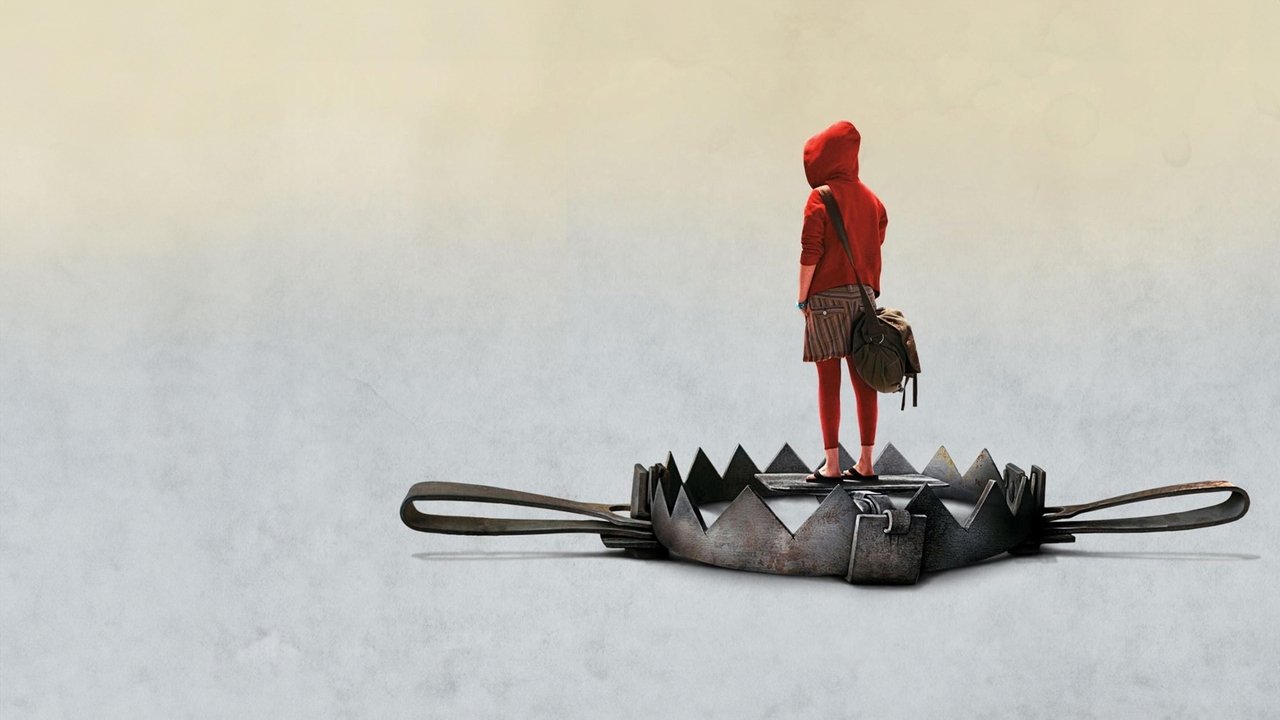
The Little Red Riding Hood reading is not subtle, and the film did not plan it. Hayley's red hooded sweatshirt was a wardrobe accident nobody noticed until later, and the marketing leaned into it afterward, including a tagline on the film's Japanese site that reads "Red Hood traps the Wolf in his own game." But accidents can still be true. The fairy tale she is living in is the one where the girl escapes and the wolf dies. What the film does with that frame is refuse the ending the frame implies. Red Hood does not kill the wolf. She hands him the rope and lets him decide.
The verdict
The verdict
The ending is not ambiguous, and anyone who tells you it is has not watched the last scene closely. Hayley wins, in the sense that Jeff is dead and she is walking away. But she wins by making him complicit in his own death and by breaking the one promise that made the deal legible. She told him she would erase the evidence. She never intended to. The photos of the girls, the picture of Donna Mauer, all of it is still in that house when she leaves, which means the deal's one promise, erasing the evidence, is the one thing she did not do.
I'd argue that is the point, and it is a colder point than the film's reputation suggests. Hard Candy is not a movie about a girl who takes justice into her own hands. It is a movie about a girl who takes a man's life and does not particularly care whether he was the right man. She says so on the roof: the other suspect accused Jeff before killing himself, and she does not care which of them did it. That line is the whole film. Hayley is not an avenger with a case file. She is a 14-year-old who decided a man should die and built a story around him to make it happen.
Elliot Page's performance is what keeps this from being nihilism. Lynn Hirschberg wrote that "a star was born, but almost no one noticed," and the reason the ending lands is that Page never plays Hayley as a monster or a saint. Claudia Puig, writing in USA Today, praised Page for "remain[ing] consistently convincing" in a role that is both "powerful and chilling," and for being "both cruelly callous and likable." That is scarier than a castration, and it is what Hard Candy leaves you with: a red hood disappearing into the trees, a dead man, and evidence that was never going to be erased, still in the safe in the house Janelle has just arrived at.