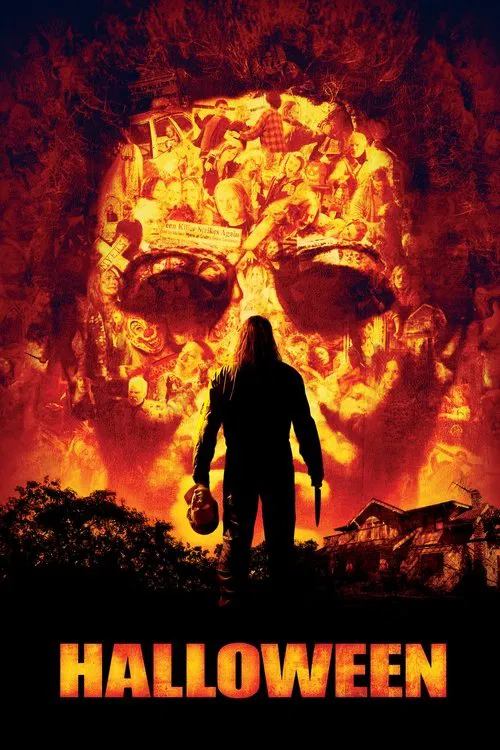
Halloween (2007): Ending Explained
Rob Zombie's Halloween ends on an unresolved gunshot and Laurie's scream, refusing the catharsis its own backstory labored to build
9 min read
Release Year: 2007
Rating: 6.2/10
Runtime: 110 minutes
By Ending Explained Team
The short answer
The short answer
Laurie Strode wakes up on the ground next to an unconscious Michael Myers, points a gun at his face, and Michael grabs her wrist just as the gun goes off. Laurie drops the gun and starts screaming maniacally as police sirens are heard in the distance. The film ends there. Michael's fate is unresolved. Laurie's future is unresolved. Dr. Loomis, who tried to intervene moments earlier, was subdued by Michael, who crushed his skull; his condition afterward is never stated. Sheriff Brackett was heading toward the scene after hearing Laurie's call over the radio and never arrives on screen. The last thing you hear is a teenage girl screaming and the sound of sirens that may or may not be close enough.
That is a strange place for a movie like this to stop. The whole first hour of Rob Zombie's Halloween works to explain how Michael Myers became what he is. Then it refuses to tell you what that explanation adds up to.
The contract
Zombie's film opens by promising to show where this killer comes from. For the film's first half, this is a movie about how a boy becomes a killer. We watch ten-year-old Michael murder his school bully Wesley Rhoades, his abusive stepfather Ronnie White, his older sister Judith and her boyfriend Steve. We watch him sit in Smith's Grove under Dr. Samuel Loomis's care, dissociate, stop speaking, and fixate on his papier-mâché masks. We watch his mother Deborah visit him regularly, and kill herself after he murders a nurse during one visit. Zombie wanted to delve deeper into Michael's backstory and add "new life" to the character, and he wanted Michael to be true to what a psychopath really is. That is the deal the opening act strikes with you: cause and effect. You will be shown where this comes from.
The back half honors the shape of a slasher. Michael escapes Smith's Grove, kills a truck driver, takes his coveralls, comes home to Haddonfield, recovers the kitchen knife and Halloween mask he stored under the floorboards the night he killed his family, and starts working through the town. Laurie Strode, her friends Annie Brackett and Lynda Van Der Klok, Lynda's boyfriend Bob Simms, Annie's boyfriend Paul: the film lines up bodies in the familiar order. Two tracks running at once, and the contract says they will meet. The psychology will pay off in the finale. When Laurie finally stands over Michael with a gun, the movie you've been watching for two hours has told you that this moment will mean something.
The breach
It doesn't. Michael kidnaps Laurie and takes her to their old abandoned childhood home, and he tries to show her a photograph of the two of them together. You know why he does it. Zombie has been explicit that Michael's motive for returning to Haddonfield was meant to be ambiguous: "[W]as he trying to kill Laurie, or just find her because he loves her?" The photograph is the whole thesis of the first act restated in one object. This is not a random monster. This is a brother who spared his baby sister as a child, who called her "Boo," and who has come back with a picture.
Unable to understand what the photograph means, she stabs Michael in the neck and runs.
Loomis shoots
Michael chases after her. Loomis arrives and shoots him three times. In any other version of this movie, that's the ending. The psychologist who spent fifteen years studying the boy finally puts him down in front of a witness. Instead Michael gets up.
Loomis falls
Michael recaptures Laurie and heads back to the house. Loomis intervenes a second time. Michael crushes his skull. The one character who could explain what any of this means is taken out before he can.
The balcony
Laurie takes the gun and runs upstairs, hiding inside the walls. Michael corners her on a balcony and charges her head-on, knocking them both over the railing.
The gunshot
Laurie wakes over an unconscious Michael and points the gun at his face. Michael grabs her wrist just as the gun goes off. Laurie drops the gun and screams as police sirens are heard in the distance.
That last beat is the breach. Not the gunshot itself, which is a scare, but the fact that the film stops on it. Zombie built a movie on the premise that Michael's violence has a source, a family, a photograph, a nickname, and then he ends on a moment where none of that is legible to anyone on screen. Laurie isn't killing a brother. She's shooting a shape on the ground whose hand closes on her wrist. The movie spent an hour teaching you the meaning of that hand and then cuts before the meaning lands.
The cut line matters here. Zombie originally planned to have adult Michael speak to Laurie in the finale, saying "Boo." He cut it because he feared it would demystify the character, and because handing Laurie the photograph was enough. That's a director deliberately withholding the single piece of information that would turn the ending into a resolution. The photograph is enough for Michael. It isn't enough for Laurie, and it isn't enough for us.
Why it does it
John Carpenter, whose 1978 original Zombie was remaking, was blunt about the whole approach: "I thought that he took away the mystique of the story by explaining too much about [Michael Myers]. I don't care about that. He's supposed to be a force of nature. He's supposed to be almost supernatural." Carpenter is arguing that the backstory itself is the error, and the unresolved ending is what you get when a filmmaker has spent two hours explaining a thing he should have left alone.
Sonny Bunch, writing in The Washington Post, made a related case against the psychology: "The blowback theory of Michael Myers may have been comforting for a post-9/11 America mired in the Iraq War trying to get a sense of how evil comes to be, but it's deeply dissatisfying as the peg on which to hang a slasher movie villain." That's the contract named and dismissed in one sentence. The first act promises that evil has an origin story. Bunch's point is that an origin story cannot carry a slasher villain, and the finale, in refusing to cash the psychology in, almost agrees with him.
Rob Zombie doesn't bring many new ideas to the table in Halloween, making it another bloody disappointment for fans of the franchise.
The Rotten Tomatoes consensus is harsher, and it's worth separating the two complaints. The consensus says Zombie didn't bring new ideas. Carpenter says he brought one and it was the wrong one. I'd argue the ending is the one place Zombie's idea actually works, because it's the one place he stops pretending the explanation is going to save anyone. Michael crushes Loomis's skull. The psychiatrist is the character who represents understanding, and the film takes him out.
Zombie's decision to keep Michael silent is the same move. Michael speaks as a child, then stops talking completely at Smith's Grove. The film's entire relationship to its own backstory is that the information exists but cannot be transmitted. Michael hands Laurie a photograph instead of saying her name. She can't decode it. The audience can, and that gap between what we know and what Laurie knows is where the ending actually lives.
What the film becomes
What it looks like
A slasher with a psychological prequel bolted to the front. The backstory promises the finale will resolve something: Michael's love for his sister, Loomis's fifteen years of work, Laurie's adoption, the photograph. Every thread is positioned to pay off in the last ten minutes.
What it is
A horror film about the failure of explanation. The psychology doesn't resolve anything. It just makes the final minutes more upsetting, because you know what Michael is trying to say and Laurie doesn't. The movie ends on a gunshot nobody in the frame can interpret.
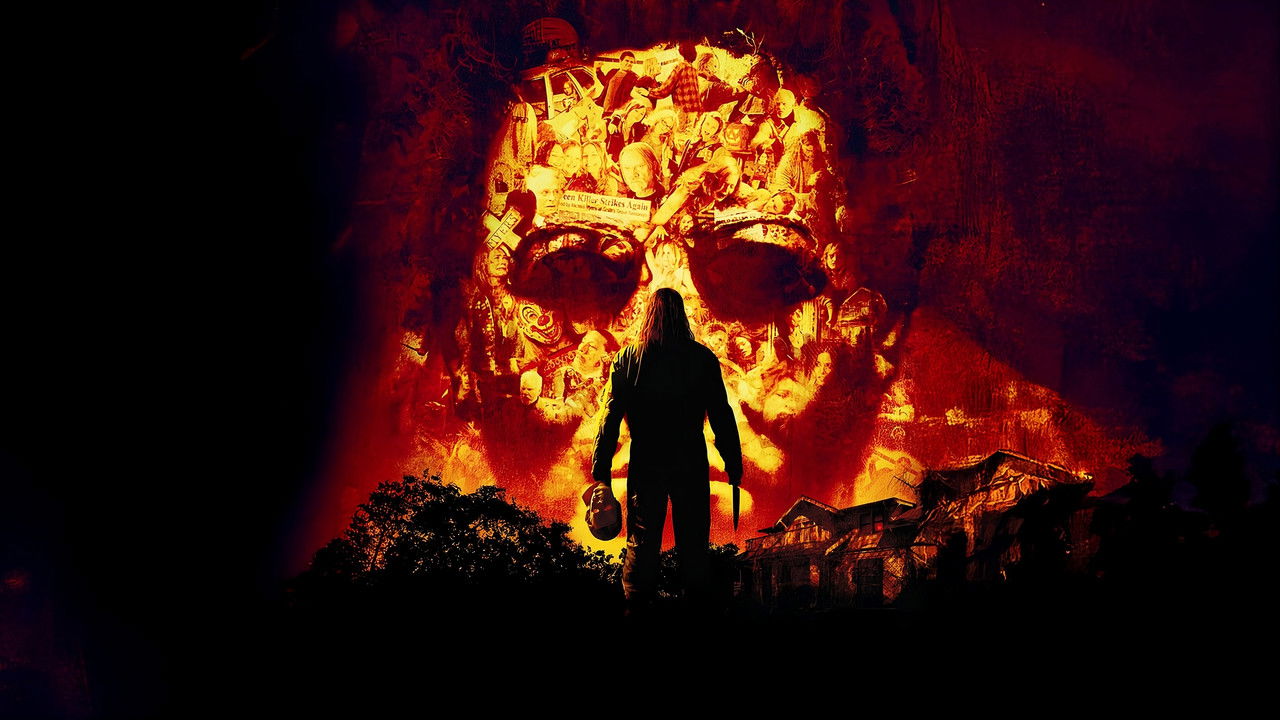
The mask is the same trick as the ending, and it's worth noticing that Zombie gave it a story. In Carpenter's original, Michael steals a mask from a hardware store. Here he makes masks for fifteen years in a sanitarium, then comes home and retrieves the one he stored under the floorboards the night he killed his family. And what does that history buy you? A face you can't read. Zombie explained the mask in order to make it more opaque, which is exactly what he does with the whole movie.

The verdict
The verdict
Zombie's Halloween ends the way it does because the film can't deliver the catharsis its own first act promised. The original ending, in which Loomis talks Michael down and Michael is killed in a hail of gunfire while Loomis looks sadly at the corpse, would have closed the loop. Psychology works, monster dies, doctor grieves. Zombie scrapped that. What he left in its place is a movie that spends an hour building a case for why Michael Myers is the way he is, then hands the case to a teenage girl who can't read it, and cuts to black on her screaming.
I'd argue that's the point, and it's a better ending than the film around it deserves. The backstory isn't there to explain Michael. It's there so that when Laurie points the gun at his face, you know more than she does, and knowing more doesn't help her at all. Carpenter thought Zombie took the mystique away. He's half right. Zombie strips the mystique from the whole film, then puts it back in the final moment, a hand closing on a wrist.