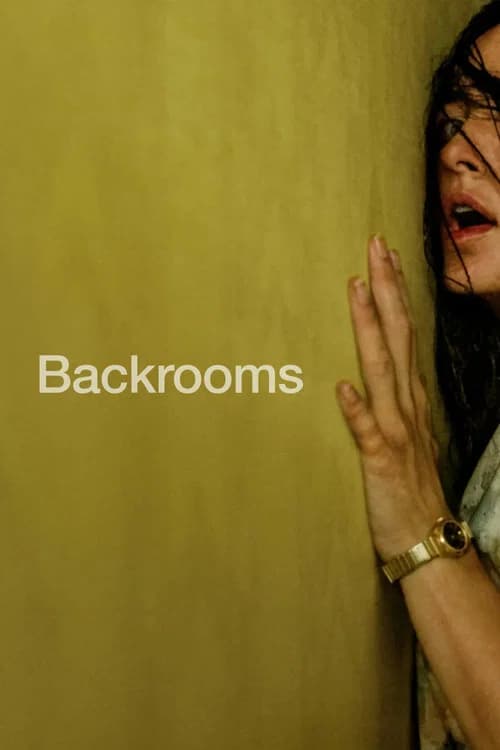
Backrooms (2026): Ending Explained
Mary survives the Backrooms monster only to be trapped by Async, and the final shot reveals the Backrooms kept a copy of her.
8 min read
Release Year: 2026
Rating: 7/10
Runtime: 111 minutes
By Ending Explained Team
The short answer
The short answer
Mary survives the pirate monster, and that is the worst thing that happens to her. An Async gas trap drops the towering simulacrum of Clark mid-swing, hazmat researchers haul her out of the Backrooms, and she wakes up in a facility where Phil explains the company's real business and tells her that whether she walks free is not his call. The rescue is a transfer, not an escape: out of one containment and into another. And the film's last image, back inside the yellow rooms, is a loose copy of that same interrogation room, with a deformed, silent simulacrum of Mary sitting in it. She got out. The Backrooms kept a version of her anyway.
The last twenty minutes
Concrete
Cornered by the pirate simulacrum in a flawed replica of the furniture store, Mary cracks it in the face with a chunk of concrete from her childhood home. The demolished house, the thing she's been paying a therapist to help her carry, becomes the only weapon that lands. Cost: nothing she has left to lose, and everything she's been refusing to put down.
The trap
The struggle trips an Async gas trap. Researchers in hazmat suits flood in, the monster goes down, and Mary is taken to their facility. Cost: the fight she just won isn't hers. The Backrooms have been under observation the whole time, and she was never outside the experiment, only inside it with the lights on.
The room
Recovered, Mary is brought to an interrogation room and meets Phil. He tells her Async built magnetic resonance imaging machines before they found the Backrooms, and that the Backrooms have been the company's primary research focus since. Cost: the answer to "what is this place" turns out to be "a product line." Her worst week is somebody's core business.
The description
Asked how she found the Backrooms and what she saw, Mary repeats Clark's phrase: a faulty, misremembered copy of reality. Cost: the sentence that killed Clark, the one Mary dismissed when he first said it, is now the only vocabulary she has. She's speaking for a dead man because his language is the accurate one.
The question
Mary asks if Async will let her go. Phil says the decision isn't up to him. Cost: the one thing she wants, to leave, has been moved off the table by a man who isn't lying and isn't helping.
The copy
Inside the Backrooms, spaces warp around what Clark and Mary did and what it cost them. The sequence ends in a loosely copied interrogation room, where Mary's own deformed simulacrum sits still and silent. Cost: the film's final accounting. She's out, and it's already made the next one.
The ledger
Gains
Mary survives the pirate simulacrum, is pulled out by the gas trap, and gets medical recovery in an Async facility. She also gets the truth about what Async is.
Costs
Mary is told her release isn't Phil's decision, which means she's held. Her childhood home is gone, and its concrete is now spent on a monster's face. And the Backrooms finish the film by copying her: a deformed simulacrum of Mary sits in a replicated interrogation room, still and silent.
Clark gets exactly what he built. The commercial persona he invented, the pirate mascot, becomes the towering simulacrum that kills him in the space he chose to stay in.
Clark pays with his life, and his experiences keep distorting the Backrooms after he's dead. There's no version of this where he gets to be the architect.
Phil gets a research subject delivered to his interrogation room and a clean institutional answer for everything Mary asks.
Phil pays nothing on screen. He's the only named character who walks out of the ending with his position intact, which is the point.
Kat gets nothing. Her severed head is in a refrigerator.
Kat pays for a commercial shoot with her life. She was Clark's assistant manager, not a researcher, not a volunteer.
Bobby gets nothing. Ambushed and dragged away by the unseen entity in the sloped corridor.
Bobby pays the same, earlier, with less screen time to argue about it.
Naren Warne gets nothing. Chased and killed by an unseen entity in 1990; his belongings are the first thing Clark finds.
Naren Warne pays first, thirty-six years before the film's present, and the film treats him as set dressing.
The irony
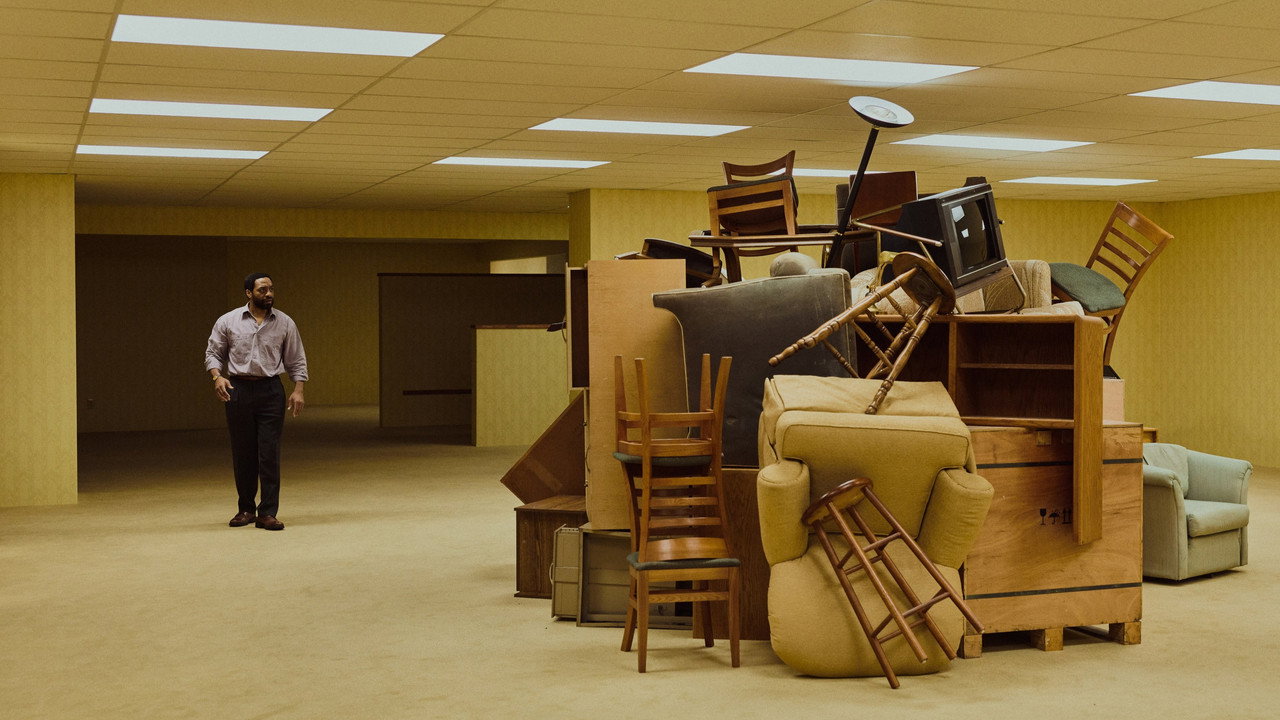
Clark wanted to be remembered as something. He was a failed architect running a struggling furniture store, drinking through a marriage that was ending, and the pirate mascot was his idea of a character: a costume he put on to sell sofas. The Backrooms took that and gave it back as the thing that kills him. The simulacrum that arrives at his dining room is him, in the costume, distorted and towering, and it doesn't need him anymore. He got the version of immortality he was reaching for, an image of himself that outlasts him, and it's hunting the last person who tried to help him. That's the bill.
Mary wanted to stop being the person things happen to. She goes into the store to find Clark, she fights the monster with her own hands, she wins. And the film's reply is an interrogation room where a stranger tells her she can't leave. Then it shows you the copy of her, sitting in the copy of the room, and you understand the shape of the deal: the Backrooms don't just take people, they file them. Mary's simulacrum is her receipt.
Did anyone get a warning
Clark gives it to her directly, and she's the one who hears it. After he tells Mary about the Backrooms and gets skepticism back, he comes home with proof and takes Kat and Bobby in to film it. Bobby dies in the sloped corridor. Kat's head ends up in a refrigerator. Clark himself stays, and the answering machine message he leaves Mary says he isn't coming back. The warning isn't a line about monsters. It's the moment Mary decides Clark is unwell instead of correct, which is the decision that costs everyone around him, and eventually her.
But the cleanest forecast is buried in what Clark tells her about the place itself, the description she'll be reciting to Phil by the end:
A truly terrifying cinematic rabbit hole that takes its audience down a twisted and dread-filled path as cerebral in its horror as it is aesthetically pleasing in its design.
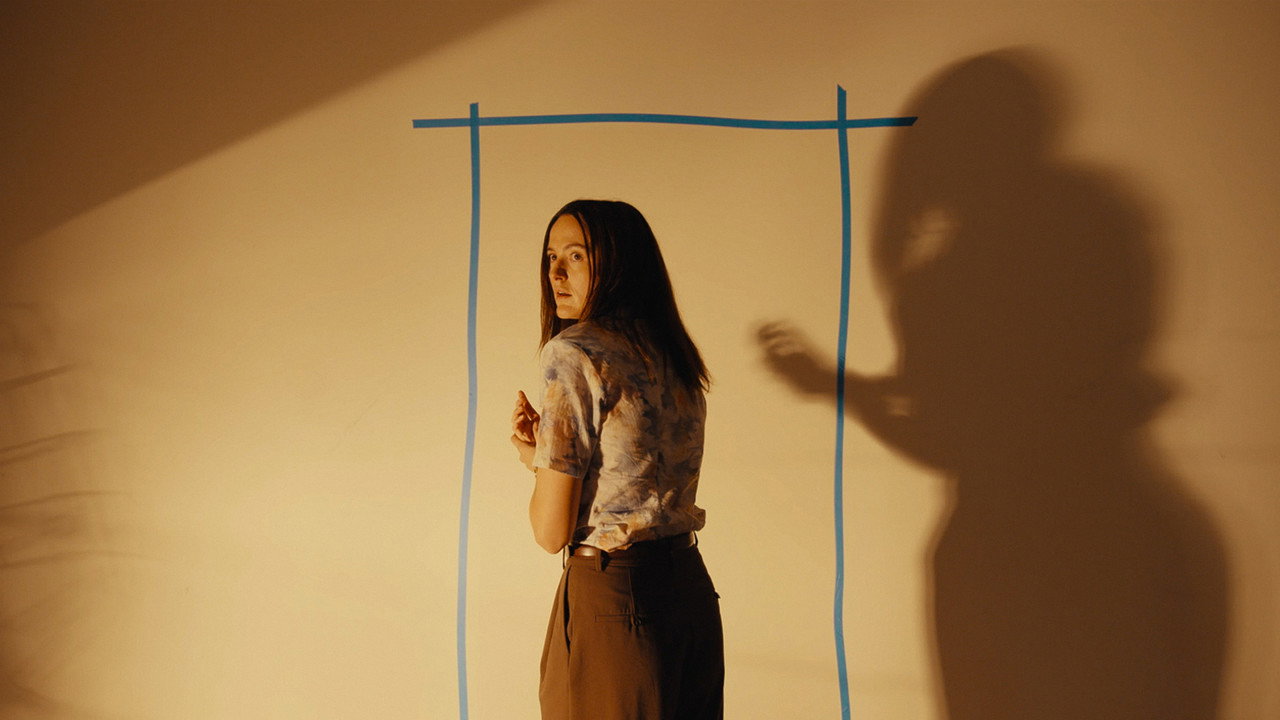
That's the warning, and it's not about the monster. A faulty copy of reality will copy you. Clark said it, Mary repeated it back to him as evidence he'd lost it, and then the film ends with her deformed simulacrum sitting in a replicated interrogation room, proving the sentence was never a symptom. It was a description. The Backrooms don't just distort space. They duplicate the people inside it, and the film has shown that before: Clark's three static simulacra made of an edible white substance, the mural, the distorted spaces shaped by what he and Mary did. Mary's copy is the continuation, not a twist.
The verdict
The verdict
The price is not fair, and the film knows it. Backrooms spends 110 minutes establishing that the Backrooms take what you bring: Clark's guilt, his costume, his refusal to take responsibility, all of it comes back as monsters and furniture. Then it hands Mary a win, a chunk of concrete to the face and a gas trap and a rescue, and immediately converts that win into a new kind of custody. Phil's line, that her release isn't up to him, is the film's actual horror beat. Not the pirate monster. A man in an interrogation room telling a woman who just survived something unspeakable that the paperwork isn't his.
The final image seals it. Inside the Backrooms, a series of spaces distorted by Clark's and Mary's experiences ends in a loosely copied interrogation room where Mary's deformed simulacrum sits still and silent. So there are two Marys now: the one in Async's chair, waiting on a decision that isn't Phil's, and the one the Backrooms made, sitting quietly in a room that looks like the one she's in. The film isn't ambiguous about what that means. It's saying Async and the Backrooms are the same kind of institution, one running on hazmat suits and one running on yellow wallpaper, and both of them are in the business of copying people and keeping them. Mary beat the monster. She didn't beat the ledger. Nobody in this film does.