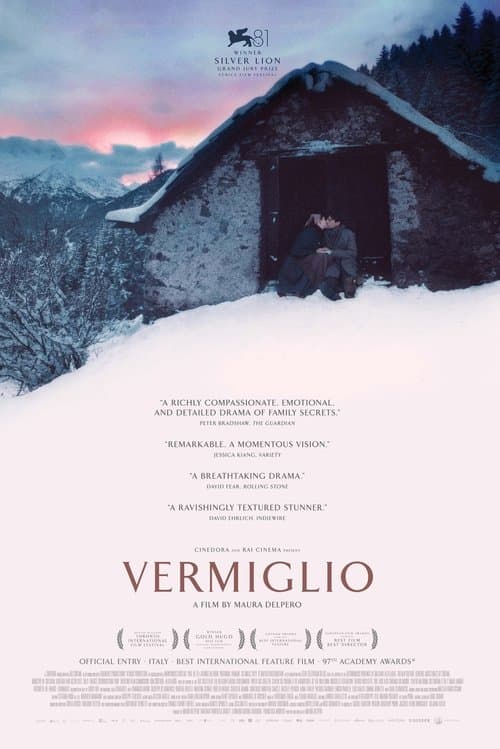
Vermiglio (2024): Ending Explained
Set in the small, mountainous village of Vermiglio during the waning days of WWII, a series of dramatic, consequential events unfold after the arrival of a taciturn Sicilian soldier, who hides out in town after deserting the army. While there, the soldier develops a romance with a provincial family’s eldest daughter.
8 min read
Release Year: 2024
Rating: 7.1/10
Runtime: 119 minutes
By Ellis Carver
Vermiglio (2024): Ending Explained
As a film critic who's spent years dissecting the quiet devastations of postwar cinema, Vermiglio (2024) stands out for its unflinching portrayal of love's fragility amid historical upheaval. Directed with a restrained intimacy that mirrors the harsh Trentino Alps, the film weaves personal loss into the larger tapestry of World War II's aftermath. In this ending explained, we'll unpack the final scenes of Vermiglio, exploring their literal events, symbolic weight, and the moral ambiguities they leave lingering like mountain fog. If you've just watched this poignant Italian drama and are searching for clarity on Lucia's ultimate choices, read on—spoilers ahead, of course.
Quick Recap
Set against the remote, snow-swept village of Vermiglio in 1944, Vermiglio follows two Italian deserters, Attilio and Pietro, who flee their posts in Germany to seek refuge in Attilio's mountainous hometown. The village, isolated and gripped by wartime scarcity, centers on a one-room school run by the stern teacher Cesare—Attilio's uncle—and his overburdened wife, Adele, who struggles to raise their large family amid poverty and the recent tragedy of losing another infant child. Catholic traditions and familial duties permeate daily life, underscoring the community's rigid moral framework.
Into this world steps Pietro, a taciturn Sicilian soldier whose arrival sparks a forbidden romance with Lucia, Cesare and Adele's eldest daughter. Their passionate affair leads to Lucia's pregnancy, and despite the aunt's suspicions, Pietro agrees to marry her. As subplots unfold—ranging from the school's austere lessons to Adele's quiet endurance of endless hardships—the shadow of war looms. News of the conflict's end brings fleeting hope, but Pietro departs for Sicily to inform his family of his survival, vowing to write and return soon. What follows is a cascade of betrayals and grief: Lucia learns from a newspaper that Pietro was already married to a Sicilian woman, who has killed him. Devastated, Lucia gives birth to their daughter, Antonia, but spirals into despair, rejecting the child and contemplating suicide—only to be saved by her brother Dino.
What Happens in the Ending
The final act of Vermiglio unfolds with a deliberate, almost meditative pace, shifting from Lucia's raw postpartum anguish to a tentative path toward self-reclamation. After Dino intervenes to prevent her suicide, Lucia begins a slow recovery, her world narrowed to the village's unyielding routines. In a pivotal sequence, she entrusts her newborn daughter, Antonia, to a local orphanage, a decision born of overwhelming grief and a sense of unworthiness as a mother. This act is handled with subtle restraint: we see Lucia's trembling hands handing over the bundled infant, her face a mask of quiet resolve masking deeper turmoil, as the orphanage's nuns accept the child without judgment.
Lucia's journey doesn't end in isolation. Compelled by a need for closure, she travels alone to Sicily—a stark contrast to Vermiglio's alpine austerity, with its sun-baked landscapes evoking Pietro's hidden roots. There, she has a tense, intimate encounter with Pietro's first wife, a woman whose own pain mirrors Lucia's but is laced with the violence that ended his life. The meeting is wordless at first, heavy with unspoken accusations, before dissolving into a shared moment of recognition over their mutual loss. Lucia then visits Pietro's grave, a simple stone marker in a dusty cemetery, where she kneels in silent confrontation with the man who promised her a future but delivered only fragments.
Back in Vermiglio, the film circles to resolution without fanfare. Lucia, now somewhat steadied, decides to leave the village for the city, securing work with a wealthy family—an opportunity that promises economic independence but severs her from the familial web that's both sustained and stifled her. In a poignant final image, she stands at the orphanage window, gazing at Antonia in the nuns' care. Her younger sister Ada, who has taken vows as a nun and now works there, offers a nod of solidarity. Lucia whispers a promise to herself—and implicitly to the audience—that she will return for her child one day, before turning toward the road leading out of the mountains. The screen fades on the vast, indifferent landscape, leaving her fate open but her agency affirmed.
The Meaning Behind the Ending
At its core, Vermiglio's ending symbolizes rebirth amid irreparable loss, using the stark divide between mountain isolation and urban possibility as a metaphor for emotional exile and return. Lucia's journey to Sicily isn't just geographical; it's a confrontation with the illusions of love, where Pietro's grave represents the death of not only him but the naive dreams he embodied. The encounter with his wife underscores a profound human truth: shared suffering can bridge even the widest chasms of betrayal, hinting at forgiveness as a fragile, personal act rather than a societal dictate.
Thematically, the ending grapples with the moral complexity of survival in a postwar world, where personal choices ripple through generations. Lucia's decision to leave Antonia behind temporarily critiques the Catholic traditions that demand unwavering motherhood, yet it also affirms resilience—her promise to return suggests hope as an act of will, not fate. This resolution reflects the film's broader commentary on women's burdens in patriarchal structures: Adele's endless childbearing, Lucia's unwed pregnancy, and now the orphanage as a limbo for the unwanted. It's a contemplative nod to how war's end doesn't erase intimate scars, but individuals can carve paths through them, however imperfectly.
Character Arcs and Resolution
Lucia's arc is the film's emotional spine, evolving from a sheltered provincial girl to a woman forged by deception and maternal instinct. Her initial romance with Pietro awakens desire and agency, but his abandonment shatters her, leading to rejection of Antonia as a symbol of that pain. By the end, her recovery—facilitated by Dino's intervention and her Sicilian pilgrimage—marks a psychological turning point: she reclaims control by choosing work over despair, resolving her arc not in reunion but in deferred hope. This leaves her stronger, yet haunted, embodying the film's nuanced view of growth as nonlinear and bittersweet.
Pietro's off-screen death resolves his arc tragically, revealing him as a flawed deserter whose Sicilian secrecy dooms his promises. For Cesare and Adele, the ending subtly closes their circle of endurance; their large, struggling family persists, with Lucia's departure highlighting the generational shift from rural duty to modern autonomy. Ada's nunhood offers quiet resolution, positioning her as a bridge between Lucia's worldly ambitions and the village's spiritual anchors. Overall, these arcs converge on themes of fractured bonds, where resolution comes not through tidy closure but through individual reckonings with absence.
Alternate Interpretations
While Vermiglio's ending feels resolute in Lucia's forward momentum, its ambiguities invite multiple readings, particularly around her promise to return for Antonia. One interpretation sees it as genuine optimism: Lucia's city job as a stepping stone to financial stability, allowing her to reclaim motherhood on her terms—a subversive take on postwar Italian women's emerging independence. Yet, a darker view posits cynicism; the vast mountains and her whispered vow could foreshadow permanent separation, with the orphanage as a permanent exile for the child, critiquing societal failures to support unwed mothers.
The Sicily trip adds layers: is the encounter with Pietro's wife a moment of empathy, or a hollow echo that reinforces isolation? Some might read Lucia's final gaze at Antonia as lingering doubt, suggesting her "recovery" is fragile, prone to relapse in the anonymity of city life. These ambiguities enhance the film's contemplative tone, refusing pat answers and mirroring the moral grayness of desertion, infidelity, and survival.
Themes and Symbolism
The ending reinforces Vermiglio's central themes of displacement and the illusion of home, subverting WWII narratives by focusing on domestic aftermaths over battlefield heroics. Symbolically, the orphanage represents institutional mercy laced with abandonment—a Catholic safety net that both saves and severs—while Sicily's sunlit graves contrast Vermiglio's snowy desolation, symbolizing how hidden pasts erupt to redefine the present. Broader societal commentary emerges in the moral complexity of desertion: Pietro's fate critiques macho secrecy, and Lucia's arc challenges rigid gender roles, portraying women as navigators of inherited traumas.
These elements weave a tapestry of human truths—love as a desert mirage, motherhood as burden and redemption—urging viewers to contemplate how personal histories intersect with historical ones, often leaving scars that time only partially heals.
Final Thoughts
Vermiglio's ending works masterfully because it resists melodrama, opting instead for a quiet profundity that lingers like the film's alpine chill. By centering Lucia's imperfect choices, it delivers a resolution that's emotionally honest, avoiding Hollywood redemption while honoring the psychological depths of grief and agency. This isn't a triumphant close but a contemplative one, inviting us to ponder the costs of survival in a world forever altered. For fans of introspective dramas like The Wonders or Happy as Lazzaro, it's a gem that rewards rewatches, proving that true cinematic power lies in what it leaves unresolved. If Vermiglio's finale left you aching with questions, that's the point—it's a mirror to our own tangled paths.