
R-Point (2004): Ending Explained
R-Point ends by revealing the rescue mission was never a rescue — Choi's ghost now runs the same radio trap that doomed his squad
7 min read
Release Year: 2004
Rating: 6.6/10
Runtime: 107 minutes
By Ellis Carver
The short answer
The short answer
R-Point ends by revealing that the rescue mission was never a rescue. Lieutenant Choi's squad was lured to the island by a radio transmission, and by the final scene Choi's own voice is doing the luring, begging for reinforcements at an abandoned base so that some new unit will come looking. The ending collects on a debt the film insists was rigged from the start: the men who pay it were set up to pay it before they ever landed.
The last twenty minutes
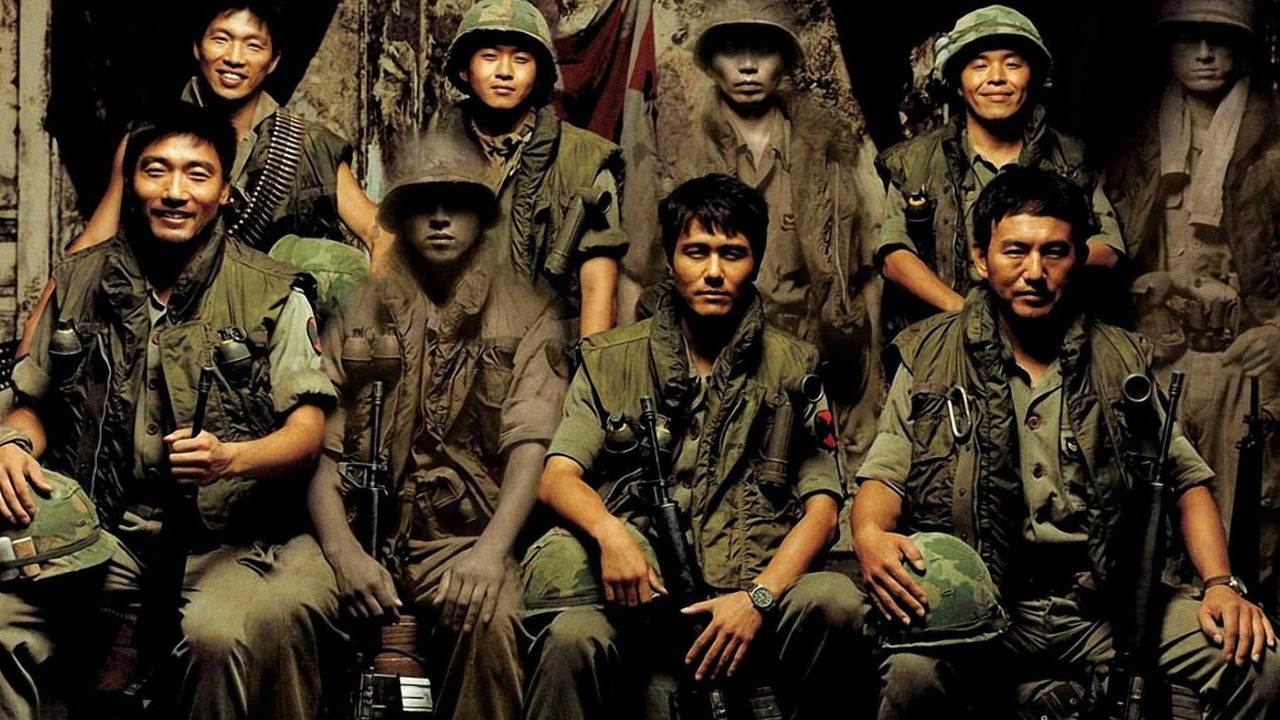
Jin comes back
Sergeant Jin Chang-rok, who the squad believed was lost, walks back into camp and warns them not to stay on R-Point. Then he beheads Sergeant Park. The soldiers shoot Jin. Choi, staring at a man he thought was his own, orders everyone to verify their identities. The cost: the one reunion the squad wanted turns out to be the first killing, and trust becomes a procedure. You don't get to hug your friend. You get to prove you're you.
:::divider:::
Byun and the grenade
Choi shoots Corporal Byun Moon-Sub, who seems possessed. Byun pulls the pin on a grenade as he goes down. The blast blinds Sergeant Jang. Choi kills Joh Byung-hoon after Joh shoots Corporal Lee. The cost: the squad finishes the job the curse started. Every remaining death in this sequence is a Korean soldier killing a Korean soldier. The enemy is inside the uniform.
:::divider:::
The photograph
Tending to the blinded Jang, Choi finds a photo in Jang's pocket: French soldiers standing with the Viet Cong woman who ambushed the squad on arrival. The cost: nothing, because there's no one left to spend it on. The photo explains the French garrison's deaths and the American soldiers' deaths, and it explains why R-Point is what it is. It arrives too late to save anyone, which is the point.
:::divider:::
Choi's order
Choi tells Jang to aim his rifle at him and fire, because Choi knows he might be possessed. Jang does it. The cost: Choi's last act as a commander is to ask a blind man to kill him on suspicion. It's the only order in the film that makes sense, and it's an order to die.
:::divider:::
The rescue team arrives
The next morning a rescue team finds Jang alone. The bodies of the other eight soldiers are gone. Every bloodstain is gone. The cost: Jang survives as the only witness to a massacre with no physical evidence, which means his story cannot be proven. He is alive and unusable.
:::divider:::
The radio
At a completely abandoned base, a radio transmission comes through: Choi, desperately requesting reinforcements. The film cuts back to show that the previous platoon's last survivor was blinded exactly like Jang and went through the same encounter. Choi's unit was sent in despite that survivor's warnings. The cost: the ending isn't the end. Choi's spirit is now the voice on the radio, and the next squad is already being written into the ledger.
The ledger
What they gain
Lieutenant Choi: an early honorable discharge and a clean record, promised before he ever boards the transport. He also gains a kind of afterlife, if you want to call it that: a voice on the radio, still issuing orders.
What they pay
Lieutenant Choi: his entire squad, his own death, and then the job of luring the next squad in. The discharge was real. He just never got to use it.
Sergeant Jang: survival. He's the one the rescue team finds. He walks off R-Point alive.
Sergeant Jang: his sight, taken by Byun's grenade, and the particular horror of being the survivor who gets to explain nothing, because the bodies and bloodstains are gone and the only thing he can offer is a story.
Corporal Byun Moon-Sub, Corporal Joh Byung-hoon, Sergeant Park, Corporal Lee: nothing. They gain no discharge, no record, no rescue. They are the eight bodies that aren't there in the morning.
Corporal Byun Moon-Sub, Corporal Joh Byung-hoon, Sergeant Park, Corporal Lee: they pay with their lives, and they pay them at each other's hands after the possession takes hold. Joh kills Sergeant Cook and Corporal Lee before Choi kills Joh.
Sergeant Jin Chang-rok: nothing, unless you count the knowledge of what R-Point is, which he tries to pass on when he warns the squad off.
Sergeant Jin Chang-rok: he pays by being shot by his own men after he kills Park. He comes back to help and is killed for it.
Sergeant Oh, Private Jung, Sergeant Cook, Sergeant Park: nothing.
Sergeant Oh, Private Jung, Sergeant Cook, Sergeant Park: Oh falls into a booby trap after panicking at his dead friend's ghost. Jung hangs himself. Cook is shot by Joh, who mistakes him for a ghost. Park is beheaded by Jin. Four separate deaths, four separate causes, one destination.
The Viet Cong woman: nothing in the ledger sense. She isn't a character with a balance. She's the reason the ledger exists.
The Viet Cong woman: nothing, because she's already dead and the curse is doing the work. The photo of her with the French soldiers is the closest thing to a receipt, and it's a receipt for other people's debts.
The irony

Choi wanted the honorable discharge. He's the only one who gets something like it, and what he gets is a permanent posting. His punishment for wanting out of the army is to spend the afterlife as a recruiting sergeant, calling in reinforcements he knows won't survive. He gets his wish in the exact shape he'd have refused: he's off the island, technically, and on the radio, forever.
And Jang wanted, presumably, to go home. He does. He goes home blind, alone, with eight missing bodies behind him and no blood to point to. The film doesn't give him a scene of being disbelieved, which would be a mercy. It just shows the rescue team finding him in a clean camp, and lets you understand that the story he tells will sound like a man who lost his mind in the jungle. That's the trap's final cruelty: it doesn't just take the squad, it makes the survivor uncredible.
Did anyone get a warning
Yes. The whole film has one, buried in the last scene, but the earliest version of it comes in the radio transmission that opens everything: a missing platoon, sending a signal from a place it has no business sending from. The squad treats it as a distress call. It's a lure. Every soldier who follows a radio signal in this film ends up in the same place, and Choi is the last one to learn it, after he's already become the signal.
Choi then instructs Jang to aim his rifle at him and fire, knowing he might be possessed. That order is the film's thesis in one gesture.
There's a reason that order lands as the film's thesis. Choi's last competent decision is to assume the worst about himself. The warning wasn't the transmission. The warning was the previous survivor, blinded, telling them what R-Point does. He warned them. They went anyway. Choi then does the same thing, from the other side of the microphone, to whoever comes next.
The verdict
The verdict
R-Point is a possession film that's really a film about command, and the ending settles its argument: the system that sent Choi to the island never needed him alive, it only needed his voice. The trap works because soldiers follow orders and answer radios, and the film's last image is the trap running exactly as designed, with Choi on the other end of it pretending to be a man who needs help. Nobody's death on R-Point buys anybody else's freedom. The eight bodies vanish so the story can repeat cleanly: no corpses, no proof, just a voice on the radio and a group of men who think they're going to save someone.