Platform (1993): Ending Explained
Raju frees Vikram from the tracks as the train roars over him, and Shetty's gang falls in a firefight after Hariya confesses.
8 min read
Release Year: 1993
Rating: 3/10
Runtime: 150 minutes
By Ellis Carver
Platform (1993): Ending Explained
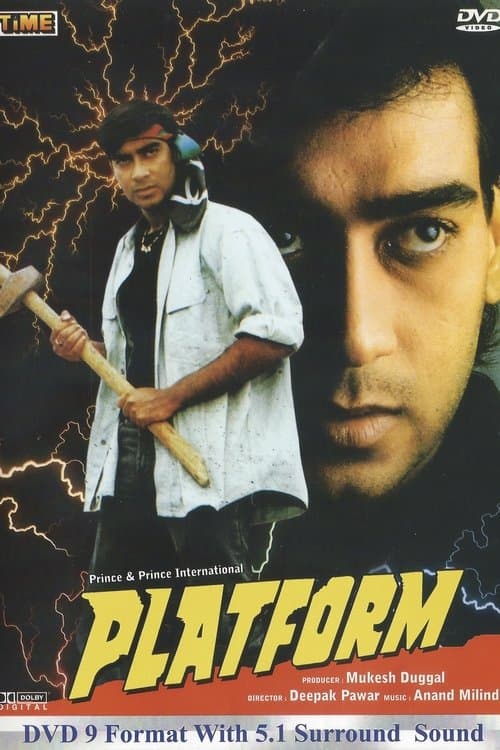
In the gritty underbelly of 1990s Indian cinema, Platform (1993) delivers a raw tale of brotherhood, betrayal, and redemption amid the chaos of crime and corruption. Directed by Vikram Bhatt, this action-drama stars Ajay Devgn as the fierce Raju and Sunny Deol as the steadfast Vikram, weaving a narrative that pits familial bonds against the seductive pull of the criminal world. As a film critic who's long admired how Bollywood blends high-stakes thrills with emotional depth, I find Platform's ending to be a masterful culmination—one that forces us to confront the fragile line between loyalty and vengeance. If you've just watched the film or are piecing together its twists, this breakdown unravels the finale's literal events, symbolic layers, and profound implications, revealing why it lingers as a poignant commentary on human resilience.
Quick Recap
Platform opens with the unbreakable bond between young brothers Raju and Vikram, shattered by their mother's death. Vikram, stepping into a paternal role, works at the benevolent Bhaiya Saab's hotel to support them. Tragedy strikes when the ruthless gangster Hariya guns down Bhaiya Saab, framing Vikram for the murder. As police inspector Joshi closes in, Vikram flees with Raju to a railway platform, but he's captured, leaving the impression of abandonment. Hariya manipulates the vulnerable Raju, convincing him Vikram has deserted him forever, and grooms the boy into a loyal henchman in his criminal empire.
Years pass, and Raju matures into a cold, efficient enforcer, dismantling Hariya's rivals—save for the cunning Shetty—while Vikram serves his sentence. Nearing release, Vikram escapes prison to reunite with Raju and expose Hariya's web of deceit. But loyalty runs deep; Raju, hardened by betrayal and indoctrinated by Hariya, rejects his brother outright. Tensions escalate as Shetty plots against Hariya and Raju, warned off by his astrologer twin Shani Avatar but undeterred. Raju steals from Shetty, prompting a deadly game of alliances and double-crosses. Vikram offers to assassinate Hariya for Shetty in exchange for Raju's safety, but Hariya uncovers the plot and orders Raju to eliminate both threats. With Joshi now convinced of Vikram's innocence, the stage is set for a explosive confrontation that tests the brothers' fractured tie.
As betrayals pile up, Shetty kidnaps Vikram and pressures Raju to return stolen money, threatening the lives of Vikram and their loved ones. Raju agrees to comply, but Hariya, sensing opportunity, allies with Shetty to wipe out the brothers. This volatile setup hurtles toward the film's titular railway platform, where past separations echo in a life-or-death reckoning.
What Happens in the Ending
The climax unfolds on the very railway platform where Vikram was once torn from Raju years ago, a deliberate callback loaded with irony and tension. Vikram dangles precariously from the platform's edge, his arms straining as he's held above the tracks by Shetty's men, a human pendulum facing imminent doom from an approaching train. Raju arrives, clutching the stolen money doused in alcohol, igniting a lighter as a desperate bargaining chip. He demands Hariya confess to Bhaiya Saab's murder and the brothers' forced separation—threatening to burn Shetty's fortune if he refuses. Shetty, fixated on his cash, points a gun at Hariya, coercing the confession on the spot.
Inspector Joshi emerges from the shadows, having overheard the damning admission, sparking a chaotic firefight. Bullets fly as Raju unleashes a torrent of vengeance, gunning down Shetty's gangsters with ruthless precision. In the melee, he frees Vikram just as the train barrels through, the roar of its approach heightening the peril. Vikram collapses prone onto the tracks, the train thundering over him harmlessly—a heart-stopping moment of narrow escape that symbolizes survival against overwhelming odds.
Joshi moves to arrest Shetty, but Hariya slips away in the confusion, fleeing in his car. Raju pursues on foot, catching up to overturn Hariya's speeding vehicle in a brutal crash. As Hariya staggers out, an old rival joins the fray, the two assaulting the battered Raju. Clutching his mother's chain for strength—a talisman of lost innocence—Raju fights back ferociously. The car's fuel ignites in a fiery explosion, engulfing and killing Hariya. Raju, bloodied and staggering from the wreckage, collapses into Vikram's waiting arms. The brothers embrace amid the smoke and sirens, their reunion a quiet triumph over years of pain.
The Meaning Behind the Ending
At its core, Platform's ending transcends mere action spectacle to probe the redemptive power of truth amid deception. The railway platform serves as a metaphorical crossroads—not just of literal tracks, but of moral paths—where the brothers' separation began and their reconciliation concludes. Vikram's harrowing hang above the tracks embodies suspended fate, a visual metaphor for the brothers' lives derailed by Hariya's lies. The train's passage over Vikram, unharmed yet intimately close to death, underscores themes of vulnerability and grace: life hurtles forward relentlessly, but human connection can pull us from its path.
Raju's act of threatening to burn the money isn't just tactical; it's a symbolic rejection of the material corruption that ensnared him. Fire, often a purifier in storytelling, here consumes greed's hold, forcing Hariya's confession and exposing the fragility of criminal empires built on manipulation. The finale's moral complexity shines in how vengeance and justice intertwine—Raju's final brawl, fueled by his mother's chain, reveals a psychological pivot from blind loyalty to protective fury, highlighting the human truth that family endures as an anchor in societal decay. This ending critiques the cycle of crime in urban India, where the underclass is groomed into violence, yet individual agency can shatter it.
Character Arcs and Resolution
Raju's journey from innocent child to hardened criminal reaches its zenith in the ending, where his arc bends toward redemption without erasing his scars. Indoctrinated by Hariya, Raju's rejection of Vikram earlier stems from deep-seated abandonment trauma, a psychological wound that festers into loyalty to his surrogate "family." Yet, in the platform showdown, his choice to save Vikram—risking everything for truth—marks a reclamation of agency. Clutching his mother's chain during the final fight, Raju confronts not just Hariya, but the boy he once was, emerging whole yet forever marked by violence. His collapse into Vikram's arms signifies emotional resolution: brotherhood as salvation, not subjugation.
Vikram, the steadfast guardian, endures imprisonment and betrayal with unyielding hope, his escape and pleas to Raju reflecting a psychology rooted in paternal duty. Hanging above the tracks, he becomes the film's moral compass, his survival affirming resilience. Their reunion resolves his arc as a quiet vindication—justice served not through personal vendetta, but through Raju's awakening. Antagonists like Hariya and Shetty meet poetic ends: Hariya's fiery death mirrors the inferno of his deceit, while Shetty's arrest strips his power, underscoring how greed isolates. Joshi's role evolves from antagonist to ally, humanizing institutional justice as fallible yet redemptive.
Alternate Interpretations
While Platform's ending feels resolute in its brotherly reunion, subtle ambiguities invite layered readings. One interpretation views the finale as a critique of incomplete justice: Hariya's escape and death feel vigilante-driven, raising questions about whether Raju's hands-on vengeance truly heals or perpetuates the cycle of violence he was born into. Is the brothers' embrace a genuine fresh start, or a fragile truce shadowed by Raju's criminal past? Another lens sees the train's passage as symbolic of inevitability—Vikram's survival could imply that fate (or karma, in the film's Indian context) spares the innocent, but Raju's exhaustion suggests the cost of survival weighs heavier on the corrupted soul. These ambiguities prevent a tidy moral victory, inviting viewers to ponder if redemption is ever fully attained in a world of moral gray.
Themes and Symbolism
The ending reinforces Platform's exploration of fractured families in a corrupt society, subverting the typical Bollywood redemption trope by grounding it in psychological realism. Brotherhood emerges as the central theme, symbolized by the platform itself—a liminal space of arrival and departure, mirroring the brothers' emotional limbo. The mother's chain, a recurring motif, represents enduring maternal legacy amid paternal voids, its invocation in Raju's fight symbolizing how personal artifacts combat societal erosion.
Broader commentary targets urban crime's grooming of the vulnerable: Hariya as the manipulative patriarch critiques how power preys on isolation, while the money-burning threat subverts capitalism's allure, showing wealth as illusory chains. Fire and trains symbolize destruction and momentum, respectively—fire purges lies, but the train's unstoppable force warns of consequences unchecked. Ultimately, the ending subverts fatalism, affirming that human truths like loyalty and truth can redirect even the most derailed lives, offering subtle societal hope without preachiness.
Final Thoughts
Platform's ending works brilliantly because it balances visceral action with introspective depth, leaving audiences with a cathartic yet contemplative aftertaste. In an era of formulaic blockbusters, this 1993 gem dares to humanize its anti-heroes, using the platform as a stage for moral theater that resonates universally. Raju and Vikram's reunion isn't saccharine; it's earned through pain, reminding us that redemption demands confrontation with our shadows. For fans dissecting Bollywood's underappreciated thrillers, this finale cements Platform as a thoughtful standout—proof that even in chaos, the ties that bind can prevail. If it leaves you pondering your own "platforms" of choice, that's the mark of cinema at its most substantive.