Nocturne (2020): Ending Explained
"The great reach their potential. The mad surpass it."
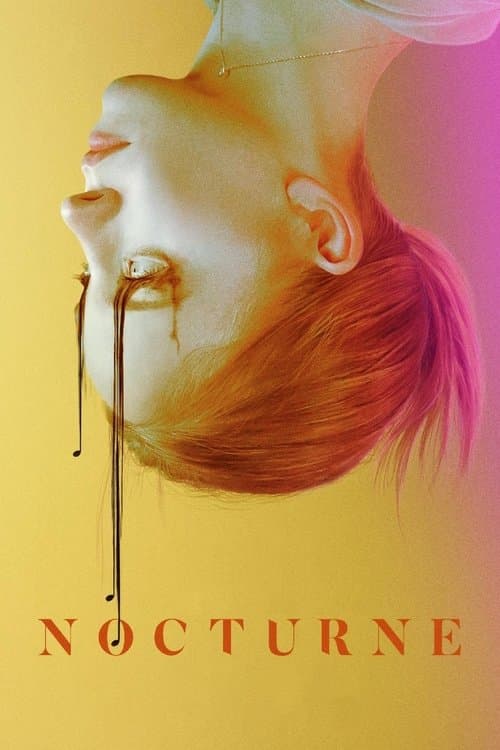
Inside the halls of an elite arts academy, a timid music student begins to outshine her more accomplished and outgoing twin sister when she discovers a mysterious notebook belonging to a recently deceased classmate.
8 min read
Release Year: 2020
Rating: 5.86/10
Runtime: 90 minutes
By Luna Sterling
Nocturne (2020): Ending Explained
As Luna Sterling, I've long been drawn to films that peel back the layers of the human psyche, where ambition festers like a shadow in the dim corridors of the soul. Nocturne (2020), directed by Zu Quirke, is a haunting descent into the toxic undercurrents of sibling rivalry and artistic obsession at an elite performing arts academy. With its brooding visuals and a score that pulses like a racing heartbeat, the movie builds an atmosphere of creeping dread, where every piano note feels like a whispered curse. In this ending explained, we'll unravel the film's chilling finale, dissecting its literal events, symbolic depths, and lingering ambiguities. If you've just watched Nocturne and are left staring at the screen, heart pounding, wondering what it all means—read on. Spoilers ahead, of course.
Quick Recap
In the shadowed halls of Lindberg Academy, twin sisters Juliet and Vivian Lowe navigate their final year as classical pianists, their lives intertwined like the keys of a grand piano. Vivian, the radiant prodigy bound for Juilliard, casts a long shadow over the timid Juliet, who grapples with mediocrity and decides on a gap year. The story ignites when Juliet discovers a mysterious notebook belonging to Moira, a talented violinist who recently took her own life by leaping from a balcony as a grandfather clock tolled ominously. This notebook, etched with cryptic symbols—a sun, a blinding light, sketches of impending doom—becomes Juliet's dark talisman. As she auditions for Moira's spot in the senior showcase with the daring The Devil's Trill by Tartini, Juliet begins to eclipse her sister, but not without cost. Fainting during her audition, she awakens to visions of glory, only to learn Vivian has secured the slot.
Tensions escalate in a haze of betrayal and psychological unraveling. Juliet clashes with her mentor Roger, leading to his suspension after a violent altercation, and she maneuvers into the orbit of the enigmatic Dr. Cask, who mentors both sisters. Bloody tampons appear in her shelf—a petty revenge from Vivian, evening some unspoken score. At a clandestine senior party, Juliet flirts with Vivian's boyfriend Max, sows seeds of doubt about Moira's notebook, and a blinding light from its pages halts her as Vivian pursues, tumbling off a cliff and shattering her arm in a fall that threatens her career. Juliet inherits the showcase role, her path paved by misfortune. She seduces and discards Max, exposes Dr. Cask's affair with Vivian, and burns his trophy in a fit of rage. Realizing the notebook's illustrations have eerily predicted these calamities—Roger's slap, Vivian's plunge—Juliet panics, burning the tome after trance-like automatic writing reveals a demand for "sacrifice." As the showcase looms, the air thickens with unresolved fury, Vivian's accusations, and Juliet's fragile ascent.
What Happens in the Ending
The finale unfolds like a fever dream, the academy's auditorium humming with anticipation, the scent of polished wood and fresh roses hanging heavy in the air. Vivian confronts Juliet backstage, her words slicing through the tension like a discordant chord: she accuses her twin of deliberate sabotage and declares Juliet forever mediocre, her voice laced with venom that echoes their lifelong imbalance. The weight of it crushes Juliet; as she takes the stage, fingers trembling on the keys, a panic attack seizes her. The spotlight burns like the blinding light from Moira's notebook, the audience a blurred sea of expectant faces. Gasping, sweat beading on her skin, Juliet bolts from the piano mid-performance, fleeing up the dim stairwell to the roof, where the night wind whips cold and unforgiving.
There, on the precipice, the city's distant hum fades into an eerie silence broken only by the tolling of a grandfather clock—mirroring Moira's fatal chime. Juliet teeters on the edge, her breath ragged, eyes wild with despair. In a hallucinatory vision, she glimpses an alternate reality: herself back on stage, completing The Devil's Trill flawlessly, the final notes ringing triumphant. Roses cascade toward her, the audience erupts in a standing ovation, and—most poignantly—Vivian nods in approval from the wings, a fleeting reconciliation. The illusion shatters as reality reasserts its grip. Drawn inexorably forward, Juliet jumps.
The film cuts to the aftermath with visceral finality: Juliet's broken body sprawls across a statue below, blood pooling in stark crimson against the stone, her face frozen in a serene, almost ecstatic smile. Students mill about the campus oblivious, their chatter a muffled drone, as if her fall ripples through an unseen veil, unnoticed in the everyday bustle. The screen lingers on her, the wind rustling leaves like a subdued applause, sealing her fate in quiet horror.
The Meaning Behind the Ending
At its core, the ending of Nocturne symbolizes the devouring cost of ambition, where the pursuit of artistic supremacy demands a blood price that no talent can outrun. Juliet's leap isn't mere suicide; it's the ultimate sacrifice foretold by Moira's notebook, a supernatural ledger that trades success for souls. The notebook, with its infernal Devil's Trill and prophetic drawings, acts as a Faustian bargain—Juliet's rise mirrors Moira's descent, her visions of glory a cruel mirage that lures her to the edge. That final smile on her corpse evokes a twisted peace, suggesting she's claimed the recognition she craved, even in death, her mediocrity transmuted into eternal notoriety. The oblivious students underscore isolation: in the cutthroat world of elite arts, individual tragedies dissolve into the institution's indifferent rhythm, a metaphor for how genius often blooms from unseen graves.
Psychologically, the ending probes the erosion of self under rivalry's weight. Juliet's panic attack and rooftop hallucination represent the fracturing mind, where desire blurs into delusion. The grandfather clock's chime ties back to Moira's suicide, implying a cyclical curse—ambition's toll chimes eternally, pulling the overshadowed into the abyss. It's a visceral reminder that true passion, as Dr. Cask notes Juliet lacks, isn't seized through sabotage but born from within; stealing it invites annihilation.
Character Arcs and Resolution
Juliet's arc crescendos in tragic irony: from timid shadow to empowered destroyer, only to be consumed by her own darkness. Her journey begins with quiet envy, amplified by the notebook's occult influence, leading her to orchestrate Vivian's fall, Roger's ruin, and Dr. Cask's exposure. Yet, this "success" hollows her; the ending resolves her arc not in triumph but in self-inflicted oblivion, her death affirming Vivian's taunt of mediocrity while granting a posthumous spotlight she could never earn alive. It's a pyrrhic victory, her smile a mask for the void.
Vivian, the golden child, arcs from untouchable prodigy to humbled survivor. Her injury and suspension strip her Juilliard dreams, forcing confrontation with Juliet's resentment. Though she accuses her sister of malice, Vivian's arc hints at growth—her imagined approval in Juliet's vision suggests potential reconciliation, but the real-world fracture leaves her scarred, a cautionary tale of complacency's fragility. Supporting characters like Moira (a spectral catalyst) and Dr. Cask (exposed manipulator) resolve as footnotes: Moira's notebook claims another victim, while Cask's humiliation echoes the academy's predatory underbelly. No one emerges unscathed; resolution comes through loss, the sisters' bond severed in blood.
Alternate Interpretations
Nocturne's ending thrives on ambiguity, inviting multiple lenses. One reading casts the notebook as supernatural—its drawings don't predict but cause events, a demonic force demanding sacrifice for talent. Juliet's jump fulfills this pact, her vision a lure from the "devil" of Tartini's sonata, explaining the eerie prescience and her trance-like writing. Alternatively, it could all be psychological: the notebook as projection of Juliet's subconscious rage, her "visions" manifestations of guilt-induced psychosis. The fall becomes self-sabotage, not curse—her mind, warped by rivalry and isolation, conjures glory to justify the leap, a delusion born from untreated trauma.
A third interpretation subverts the supernatural entirely: the ending as institutional critique. Lindberg Academy fosters toxicity, where competition breeds madness; Juliet's death exposes this, her unnoticed body symbolizing how the system discards the broken. Was Vivian's fall truly accidental, or did Juliet's "blinding light" moment imply subconscious push? These layers keep the film replayable, each viewing shifting the shadows of intent.
Themes and Symbolism
The ending reinforces Nocturne's core themes of toxic ambition, sibling rivalry, and the blurred line between inspiration and insanity. Symbolically, the notebook is a Pandora's box of forbidden knowledge, its sun emblem and light motifs evoking enlightenment's blinding peril—success illuminates but scorches. The grandfather clock symbolizes inexorable fate, its chimes a dirge for the fallen, linking Moira, Juliet, and the twins' fractured dynamic. Roses in Juliet's vision subvert triumph, wilting into blood on the statue, representing art's thorny beauty.
Broader, the film subverts the "prodigy" trope: Vivian's passion trumps Juliet's technique, but neither escapes unscathed, critiquing how elite institutions commodify talent, turning artists into casualties. Psychological horror permeates, with sensory echoes—the metallic tang of blood, the chill of the roof—amplifying isolation's grip. Ultimately, it warns that emulating the dead yields only echoes of their end.
Final Thoughts
Nocturne's ending is a masterstroke of atmospheric dread, landing like a final, unresolved chord that vibrates long after the credits. It works brilliantly by embracing ambiguity, forcing viewers to confront their own shadows of envy and aspiration—do we cheer Juliet's imagined ovation or mourn her real fall? For general audiences, it's accessible terror: a tale of twins twisted by talent, wrapped in moody visuals that linger like a nightmare's aftertaste. Yet, it falters slightly in under-exploring the notebook's origins, leaving some threads dangling in the fog. Still, this finale cements Nocturne as a gem of psychological thriller cinema, a haunting reminder that some spotlights burn too bright. If ambition chills you to the bone, this one's for you.