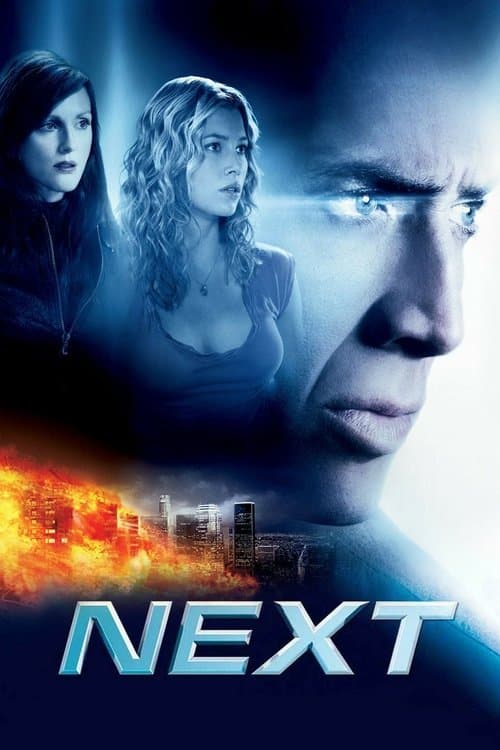
Next (2007): Ending Explained
Next's ending is a full-day timeline revert that reveals the entire climax was a precognitive simulation, reframing the film as a 'choose your own…
7 min read
Release Year: 2007
Rating: 6.1/10
Runtime: 96 minutes
By Luna Sterling
The short answer
The short answer
The climax of Next never happened. The raid on the port, Cris Johnson dodging bullets to reach the terrorist leader, the rescue of Liz Cooper, the bomb detonating out at sea and flattening the city: all of it is a vision Cris runs while staring at a seismograph, and the film rewinds a full day to Cris and Liz in bed at the Arizona hotel, before Ferris ever arrived. What the ending resolves is Cris's will. What it declines to resolve is the bomb.
What the last scene actually shows
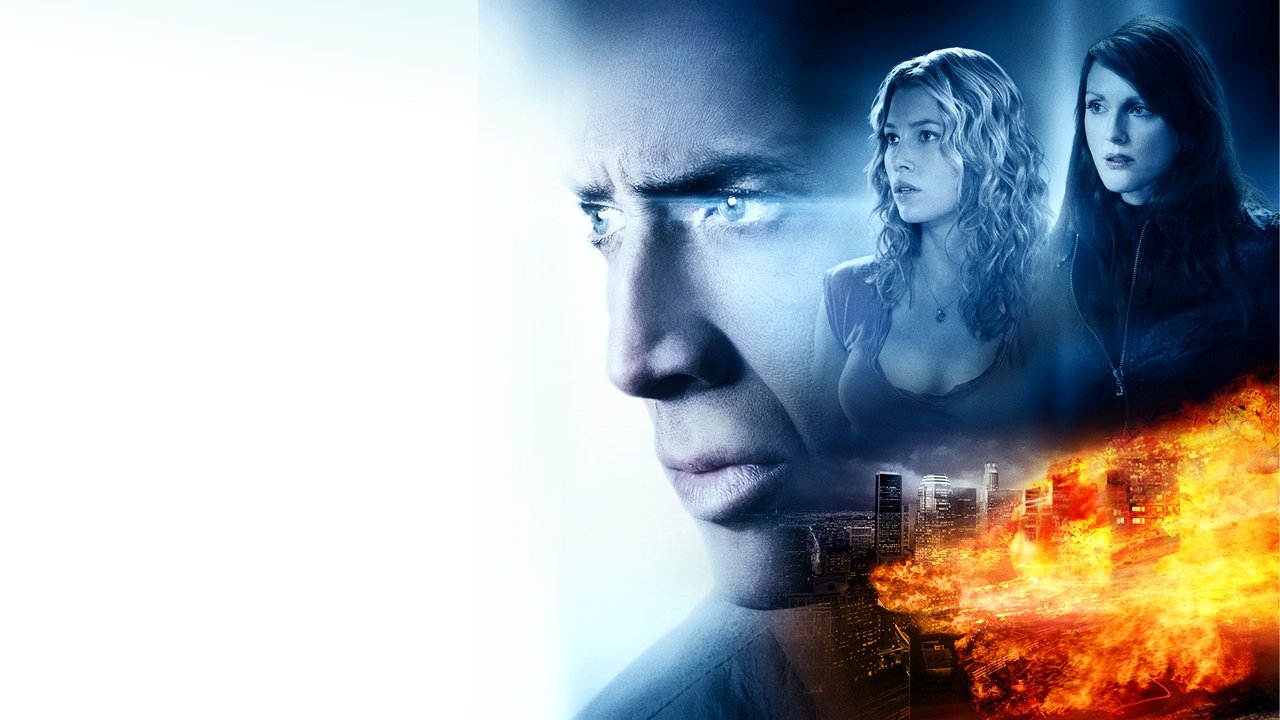
Cris and the FBI reach the port where the terrorists are based. He walks straight at the terrorist leader, using his two-minute foresight to slip every bullet, and kills the terrorists. Liz is saved. Then they learn the bomb has already been moved.
Ferris shows Cris a seismograph. She wants him to watch for tremors from an explosion before it happens, to see the blast a beat ahead of the instruments. He stares at the screen.
The bomb detonates out at sea. The port is destroyed. So is the rest of the city.
Then the timeline reverts a full day. Cris is in bed with Liz at the hotel in Arizona, before Ferris arrived. The port was a vision. The film states it outright: "Every time you look into the future, it changes." Cris calls Ferris and offers to help prevent the nuclear disaster. Then he asks Liz to wait for him.
Where the film switches tracks
The setup starts early, and it's a con. Cris can see two minutes ahead and no further, and he tells Liz exactly that when she asks why he won't help the FBI. Two minutes is a defensive power. It gets you out of a casino, past a boyfriend, away from agents at a motel. It cannot show you a bomb going off tomorrow.
Then the film breaks its own rule in plain sight. The vision of Liz in a bomb vest, strapped to a wheelchair as bait, is not a two-minute glimpse. Ferris straps Cris to a chair and forces him to watch television until he produces a vision worth having, and the vision that arrives is hours deep. Liz is the exception, and the film told us so: the diner, 8:09, twice a day. Once events involve her, the ceiling comes off.
So the port raid plays like a thriller paying off. Cris walks into gunfire and wins. It reads as the movie cashing the check it wrote in the first act, which is precisely the track it's about to abandon.
What starts out as a mildly diverting thriller blows itself to smithereens in the final reel
What gets revealed, and what doesn't
What the ending newly establishes: Cris's range now covers everything that could lead to the nuclear explosion, because Liz pulled him into the chain of events. The film says the mechanism out loud. Every look into the future changes it, which means the port raid wasn't a memory and wasn't a prediction. It was a draft.
What it leaves open is everything about the bomb itself. The weapon is still out there. The terrorists at the port are dead only inside the vision. Whether the real raid goes the same way, whether Liz gets taken again, whether Ferris's superiors still sign off on using Cris: none of it is settled. And the city, in the version we actually live in, is still standing. The film declines to tell you how it stays standing.
Compare that to what it refuses to leave open. Cris's choice isn't ambiguous. He makes the call. The ending isn't asking whether he'll help. It already answered.
The thing it retroactively changes
Go back to the diner. Cris has been showing up twice a day at 8:09 to catch a woman walking through a door, a vision with no details and no expiration. Played straight, that's a man in a loop, waiting on fate to keep an appointment. Post-revert, it reads as the film's first demonstration that looking ahead is an action, not a forecast. He didn't wait to be shown Liz again. He built a ritual around the image and stood in the path of it. The ending doesn't reveal that Cris can shape events. It reveals he's been doing it since the first scene, and calling it patience.
Go back further, to the casino. Cris wins medium amounts against the house on purpose, staying under the threshold that gets you noticed, using two-minute foresight to duck the shooter who'd otherwise kill him. That's the power at its smallest and most self-serving: a man reading the next 120 seconds to protect nobody but himself. After the revert, the casino is a baseline, and the whole film is the distance between it and a man who dials Ferris to volunteer for the worst week of his life. The gambler's instinct never changes. The stakes do.
If you were expecting the other ending
Here's the strongest case for reading the port raid as real and the revert as a cheat: you watched a man win. Cris walks into a terrorist cell, dodges live fire, kills the leader, pulls Liz out. A film that spends its third act building that sequence and then deletes it has taken ninety minutes of your investment and spent it on a hypothetical. Berardinelli put the reaction plainly: "some viewers will feel cheated by what Next does, and it's hard to blame them." Sanford went further, calling it "a hard slap in the face to anyone who has invested his or her time in watching it."
The argument fails for one reason. The film told you the rule before it broke it. Two minutes, with one exception, stated to Liz directly. A vision of Liz dead in a wheelchair that runs hours, not minutes. Then a seismograph, which is a machine for seeing tremors before they arrive, handed to a man whose entire problem is that he can see too little. The detonation isn't a reversal of the story. It's the story following its own logic to the end, and the revert is the film refusing to sell you a win it hasn't earned yet.
Saenger got closest to what's actually on screen: "a tricky twist ending that can be misconstrued if you don't pay close attention and then pause to think about it." The pause is the point.
The verdict
The verdict
The ending isn't a rug pull for its own sake, and it isn't ambiguous. It's a full-day revert that converts the entire climax into a precognitive simulation, and it does that to make Cris's final phone call land as a choice rather than a rescue. For ninety minutes he used the future to protect a two-minute bubble around himself. The vision gives him the whole disaster, and then the film hands him back the day so he can walk into it on purpose. Howell called it "one of the most infuriating endings ever," and I understand the reflex. But the film isn't cheating you out of a climax. It's showing you the actual climax and refusing to let you call it a victory. The bomb is still out there. Cris picks up the phone.